Tag Archives: bake

O’Gourmet Truffled Macaroni and Cheese

6 Dec

I love macaroni and cheese, the beautiful pasta, coated with a creamy blanket of cheesy indulgence. The crispy top, making way for a melting interior. Whats not to love? Well, some varieties of mac and cheese are plainly unappetising, made from over processed, pasturised ingredients that have all the life and soul taken out of them (once youve seen that orange glow, you will never forget it!). I wanted to make a different kind of macaroni and cheese – a sensuous, indulgent meal, ripe with scent, taste, texture and balance. This macaroni and cheese is slightly wicked, a tad naughty, and very memorable. It can be served at a celebration – birthday, New Years, holidays of every kind – or just because you want to say I love you. Honestly, they will get the message!

A dish like this needs to be in part based on thought and consideration, and in part on pure inspiration. So I wandered the O’Gourmet Food Hall to see what might present itself. First under consideration was the pasta. I decided on La Collina Toscana pasta, made in Italy, and rather than macaroni, a conchiglie shape – like a small conch or sea shell. Gorgeous, naturally dried, hand crafted pasta, with a shape that has the same benefits of macaroni (the curved tubular shape catches and holds sauce well), and yet has a more elegant look to it. But of course, I dont want to be proscriptive, so use whichever pasta strikes your fancy!

I feel that macaroni and cheese can sometimes be a tad overwhelmingly rich, and I noted some gorgeously fresh organic baby spinach, so I decided to include a surprise nestled in the depths of the pasta – bright clean spinach, sauteed with white onion, and candied, caramelised garlic. I wanted to make the garlic a little differently from the original Ottolenghi recipe I used, and so decided that instead of water, I would use wine! But then, I saw Fre wines – alcohol-removed wine. Yes, honestly!

I read the taste tests, and while there is definitely something missing (the alcohol!), there is a unanimous agreement that the taste is still there… somewhat! I thought that it might be very interesting to try cooking with this non-alcoholic wine. Would you get the same taste, roundness of flavour, haunting notes of fruit and honey and sunshine, as with regular wine? I decided I would use the Fre premium white wine in the sauce, and the Fre premium red wine in creating the caramelised garlic (in place of water in the original recipe). I found that there was certainly a hint of winey flavour to the sauce and garlic, but that depth of flavour, the resonance of the wine, the layers of scent and taste, were not as fully realised. I think the next time I make this pasta, I will use regular wine, but when I am cooking for those who have issues with alcohol in their food, I would most certainly go back to the Fre. And again, if you prefer cooking with wine, please, go ahead and give in to the urge 😉

And finally, truffles. I felt that truffles added to the cheese sauce would elevate this dish into a celebratory, special meal. I looked around, and decided to layer the different truffle tastes – starting with the amazingly hedonistic truffle oil from Vom Fass, which I used to permeate everything from the spinach to the garlic to the cheese sauce. I seasoned everything with truffle sea salt, and finally, I found Himalayan truffles (tuber indicum), an inexpensive (relatively) jar of black truffles from the Himalayas. I loved these truffles. They were easy to work with, and imbued the pasta with their own truffled scent – not quite as all inclusive as European truffles, which seem to have the reach and depth of durian, but with their own nutty, dark, rich flavour.

And when I spoke to M. Sebastien in the cheese room, he suggested that I use a Brillat-Savarin (a triple cream, soft, brie-like cheese) which had been layered, and thus completely permeated, with truffles. I used organic white cheddar and a beautiful aged crumbly parmesan as well, but I promise you, when I sliced open that Brillat-Savarin, and saw the thick soft melting consistency, and smelled that unique combination of cheese and truffle… well, I wanted to rub it all over me! Incredibly luxurious and such a beautiful addition to the pasta.

This dish looks like a lot of work, and it certainly will take a couple of hours of cooking. But a lot can be done ahead of time – the garlic can be candied and caramelised in about half an hour or so, and can be stored in the fridge for about 2 weeks. The spinach can be sauteed and kept, covered, in the fridge for 3 days. Even the cheese sauce can be made the day before (though I would whisk in the egg at the last minute), and combined with the pasta just before baking. I served the dish with a simple salad of bitter arugula (rocket) and ribboned organic carrots, with a dressing of balsamic, truffle oil and soy sauce. It was a bright counterpoint to the luxury of the main course.

This truffled macaroni and cheese is worth the work and the care, the loving sourcing of beautiful ingredients. The result is a gift to the people you love, and to yourself.

Serves 6 – 8 people

Candied Caramelised Garlic (adapted from Yotam Ottolenghi’s Plenty)

  • 2 cups Fre premium red wine (or a good red wine)
  • 1 1/2 cups garlic cloves (about 2 heads – 30 cloves or so)
  • 2 tbsp + 1 tsp truffle oil
  • 1 tbsp caster sugar or light brown sugar
  • 2 tbsp best quality balsamic vinegar (I used a 25 year old balsamic from Vom Fass – it was astonishing!)
  • 1 tsp herbes de Provence or mixed Italian/French herbs
  • 1/2 tsp truffle salt (if you have it – otherwise a good sea salt is fine)

Combine the red wine and garlic cloves in a medium saucepan. Bring to the boil over medium low heat, and simmer for about 5 minutes.

Drain the red wine from the garlic cloves, reserving the red wine for later. Clean the saucepan well and dry it, and place the garlic cloves and the truffle oil into the saucepan together.

Saute the garlic in the oil for about 5 minutes or so, on medium high heat, or until the garlic has softened, released its intrinsic garlic scent, and become lightly browned.

Measure out about 1 1/2 cups of the red wine, and combine with the sugar, balsamic, herbs and salt. Pour over the garlic in the saucepan. Be careful, because it will splatter a bit.

Simmer on medium high heat for about 15 – 20 minutes, or until the liquid has almost completely reduced, and the garlic is dark red, sticky, candied and caramelised. Take off the heat, and pour over the remaining 1 tsp of truffle oil.

This candied garlic will keep in the fridge, covered for at least 2 weeks, but you will probably eat it before then! It can be an astonishing addition to salads, soups, risottos, pastas, sandwiches – just about anything you can imagine!

Sauteed Spinach

  • 2 tbsp + 1 tsp truffle oil
  • 1 cup finely chopped white onion (1 small onion or 1/2 large)
  • Truffle salt and pepper to taste
  • 3 – 4 cups organic baby spinach, washed and roughly chopped

In a medium sized pan, over medium heat, combine the 2 tbsp of truffle oil and the white onion. Saute for 5 – 10 minutes, or until the onion goes glossy, soft and shiny. You dont want it to burn, but you do want it to reach that moment just before it caramelises!

Season with truffle salt and pepper, and add the baby spinach. Raise the heat a little, and saute quickly. The spinach will turn bright green, and will release some of its liquid. This is perfect. Remove from heat, taste and adjust seasonings, and pour over the final teaspoon of truffle oil.

You can reserve this spinach for up to 3 days, covered in the fridge. It also makes a sublime side dish!

Truffled Three Cheese Sauce

  • 1 cup cream
  • 1 cup whole milk
  • Truffles – as much as you want or can afford! I used a 100 g jar of Himalayan truffles plus 2 tbsp of truffle oil plus 1/2 tsp of truffle salt
  • 3 tbsp butter
  • 2 tbsp truffle oil
  • 3 tbsp flour
  • 1 + 1 cup Fre premium white wine (or regular white wine – or even sparkling wine!)
  • 1/2 tsp (or less – to your taste) English mustard powder or Dijon mustard
  • 8 oz (about 2 cups) grated white organic cheddar
  • 200 g (about 7 oz) truffled Brillat Savarin
  • 1/2 cup grated best quality parmesan
  • Truffle salt and pepper to taste

In a medium large saucepan, combine the cream and milk. Grate over the truffles (I used a Microplane zester to shave the truffles very small and fine), and add the truffle oil and truffle salt, if using. Over low heat, warm the cream/milk/truffle mixture until it is just steaming – about 75C or 165F. Stir often. Once the mixture reaches the steaming stage, remove from heat, and let steep for at least an hour. This infusion step is important! It makes sure that the taste of the truffles is all over that sauce.

In a medium large saucepan, melt the butter and truffle oil over medium low heat. Once the butter has melted completely, add the flour, and stir well. This roux will form the basis of your sauce, so make sure that you take your time and cook it well. You want it the colour of light teak – keep your nerve. Dont burn it, but dont let it stay too pale either. I would cook for at least 5 minutes, up to 10, depending on the heat source.

Once the roux has cooked to your liking, lower the heat a bit, and add 1 cup of the white wine, whisking constantly. The mixture will immediately seize up and become very thick. Whisk in all of the steeped milk/cream/truffle mixture, and continue to whisk well. Taste. Add the remaining 1 cup of white wine, tasting every 1/4th cup or so. You dont need to add it all if the mixture becomes too heavily winey.

Sprinkle over the mustard powder or the Dijon mustard, and whisk well to combine.

Bring the heat up to medium low, and sprinkle over the cheddar. Continue whisking the sauce as you incorporate the cheddar into the mix. Taste and adjust seasonings again.

Slice the bottom rind off the Brillat Savarin, and using a teaspoon, scoop it out of its rind. Add to the sauce, and whisk well to combine.

Sprinkle over the parmesan, and whisk well, until the cheese is melted and well mixed.

Remove the sauce from the heat and allow to cool to tepid bathwater heat. Whisk in the egg yolks to enrich the sauce, and adjust for seasoning.

The cheese sauce can be made up to a day of time, before adding the egg yolks. Keep tightly covered in the fridge, and bring to room temperature before whisking in the egg yolks and assembling the main dish.

This sauce would be wonderful served as is, not baked, with angel hair pasta or linguine!

Truffled Macaroni and Cheese – Assembly

You can serve this in individual small ceramic baking pots, bake it in loaf tins (it will fill three tins), or a large enameled baking dish. Your choice – I think it depends on how and who you are going to serve! Individual pots are a very elegant presentation, but loaf tins or a large baking dish bring a casual luxury to the meal.

  • 500 g macaroni, elbow, conchiglie, or other tubular pasta
  • Truffled Three Cheese Sauce
  • Caramelised Garlic
  • Sauteed Spinach
  • Handful of Italian parsley, finely minced
  • 1/2 cup breadcrumbs (I used Panko)
  • 1/2 cup parmesan
  • A few teaspoons of truffle oil to finish

Preheat the oven to 160C (325F), and have your baking pans ready.

Prepare macaroni or other tubular pasta according to the packet directions, in a large saucepan or pot, over high heat, in heavily salted boiling water, but taste a few minutes shy of the time indicated on the packaging. I cooked conchiglie pasta, and the packet said 15 minutes. I cooked it for 11 minutes, to just before al dente.

Drain the pasta, and place in a large mixing bowl. Pour over about three quarters of the cheese sauce and stir well to combine. Taste for salt and pepper and adjust.

Place about half of the pasta in your baking pots/tin/dish. Press down to ensure that the pasta is snug. Ladle about half of the remaining sauce over the pasta. Using your hands, squeeze out the liquid from the reserved spinach, and place it in an even layer over the pasta, leaving about 1/2 inch rim free around the edge of the dish. Stud the spinach with the caramelised garlic – as much or as little as you wish, though i went easy on it. I wanted a spark of intense flavour, but I did not want to overwhelm the delicacy of the pasta. Add the rest of the pasta to the dish, and ladle over the remaining sauce.

In a small bowl, mix together the Italian parsley, breadcrumbs and parmesan, and sprinkle evenly over the pasta.

Bake in the oven for 45 minutes to an hour, or until the pasta is bubbling and hot, and a crisp, golden crust has formed.

Just before serving, sprinkle lightly with the truffle oil to really bring out the scent.

Enjoy the love.
Chocolate Hazelnut Cake

4 Dec

Deep Dark DelectableSome days, you just need chocolate. For happy, for sad, for good and for bad, chocolate has a remarkable complexity and depth to it which just eases you on your way. I have a real deep affinity for chocolate, and I always try and have some in the house at all times. There is something so essentially sexy about chocolate. Its the stuff of lovely naughty imaginings, and it is unabashedly decadent and delightful.

And I am a serious chocolate snob. Cheapo chocolate made with vegetable fats (like those overly sweet sugary candy bars) is not something I crave regularly. Admittedly, sometimes it just hits the spot, but its obvious junk food. Deep, dark bittersweet chocolate though, preferably Valhrona or Callebut … now there, my dears, is something to get excited about.

Bittersweet chocolate is real chocolate in my book (though you will never see me turning down milk or white Valhrona or Callebut) … it has such deep notes, so much going on in each bite. It resonates with the sunshine and the earth where it was grown, it has notes of coffee, caramel, plum, tobacco, dusk. A small mouthful of bittersweet chocolate brings me straight into the now. I cannot think of anything but that melting bass pounding taste. Its amazing.

And I am a chocolate snob in other ways as well. Chocolate and fruits, meh. Well, chocolate and bananas and chocolate and some berries are okay, but Im not a huge fan of astringent orange or lemon and chocolate. It just doesnt do it for me. Though I do love a good mint and chocolate combo. And chocolate and nuts is a combination which I have generally stayed away from… Again, some nuts, for me, are okay with chocolate (almonds, hazelnuts and peanut butter), but the dairy nut tins were never my first choice.

However, I have been gradually re-evaluating this stance. Gesine Bullock-Prado’s Starry Starry Night cookies introduced me to the wonders of baked almonds and chocolate, and I have recently been fiddling with a combination of hazelnuts and chocolate. The most famous hazelnut and chocolate combo is that sweet treat from all our childhoods – Nutella spread. But there is a lovely grace to the pairing, the round, rich, caramel notes of the nuts gentling the intensity of bittersweet chocolate.

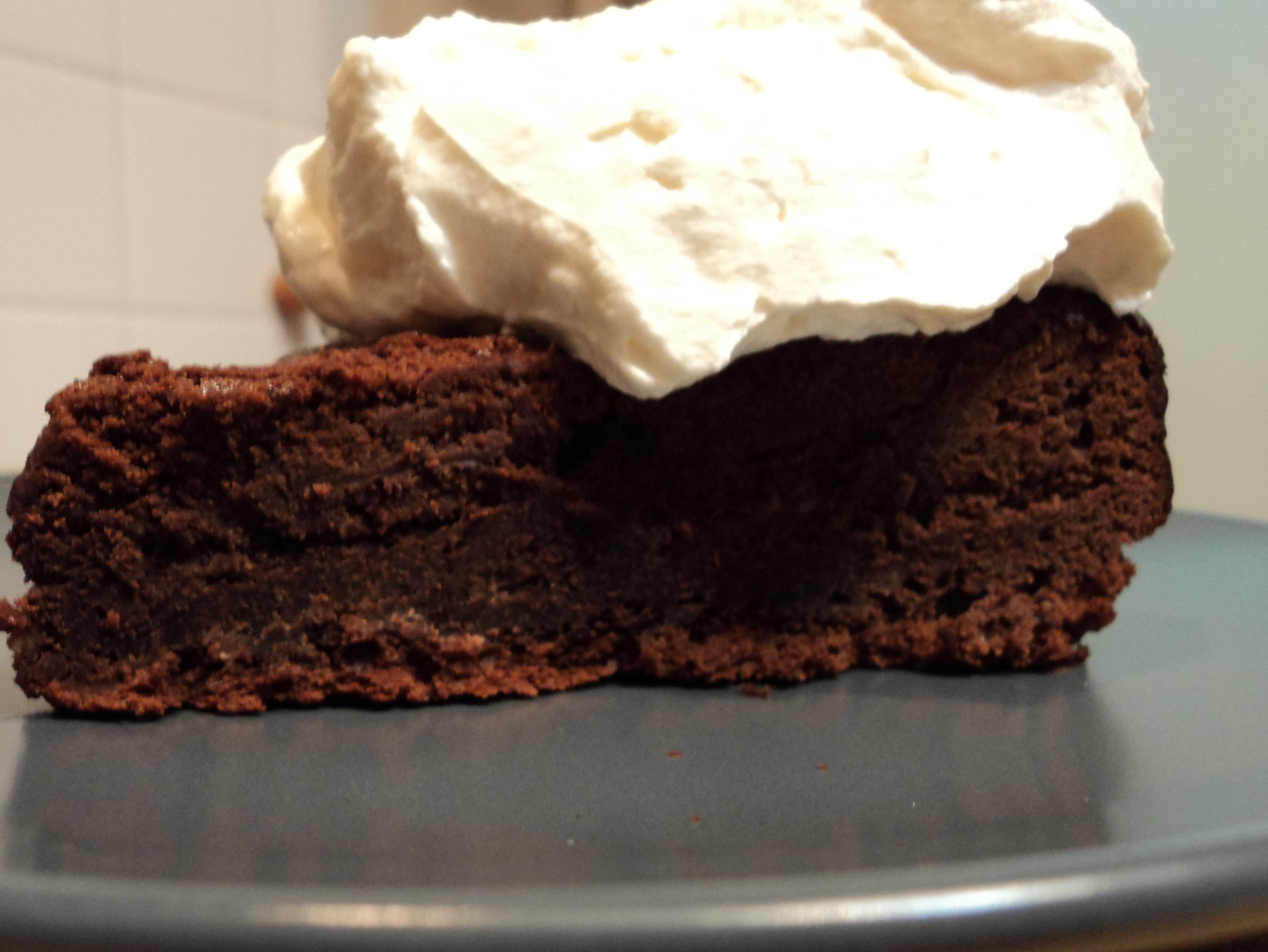
After several tries, and several versions, I have decided this is the chocolate hazelnut cake that I love. Its not so much a cake as a fallen souffle, a thick gooey almost brownie like pudding, with a crackling crust. It must be served with a generous blowsy dollop of whipped cream, and can be made completely gluten free by removing all the flour and using only ground hazelnuts instead. Though if you can, keep the flour in – it gives it some structure, and helps to pull everything together in a beautiful whole.

Bake this cake in a springform tin, and do make it the day before you will serve it. It really benefits from sitting, well wrapped, in the fridge overnight. Something about that pause between baking and eating allows all its flavours to blossom. And, if you can source it, use hazelnut oil. I find that it really adds to this cake, both in texture and flavour. Its unctuous smokey caramel tone embraces the chocolate beautifully.

Serves 8 – 10 (even 12 if you serve really thin slices). Best baked the day before, though you could refrigerate for up to 3 days, easily.

  • 1/2 cup ground hazelnuts
  • 1/4 cup flour (you can substitute additional hazelnuts here if you need a gluten free version)
  • 3 heaping tbsp cocoa powder
  • 1/2 tsp salt
  • 6 oz bittersweet chocolate
  • 10 tbsp butter
  • 3 tbsp hazelnut oil
  • 4 eggs, separated
  • 1/2 + 1/4 cup light brown sugar + additional for whipped cream
  • 1 tbsp vanilla
  • 1/4 tsp cream of tartar
  • 1 – 1 1/2 cups heavy cream
  • 1 tsp agar agar
  • Vanilla paste or essence (I used a remarkable vanilla, cacao nib and chili paste) – to taste

Preheat your oven to 325F (165 F). Line a spring form cake pan with parchment paper and set aside.

Combine the ground hazelnuts, flour, cocoa powder and salt in a large bowl, tossing well to make sure the mixture is smooth and integrated. Set aside.

Place the chocolate and butter in a small bowl that fits over the rim of a small to medium sized pot or saucepan. Boil a kettle of water, and pour into the pot. Place the bowl containing the chocolate and butter over the pot, and allow to sit, stirring occaisionally until the butter and chocolate have melted completely. Once the chocolate and butter are liquid, add the hazelnut oil and stir well. Set aside.

While the chocolate is melting, combine the egg yolks and 1/2 cup of sugar, and beat well with an electric stand mixer or hand held beaters. You want the egg yolk mixture to be fluffy, thick and golden in colour. When you lift the beaters from the yolk, a thick ribbon will fall back into the bowl. This should take you 3 – 5 minutes or so. Beat in the vanilla once you have the consistency you like.

Pur the melted chocolate/butter/hazelnut oil into the ground hazelnut mixture, and stir exceedingly well. Make sure any lumps or clumps are smoothed out.

Pour in the beaten egg yolks and sugar, and using a spatula, stir well to combine. Set aside.

Clean the beaters and bowl (or use new ones!), and beat the egg whites with the cream of tartar until the whites hold soft peaks. Continue beating, adding the remaining 1/4 cup sugar gradually, until the whites hold stiff, glossy peaks. The egg whites should look like foamy marshmallow.

Fold about 1/4 of the egg whites into the batter, stirring quickly and strongly to lighten the batter. Add the rest of the egg whites in two batches, stirring firmly, yet gently. Stir in a folding motion, making sure to completely integrate the egg whites with the batter.

Pour the batter into the prepared spring form pan, and bake for about 25 minutes, or until the top has risen and cracked, and a tester inserted into the cake comes out with crumbs attached.

Allow the cake to cool in the pan.

Prepare the whipped cream. Measure out the cream, and take 2 tbsp and pour into a small bowl or container. Sprinkle the agar agar into this set aside cream, and allow to melt into the cream. You could assist by whisking gently with a fork. You want the agar agar to be completely absorbed by the cream, and to melt away into the cream.

Whisk the remaining cream until it holds soft peaks. Add the reserved cream and agar agar, along with the sugar and vanilla paste. Whisk until the cream holds stiff peaks. Reserve, covered until you are ready to serve, up to three days.

When serving, remove the cold cake from the fridge, and ice the top with the whipped cream. Serve in gentle slices, and enjoy!

Cheese Scones / Biscuits

16 Nov

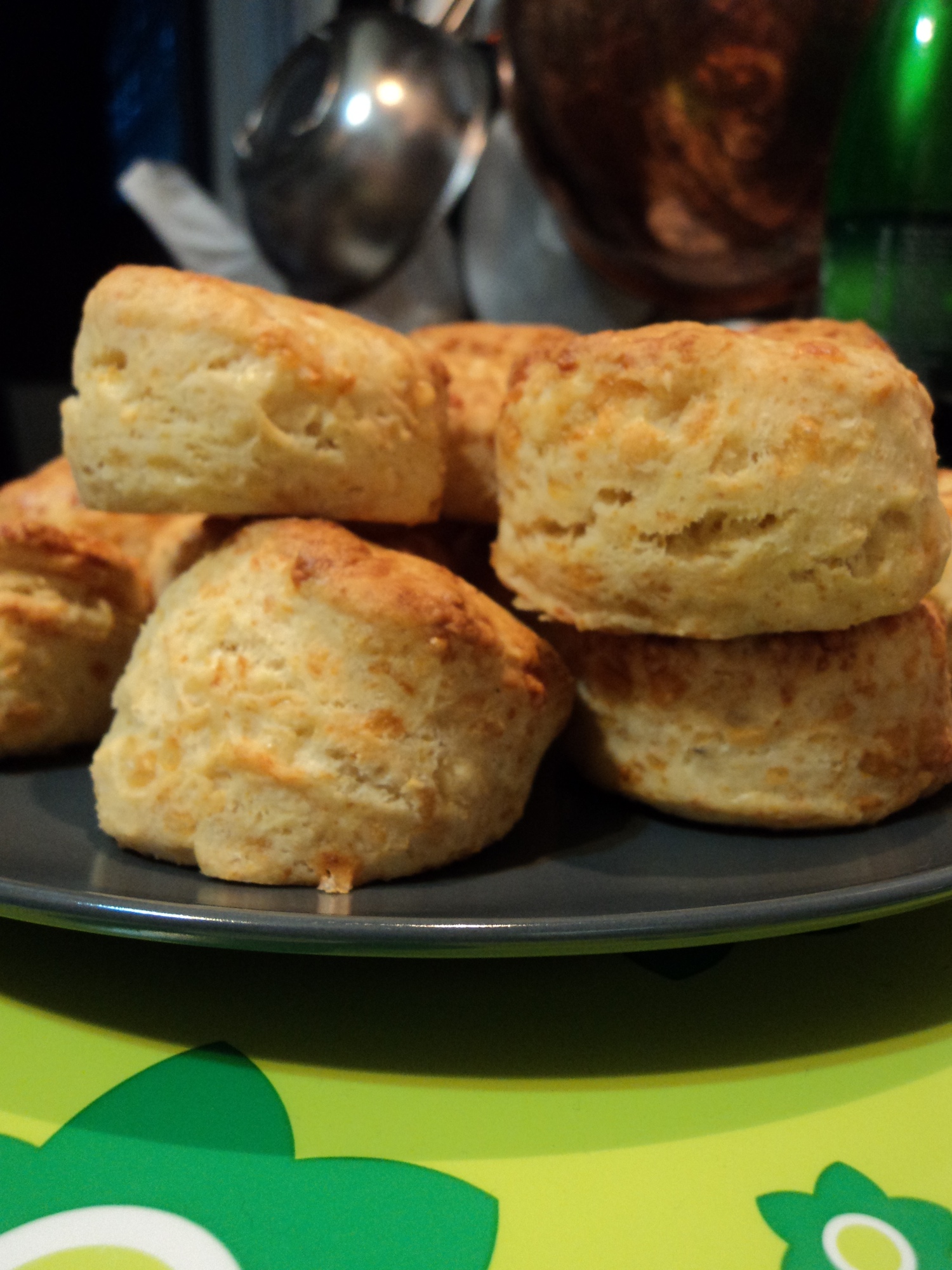
Yummy!Oh my goodness gracious. These are so good. So very very good. Fluffy, rich, creamy, cheesy, light and gorgeously tender. Cheddar cheese scones (or biscuits as Americans would call them) are a quick bread – about half an hour from inception to eating. They dont require any special equipment, in fact I prefer to grate the butter and cheddar directly into the flour and mix with the fingers. You need to be quick in order to keep these scones light as air – and there is a little trick. Add the baking powder after you combine the flour, salt, cheese and butter. This will make sure that the leavening agent is given the best possible chance to make the scones really fluffy.

I have always been fascinated by scones and biscuits. They taste so good, and look like they are easy to make… But they are not! It was a long time before I really began to understand the mechanics of how to make these perfectly. If you take your time, let the butter melt, or work the dough too hard, the scones can be thick and lumpy, with little rise. But if you have everything at the ready, dont forget to sift the dry ingredients, and use your fingertips (and cold butter, cheese and cream), then these scones really are quick and incredibly easy.

These are deeply cheesy – and they really reflect the cheese you choose, so choose well – organic aged cheddar is best. These will be a wonderful addition to a party or celebration dinner. They can be cut in any shape or size, though I prefer smaller 1 1/2 inch circles. They are wonderful split and  layered with cheese and tomato jam – or just as they are, especially just baked. They taste pretty phenomenal with a smear of strawberry jam too! Breakfast, lunch or dinner, these scones are deeply satisfying and totally delectable.

Please do note that these are rich and stuffed with butter, cheese and cream. Theyre no diet food, but then I wouldnt eat them every day. They are the ultimate comfort food though. Eating one of these scones, hot from the oven is pure, perfect joy.

By the way, they keep for about 3 days, tightly covered, and reheat well either in a low oven or in the toaster. Though I truly doubt that there will be any left though once your loved ones catch a scent of baking bread and cheese… 🙂

Makes about 18 1-1/2 inch scones

  • 3 – 3 1/2 cups all purpose flour
  • 1/2 tsp salt
  • 6 tbsp (3/4 stick/3 oz) butter, grated
  • 2 cups of good cheddar, grated
  • 5 tsp baking powder
  • Fresh cracked black pepper (optional)
  • 300 ml (about 1 1/4 cup / 10 fl oz) cream/sour cream/milk (I put 2 tbsp sour cream in a measuring cup and then half and half cream and milk)
  • A few tablespoons of milk to glaze (optional)

Preheat your oven to 215C (425F), and line a baking sheet with parchment paper.

Sift together about 3 cups of flour and the salt into a large mixing bowl. Keep the addition flour aside in case you need it to pull the scones together.

Using the largest holes on your grater, grate 3/4 stick of butter directly onto the flour. Using your fingertips, quickly toss the butter into the flour.

Grate 2 cups of cheddar and add it to the butter/flour mixture. Using your fingertips, mix well again. You should have a floury, pebbly, mealy mixture.

Measure out the baking powder, and sift onto the dough mixture. Toss with your fingertips again to combine well. Crack some black pepper into the mixture if you like (I do), and toss again.

Measure out your cream/milk/sour cream mixture. The more cream you add to the mix, the richer the scones will be. I use about 2 tbsp of sour cream, and then make up to about 6 fluid oz with cream, and add milk for the rest. Whisk together with a fork – the mixture will be lumpy from the sour cream, but this is fine.

Pour your cream/milk mixture directly over the flour, and using your hands, knead the milk into the flour until a dough comes together. If its really wet, add a little more flour, a tablespoon at a time. You want a thick soft pliable dough that holds together, and yet feels very tender and delicate. This should take only a few kneads – treat the dough very gently and carefully because you want it to be as light as possible.

Turn the dough out onto a firm working surface and pat into a rectangle or square about 1 1/2 inches thick. Use a round or cookie cutter to cut scones directly out of the rectangle, and move directly onto the baking sheet.

Any left over scraps can be quickly patted together again and recut, but know that if you do this more than once, those scones will be flatter than the others!

Let rest for about 3 – 5 minutes, and glaze with milk if you like (or even 1 egg whisked). This just encourages the top to brown well, but you dont need to do it if you dont want to!

Bake in the oven for 10 – 15 minutes or until light, fluffy and well browned at the top. Dont over bake – they will continue to firm up once out of the oven. Let cool for 5 minutes or so on the baking sheet (though I usually cant resist trying at least one!) and serve immediately, or store tightly covered for 3 days.


Pretty Gingersnap Cookies

14 Nov

Gingersnaps!Today was a day of birthdays! My beloved nephew turned 21 (yeah, I cant quite believe it myself!) and dear friends celebrated their, and their children’s, birthdays with a huge bash this afternoon. I wanted to contribute something, and so I made cookies! About 200 Starry Starry Night Cookies (4 batches) and about 200 of these gorgeous decorated gingersnap cookies. I was going to make sugar cookies, as I did for my sayang niece’s 1st birthday, but I thought I would try something different – and I do love a good, crisp ginger cookie. These make fantastic gingerbread people, and they last for ages (no eggs, so they dont go soft quickly) – you could poke hole in them (with a straw or chopstick) and use them as stunningly pretty decorations on a tree for Christmas.

I used Royal Icing for the cookies, and it set hard, and gorgeous. And because it was a children’s party, I used IndiaTree natural food colours – they were the loveliest shades of pastel – pink, robin’s egg blue, violet and spring green. Before the icing set, I decorated them with tiny silver and gold dragees, hearts, sparkle sugar, and colourful hard sugar confetti. They looked luscious, and they tasted pretty great too!

The other thing I loved about these cookies were they were a snap (hehe) to make – but you need to be really organised and focused. I made 2 batches of dough, each divided into 4. Rolled out, and frozen overnight, and then cut with small and large shapes. I stuck with hearts and circles, but you could make animals, letters, stars… anything actually that you can find as a cookie cutter. They take about 10 – 15 minutes to bake. Decorating can take a bit longer!

If you prefer chewy cookies, roll out a bit thicker, and cut and bake until the centres are just firm. Either way, involve the young people in your life in the decoration. You will be overjoyed by their creativity, and your cookies will be uniquely beautiful.

Makes about 20 – 25 gingerbread people or 80 – 100 gingersnap cookies (depending on the size of your cookie cutter). Any leftover can be frozen, rolled out, for later use.

  • 3 cups all purpose flour
  • 3/4 cup dark brown sugar (use dark brown, not light brown – you will taste the difference here. The dark brown sugar really deepens the flavour of the cookie)
  • 1 tbsp cinnamon
  • 1 tbsp ginger
  • 1/2 tsp all spice or mixed spice
  • 1/2 tsp nutmeg
  • 1/2 tsp cloves
  • 1/2 tsp salt
  • 3/4 tsp baking soda
  • 1 1/2 sticks (3/4 cup – 12 tbsp) butter
  • 3/4 cup molasses
  • 2 tbsp milk

In a large stand mixer, or large bowl if youre using a handheld mixer, combine the flour, sugar, cinnamon, ginger, all spice, nutmeg, cloves, salt and baking soda. Mix briefly so all are combined well.

Add the butter, cut into large chunks, and mix again. The butter will “cut” into the flour mixture, and will become coated with it – and the bowl will look like it contains a sandy mixture of small dark pellets.

Add the molasses and mix again. The dough will start coming together with the addition of the molasses.

I usually add the milk to the measuring cup which held the molasses, and stir it around a bit to capture any molasses that was left behind. Add the milk, and mix just briefly.

You will have a very very soft dough. Turn out onto a sheet of wax paper, and divide into four even pieces. Working quickly, form a disc with each piece, wrap tightly in individual pieces of wax paper, and transfer to the fridge to firm up for about 30 minutes or so.

Once the dough has firmed (it will still be pliable, but will just be a little easier to work with), place a piece of wax paper on your working surface, then a disc of dough, and cover with a second piece of wax paper. Roll out quite thinly and evenly. You now need to freeze the dough for about half an hour (and even overnight if you wish) – you could also refrigerate it, but I find it works quite well coming out of the freezer. Given that this is the tropics, frozen dough is much easier to work with.

Once you have frozen or refrigerated the dough, and are ready to bake, prepare your oven. Preheat to 160C (325F).

Remove one sheet of dough from the freezer. Peel the top layer of wax paper off the dough, and then replace it onto the dough sheet (this helps in making the dough easy to remove once its been cut). Flip the sheet over, and remove the (now) top layer of wax paper. I used this wax paper to line my baking sheets.

Cut out shapes and patterns to your heart’s content, and place on a baking sheet lined with wax paper.

Bake in the hot oven for about 10 – 15 minutes, or until the cookies have puffed (from the baking soda), and deflated, have darkened just a bit, and are firm in the centre to your touch.

Remove and allow cookies to cool for about 5 minutes on the baking sheet, and then transfer to a rack (or even a plate – they should be pretty cool and hardy by now). Repeat with the remaining dough.

Decorate as you like, or have them perfectly naked – a spicy wonderful happy making gingersnap.

Any scraps can be gathered together, formed into a disc, refrigerated, rolled out, frozen and re-cut.

Starry Starry Nights

4 Nov

NightsAnd after the phenomenal Savoury Polenta Tart Tatin… we are back to sweet again! I have been wanting to bake these little chocolate cookies for ages now. The recipe is in the wonderful book, Confections of a Closet Master Baker by Gesine Bullock-Prado. Say the name of that book, out loud, three times fast, and have a good giggle! It sets the tone for the entire read – funny, intelligent and immersed in the pleasures of baking. I really resonated to the story in this book because Bullock-Prado had the bravery to changer her life mid-stream, to acknowledge who she was, and what her true calling was – baking. Its kind of what I am doing now, and its terrifying, but its also so incredibly joyous.

I love the stories in the book, because they are so intensely personal – memories of her father, and their shared passion for good food, loving memories of her mother, her elegance, her charm, and her ability to bake the most gorgeous cakes, memories of her grandmother and aunts in Europe, and learning what afternoon coffee was all about. This book is a series of stories that enables us to look into Bullock-Prado’s life and understand who made her who she is today – and who gave her her passion for baking.

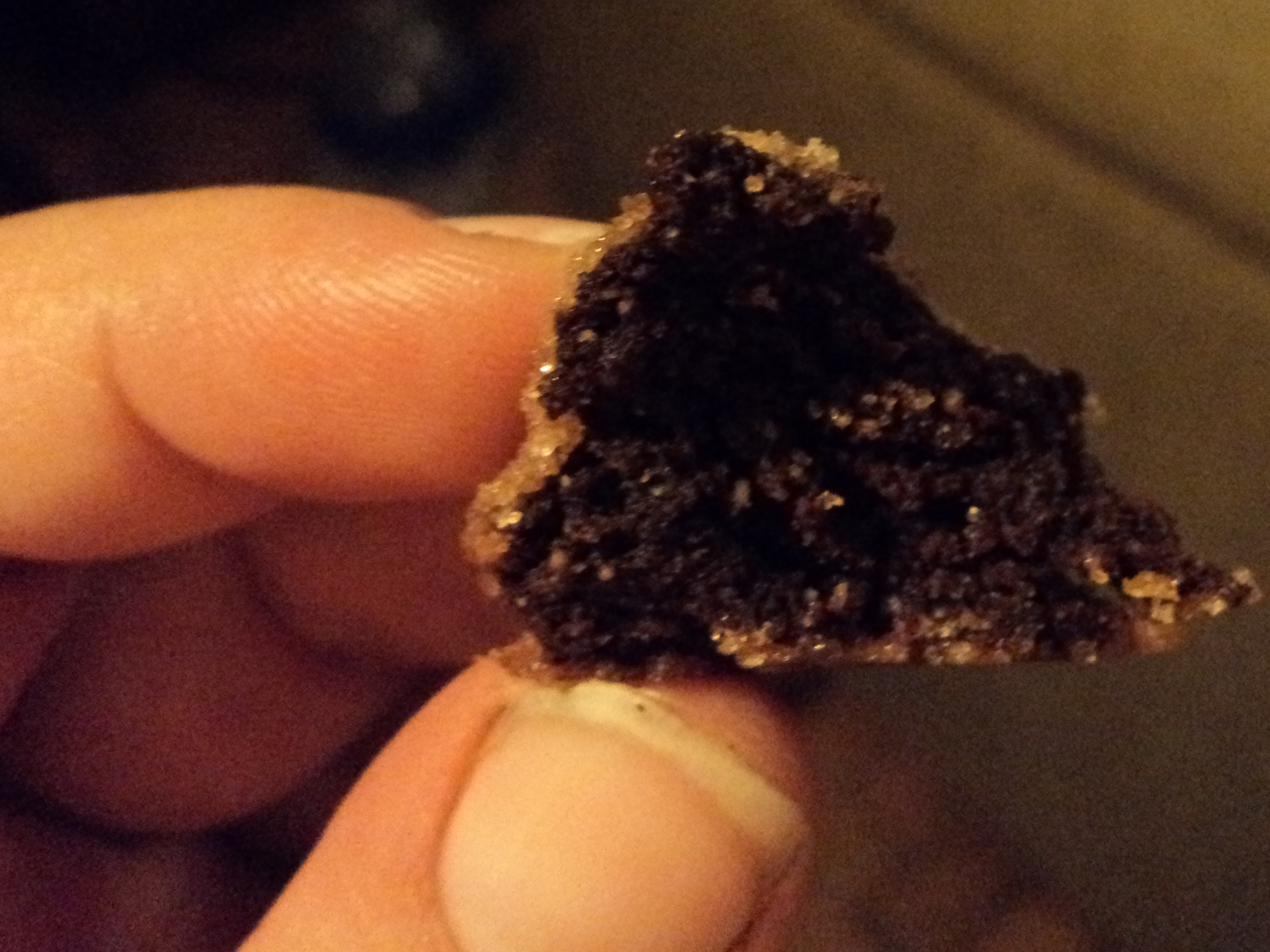
Starry Starry Nights are a gluten-free chocolate cookie, made with almond meal, sugar, honey, chocolate, eggs and cocoa powder. They are incredibly easy to put together – but its the waiting that drives me crazy. In order for these perfect, dark chocolate, baked truffle morsels to bake up properly, you first need to refrigerate the dough so it can set up, and then you need to freeze the little cookies for about 2 hours so that they are rock hard when they go into the hot oven. Dipped twice in sugar, they have a crackly nubbly exterior, glistening with sugar stars. The interior is like nothing I have ever tasted before – deep dark chocolate, beautiful and delectable.

I think I am going to try and have a bag of these in the freezer at all times – ten minutes to baking so I should never be caught wanting! Try them… and buy the book. Its wonderful, smart and funny and the recipes will make you drool. And if you want to check out a demo of how to bake Starry Starry Nights (complete with mimosas!) check here!

Gesine Bullock-Prado’s Starry Starry Nights

Makes about 80 small cookies or 50 slightly larger ones

  • 8.2 ounces bittersweet chocolate (2 bars + 2 strips of Lindt extra dark – 85%)
  • 3 tbsp butter
  • 2 large eggs
  • 1/4 cup plus 1 tbsp sugar plus more for rolling
  • 1 tbsp honey
  • 5/8 cup ground almonds
  • 1/2 tsp salt
  • 2 tsp non-Dutch processed cocoa powder

Chop the chocolate and put in a metal bowl with the butter.

Fill a saucepan about 1/3 full of boiling water, and put over medium heat. Place the bowl over the saucepan and gently mix the chocolate and butter together, mixing gently to incorporate the butter into the chocolate. Set aside to cool for a moment.

In the bowl of a stand mixer, combine the eggs, sugar and honey. Whisk for at least five minutes, or until the eggs have turned creamy and golden, and have quite a bit of air incorporated into them.

In a small bowl, combine the ground almonds, salt and cocoa powder.

Using a silicone spatula, fold the almond mixture into the melted chocolate. Make sure everything is incorporated well.

Once the eggs have been whisked to a creamy, ribbony, golden consistency, fold about 1/4th into the almond-chocolate mixture to lighten everything up a bit. Fold in the rest of the eggs, and refrigerate the batter to let it firm up. You need to let it sit for at least an hour, preferably 2.

Once the mixture has firmed, prepare a cookie tin by lining it with parchment paper. Put a couple of tablespoons of sugar in a bowl. Remove the batter from the fridge, and use a very small cookie scoop or a melon baller to scoop out small balls of dough. Roll the cookies in the sugar, and place neatly on the parchment paper in the cookie tin. Continue doing this until you have completely used up all the dough.

Freeze the mini cookies for at least two hours.

If you have 40 – 80 cookies, you will need to bake in batches. I prefer doing a few at a time – about 20 – 25.

Once the cookies have frozen through, remove them from the freezer. Preheat your oven to 180C (350F). Line a second cookie pan with parchment paper, and put a couple more tablespoons of sugar in a little bowl.

Working quickly, roll the cookies in sugar for a second time, and place them on the second prepared cookie pan. Put the rest of the (unrolled) cookies back in the freezer.

Bake in the oven for 10 minutes, turning the pan after 5 minutes to ensure even baking. The cookies will begin to crack on the top – you want this! Dont let the sugar burn though…

Remove from the oven and let cool in the pan, on a rack, for a few minutes before transferring to a plate, or your waiting hungry mouth.

Enjoy these unique and beautiful cookies with someone you love 🙂

Adi’s Cookies

26 Oct

Inspirational!Today was a lovely chilled day, reconnecting with the KL I love so much … seeing friends, being inspired and challenged by strong women. My beloved friend, Adi, gave me a beautiful gift – an astonishingly lovely vanilla bean paste that she brought back from holidays in Bali … and this paste was truly magical. It was a mix of vanilla bean, cacao nibs and chili! What a taste combination … and what a scent. When I opened the jar this deep spicy dark chocolatey vanilla musk wafted out and assailed me with its deliciousness.

I couldnt wait to cook with it … and it set me to thinking. Pastes are such a lovely conglomeration of tastes – this one in particular has a balance of dark deep flavours, invigorated by a faint sting of chili. Beautiful! I decided I was going to make refrigerator cookies with the paste, and I also dreamed up a whole variety of other pastes I could make inspired by this one.

If you cant put your hands on a vanilla, cacao nib, chili paste (and unless youre in Bali, and visiting the Puri Ganesha Villas where it was concocted, I doubt you can!), you can make your own paste from any number of wonderful combinations.

Just pound together a few ingredients that inspire you – a mortar and pestle would do well by you here – and bake some cookies or make a cake with the paste as your flavouring inspiration.

Here are a few that come to mind:

  • Crystallised ginger, cranberries and cinnamon
  • Grated lemon and orange peel, hazelnuts and raisins
  • Mint, cacao nibs, and pineapple
  • Dried blueberries, saffron, and almonds
  • Macadamias, a touch of honey, and nutmeg

Once you have a paste that you love, you can add it to so many things – to cakes and glazes. You could stir some into a pudding or ice cream. Use it to perfume a cupcake or frosting. Rub it onto an apple before baking, or stir it into a fruit crumble… you will have a haunting, unique flavour that will intrigue and delight.

Or you could make these cookies. I love refrigerator cookies. Basically, you make a simple cookie dough, lushly rich with creamed butter and sugar, and flavoured with the paste of your choice, and refrigerate the dough, rolled into logs, for at least a few hours. This allows the butter to firm up, and then you just slice the cookies and bake for a few minutes. Any left overs, you can freeze for up to six months, so you always have fresh cookies to hand. What a pleasure and a luxury! And once you have a paste that you love, the entire process takes literally 20 minutes to put together!

Enjoy this recipe, and be comforted. And thank you to Adi for inspiring me in so many ways!

Makes about 48 cookies / 2 logs

  • 2 sticks (16 tbsp) butter, at room temperature
  • 1 cup light brown sugar
  • 1 egg
  • 1 tbsp sour cream (or you could use cream cheese – or even leave this out – I just love the slight tang this provides)
  • 2 – 4 tsp vanilla, cacao nib and chili paste (or one that you make up!)
  • 2 1/2 cups unbleached organic cake flour
  • 1 tsp baking powder
  • 1/4 – 1/2 tsp sea salt (I used 1/2 tsp because I wanted to bring out the spice note of the chili – use less if your flavour combinations are softer)
  • 1 tbsp milk or buttermilk

In a stand mixer, fitted with a flat paddle, or a electric hand beater, cream the butter and sugar until light and fluffy. This takes a few minutes, so be patient. Its not just mixed together, but actually starts to fluff up…

Add the egg and sour cream and mix well. Add 2 teaspoons of the vanilla paste and taste – adjust if needed.

In a separate bowl, mix together the flour, baking powder and sea salt. Add to the butter mixture in three batches, adding a touch of milk in between each batch to keep the dough soft and pliable. Mix in the flour very briefly, just until the dough comes together, then add a bit of milk, mix again, etc.

Once all the flour has been incorporated, turn the dough out onto a long strip of waxed paper. Divide the dough into half, and roll out into a thick log. Wrap tightly in separate pieces of waxed paper, and refrigerate for at least 2 hours, or freeze until you are ready to use.

When you are ready to bake some cookies (and I have to ask myself, when am I not?!), preheat the oven to 200C (400F)

Line a cookie tin with greaseproof paper, and take out a log of cookie dough. Cut slices about 1/8th inch thick from the log, and arrange on baking sheet. They wont spread very far, so they dont need to be very far apart.

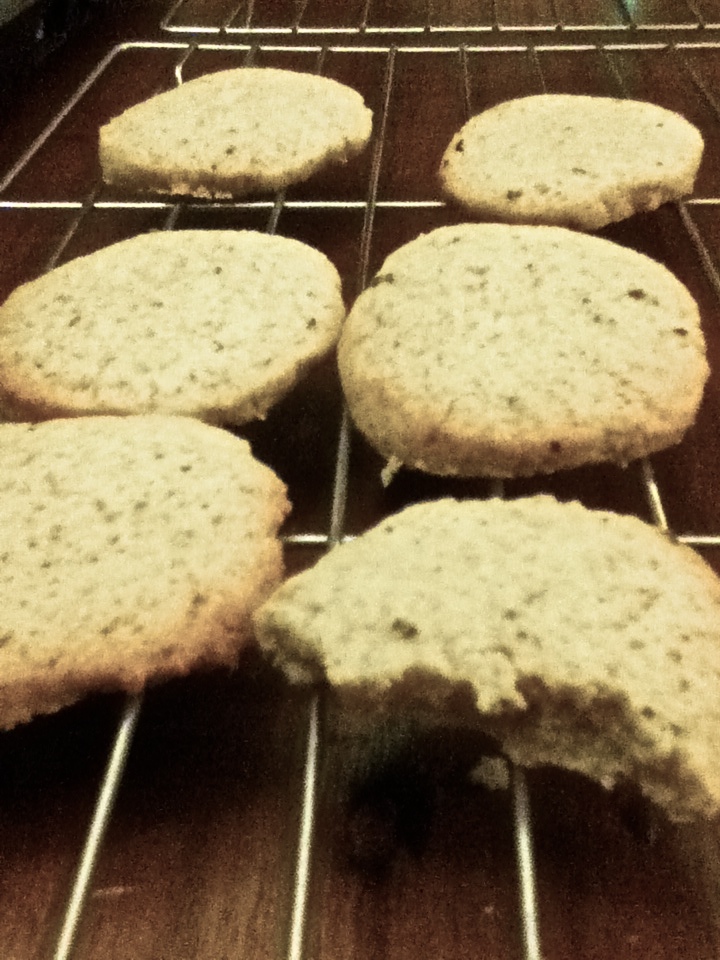
Bake for 6 – 10 minutes, until the edges are just starting to brown, and the cookies are firm to the touch. Cool on racks for a few minutes before devouring.

Enjoy and be inspired!

PS – forgive the blurry photograph, am still sorting through my luggage looking for my camera!

Molly O’Neill’s Blackout Cake

8 Aug

Molly O'Neill's blackout cakeI am on a mission – to find the blackout cake of my childhood. My sister and I had this amazing cake when we were little – it was served in the embassy where we grew up. We used to watch like hawks when it was served, to see if we could shave infinitesimal amounts off the cake to share. We always got a slice, but we always wanted more. Our mother used to order it in these large logs – and we had at least 2 or 3 as “back up” desserts in the freezer room downstairs. My sister and I used to dream of that cake … and when I realised that it was a form of blackout cake, I decided to test a few.

Last week, I made the blackout cake from The Week, by Jeremy Sauer from Cook’s Country. It was delicious but it lacked a certain something. It was too sweet, and I think too milky. The pudding was made with a cream/milk mixture, and while it was phenomenal, it wasnt the cake of my childhood and my memory. This week, I decided to try Molly O’Neill’s blackout cake from her book, The New York Cookbook: From Pelham Bay to Park Avenue, Firehouses to Four Star Restaurants.

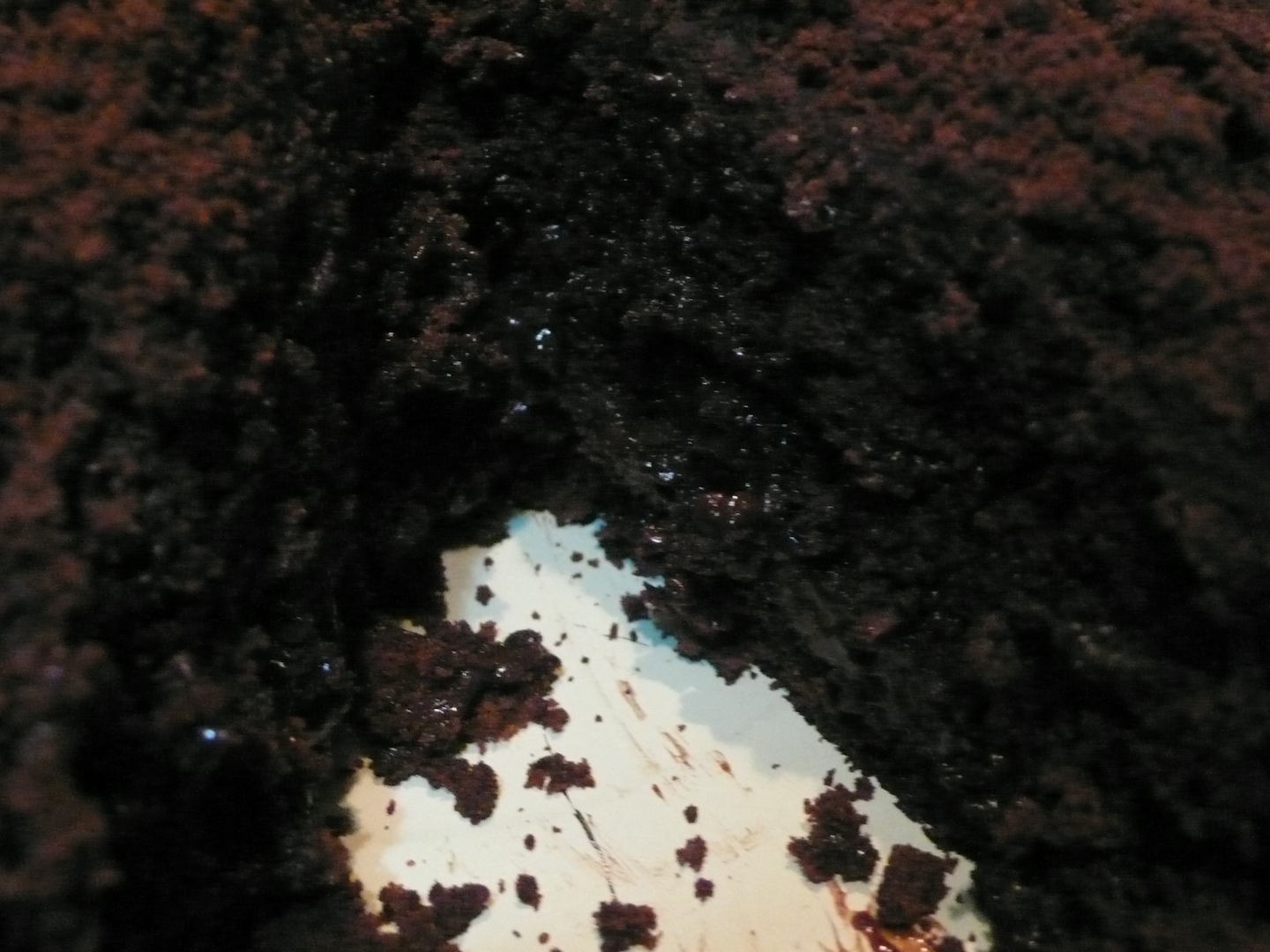
If last week’s cake was a chocolate extravaganza, this week’s cake was a chocolate obliteration. No milk, save for a little in the cake, and dark as a blacked out night. Seriously. The cake is so dark, that you can only tell its been cut if you look at it from the top. Its dark dark dark. It was overwhelming favoured by my taste testers – they loved the deep dark chocolate layers, the balance between chocolate and sweetness, and the textures of the cake, pudding, topping and crumbs. It is truly a phenomenal cake. It comes much closer to the cake of my memory, but I think it might need more of a touch of bittersweet – next time I make it I think I will adapt it with a bit of coffee.

As Ezril said, “Eating this cake is an intense experience!” Making it was pretty intense as well. I love baking, but this cake… so many different processes involved in creating all the layers, the custard/pudding and the topping. The cake itself not only creamed the sugar, and bloomed the chocolate and chocolate powder, but also needed whipped egg whites folded in. By the end, I was covered head to toe in flour, chocolate and butter. I could have baked myself! I learned an important lesson. Even though I read the recipe many times over, and I knew what I was in for, I think I would have been better served if I laid out my ingredients, measured them out, and then started to cook. As it was, there was a fair bit of chaos, and a fair bit of mess. Given all of that, it was worth it. Delicious, deep, dark chocolate cake, layers of pudding, a bittersweet glaze, and the rubbly texture of the crumbs on top. Wonderful and very very satisfying!

Molly O’Neill’s Blackout Cake

Cake

  • ½ cup unsweetened Dutch-process cocoa powder
  • 2 tablespoons boiling water
  • 2 ounces unsweetened chocolate, chopped
  • ¾ cup milk
  • 1 cup (2 sticks) unsalted butter, softened slightly
  • 2 cups sugar
  • 4 large eggs, separated
  • 2 teaspoons vanilla extract
  • 2 cups all-purpose flour
  • 1 teaspoon baking powder
  • 1 teaspoon baking soda
  • 1 teaspoon salt

Preheat oven to 190C degrees. Butter and lightly flour two (8-inch) round cake pans. Place cocoa in a small bowl and whisk in boiling water to form a paste.

Combine the chopped chocolate and milk in saucepan over medium heat. Stir frequently until the chocolate melts, about three minutes. Remove from the heat. Whisk a small amount of the hot chocolate milk into the cocoa paste to warm it. Whisk the cocoa mixture into the milk mixture. Return the pan to medium heat and stir for one minute. Remove and set aside to cool until tepid.

In the bowl of a mixer, cream the butter and sugar together. Beat in the egg yolks, one at a time, and the vanilla. Slowly stir in the chocolate mixture. Combine the flour, baking powder, baking soda and salt. Using a spatula or a wooden spoon, slowly add the flour mixture to the chocolate mixture. Fold in until just mixed.

In another bowl, whisk the egg whites until soft peaks form. Using a spatula, gently fold the egg whites into the batter.

Divide the batter between the prepared pans. Bake until a toothpick inserted in the center comes out clean, 45 minutes. Cool the cakes in the pans on rack for 15 minutes.

Gently remove the cakes from the pans and continue to cool.

Note: in my oven the cakes only took 30 minutes to bake. Check after half an hour as timing and heat can vary widely.

Filling

  • 1 tablespoon plus 1 ¾ teaspoons unsweetened Dutch-process cocoa powder
  • 2 cups boiling water
  • ¾ cup plus ½ teaspoon sugar
  • 1 ounce bittersweet chocolate, chopped
  • 4 tablespoons cornstarch dissolved in 1 tablespoon cold water (use 2 tablespoons cornstarch for a runnier filling*)
  • ¼ teaspoon salt
  • 1 teaspoon vanilla extract
  • 2 tablespoons unsalted butter

While the cake is baking, combine the cocoa and boiling water in a small saucepan over low heat. Stir in the sugar and chocolate. Add the dissolved cornstarch paste and salt to the pan and bring to a boil, stirring constantly. Boil for one minute. Remove from heat and whisk in vanilla and butter. Transfer the mixture to a bowl, cover and refrigerate until cool.

Note: I added 100 g chopped bittersweet chocolate to this filling as I felt it was not chocolatey enough. I added it just before adding the cornstarch paste. I used the maximum 4 tbsp cornstarch, and it was just fine. I also sieved the pudding to make sure there were no lumps.

Frosting

  • 12 ounces semisweet chocolate, chopped
  • 12 tablespoons (1 ½ sticks) unsalted butter
  • ½ cup hot water
  • 1 tablespoon light corn syrup
  • 1 tablespoon vanilla extract

Melt the chocolate in a double boiler over hot, not simmering, water, stirring until smooth. Remove the top of the double boiler from the heat and whisk in the butter, one tablespoon at a time. Return the top to the heat, if necessary, to melt the butter.

Whisk in the hot water all at once and whisk until smooth. Whisk in the corn syrup and vanilla. Cover and refrigerate for up to 15 minutes before using.

Assembly

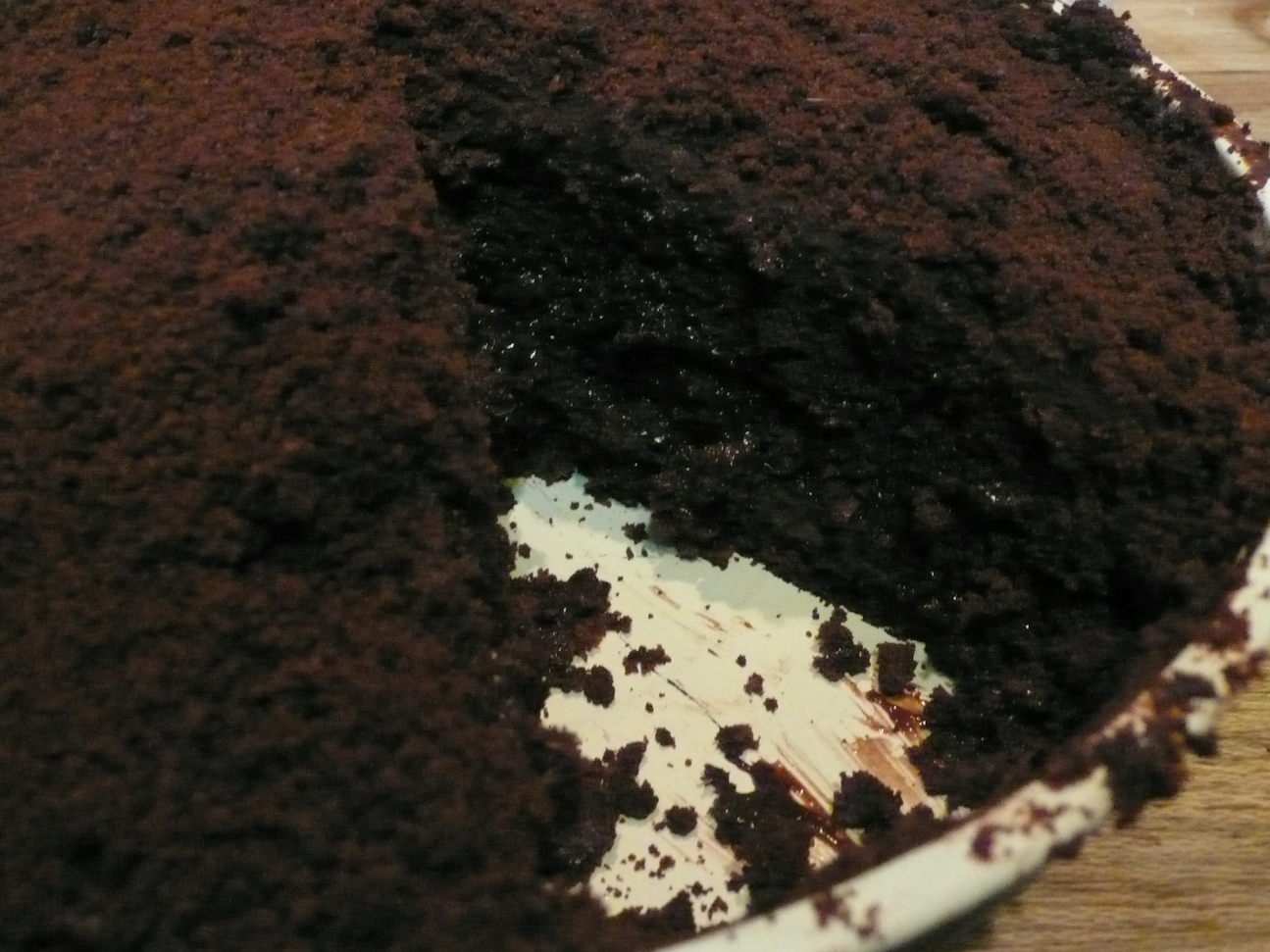
Black Out Cake SlicedUse a sharp serrated knife to slice each cake layer horizontally in half to form four layers. Set one layer aside. Place one layer on a cake round or plate. Generously swath the layer with one-third of the filling. Add the second layer and repeat. Set the third layer on top. Quickly apply a layer of frosting to the top and sides of the cake. Refrigerate for 10 minutes.

Meanwhile, crumble the remaining cake layer. Apply the remaining frosting to the cake. Sprinkle it liberally with the cake crumbs. Refrigerate for at least 1 hour before serving.