Tag Archives: vegetarian

Rendang Potatoes!

4 Sep

DelectableI have long mourned the loss of rendang from my life as a vegetarian. My sister, too, says that the one thing she might consider eating meat for again is rendang. For those of you who dont know this food of the Goddesses, here is the definition of rendang from Wikipedia:
Rendang is made from beef (or occasionally chicken, mutton, water buffalo, duck, or vegetables like jackfruit or cassava) slowly cooked in coconut milk, spices and sometimes kerisik (toasted coconut paste) for several hours until almost all the liquid is gone, allowing the meat to absorb the spicy condiments. The cooking process changes from boiling to frying as the liquid evaporates. The slow cooking process allows the meat to absorb all the spices and to become tender. The spices may include ginger, galangal, turmeric leaf, lemon grass and chillies.

Its as good an explanation as any … rendang is difficult to explain, because its kind of curried, but not really. But once you eat it, it can become obsessional. Each state in Malaysia has a different kind of rendang, and we grew up eating Rendang Tok from our Dad’s home state of Perak. We of course consider that the height of rendang. But to be honest, since we both became complete vegetarians, any kind of rendang would be most welcome.

One of the reasons I love cooking is that inspiration comes from strange places. I have often wondered how to translate rendang into a vegetarian dish that was easily accessible. Jackfruit and cassava are not available here in the US, at least not easily, and so … I was looking at the potato gratin I made the other night, and marveling at the alchemy which turned the milk and cheese into a gooey sticky lovely binding for the potatoes, and suddenly, I thought, oooh. What if I put a rendang sauce together with boiled potatoes and roasted the whole thing in a high oven? I think I might be on to something…

So today, when I had quite a bit of time to potter about the kitchen, I decided to make rendang potatoes. I served them with rice and a beautiful mixed vegetable curry, which got quite a bit of sweetness from sugar beets and artichoke hearts and stems. The potatoes were spicy, salty, crispy and gooey with rendang paste. They were phenomenally good.

If you have access to a great market, try and make your rendang sauce from scratch. I give you below a basic recipe for rendang sauce that you can then treat as I do to prep it for the potatoes. If you dont have access to a good market, do as I did. Buy rendang sauce, jazz it up a bit, and boil it down until it is very very dark and very syrupy. Mix it with boiled potatoes, add a bit of olive oil or peanut oil, and roast until the rendang sauce becomes a paste, coating and loving those gorgeous crispy potatoes. Heaven.

For rendang sauce

I used 1/2 bottle of Rendang Sauce from World Market. I mixed it with:

  • 1/2 can thick coconut milk
  • 1 tsp cinnamon
  • 1 tsp tumeric
  • 1 tsp salt
  • 3 tsp toasted sesame oil
  • 1 tsp light brown sugar
  • 1/2 tsp honey
  • 1 tsp grated fresh ginger
  • 1 tsp grated fresh garlic
  • 1 tsp paprika
  • 1 tsp red chili flakes
  • 1 stalk of lemongrass, smashed

Boil this concoction in a saucepan over medium high heat for at least 30 minutes, mixing often. You might need up to an hour. The mixture will turn from light brown to a deep dark chocolate brown, and will reduce by up to 3/4ths. This is very very good. Taste and adjust seasonings. Once it is ready, fish out the lemongrass stalk, and set aside and prepare your potatoes.

If you are cooking the rendang sauce from scratch, you will need:

  • 2 – 5 fresh red chilis, seeded and chopped
  • 3 dry red chilis
  • 2 inches galangal root (a type of Asian ginger), peeled and chopped
  • 1/4 red onion, chopped (or 3 shallots, chopped)
  • 5 cloves of garlic
  • 1 inch ginger, peeled
  • 1 stalk of fresh lemongrass, smashed
  • 1 tsp fennel powder
  • 1 tsp cumin powder
  • 1 tsp tumeric

Create a paste from these ingredients in a food processor. Add a tiny bit of water if you need it, but you shouldnt really. Set aside.

  • 4 -5 tbsp olive oil mixed with peanut or toasted sesame oil (about 50/50)
  • Spice paste as above
  • 1 stick cinnamon
  • 2 cloves
  • 2 star anise
  • 1 tbsp tamarind pulp (mixed with water and deseeded)
  • 1 stalk of lemongrass, smashed
  • 7 kaffir lime leaves, thinly sliced
  • 1 tsp white pepper
  • 1 – 2 tsp light brown sugar, or palm sugar if you can get it, to taste
  • 2 cups thick coconut milk
  • 1 – 2 cups dried grated coconut, toasted

In a large saucepan, over medium high heat, heat the oil, and fry the spice paste until it becomes fragrant, and begins to separate from the oil. Add the rest of the spices, sugar and coconut milk . Mix well, and allow the mixture to boil until it is reduced by at least half. This can take up to an hour, and should be done on medium heat. Drain out the spices, and return the mixture to the heat. Add the toasted coconut, and continue to simmer the mixture until it is very thick and dark glossy brown, probably a further 30 – 40 minutes. Taste and adjust seasonings if need be. Proceed with the rest of the recipe.

Assembly

  • 1 1/2 lbs (about 3 kg) potatoes, sliced. I used fingerling potatoes, and left the skin on.
  • Salt and pepper to taste
  • Rendang sauce
  • 2 tbsp olive oil

Preheat your oven to 200 C

Boil the potatoes in salted water until they are just soft. A fork should be able to pierce one with little effort. Drain, and tumble the potatoes into a casserole dish that should fit them quite evenly. Its okay if they are crowded, but you dont want them in big layers – they will steam rather than roast.

Pour the reserved rendang sauce over, and stir to cover. Make sure every last potato has been totally glazed in the sauce. This is important, so take your time. Taste, and adjust salt and pepper if needed. Pour over the olive oil, and roast in the oven for at least 30 – 40 minutes, or until the potatoes are quite crisp, and the rendang sauce has reduced further to a thick dark brown paste.

Serve and get ready for people to go into paroxysms of joy.

The Elements of a Perfect Salad

3 Sep

Summertime, and the living is easy … Every time I get an urge to make a salad, I hear that song singing in my head. I never used to like salads (strange for a vegetarian, I know!) but that was because I grew up in the olden times when salad was iceberg lettuce with some washed out supermarket tomatoes. These days, salads are a whole different creature. They are sumptuous, delicious, delectable and can serve as an entire meal.

Dont get me wrong, I have learned to love side salads too – I think there is much to be said for the perfect accompaniment to say, mac and cheese, or pasta … where a salad needs to be fresh, sparkling, with a few key ingredients that will highlight and compliment the meal. But what I am thinking about here is a salad that is an event. A salad that stands on its own, and is immensely satisfying. When I go to non-vegetarian potlucks, I often bring the salad. I usually find that even the carnivores want more!

Here, then, are my nine elements of a really perfect salad, one that will create for you a fearsome reputation as a master salad maker.

Theme

Decide on one theme and stick to it! Salad is ripe for interpretation, and for creativity, but just as with any meal, a mishmash of ideas and thematic flavours will muddy and confuse the eater. Decide on the direction in which you want to go, and let your imagination flow from there. An Asian inspired salad could have mung bean sprouts, sesame seeds, and a rich soy honey dressing. An Indian-Asian inspired salad could have a curry mayonnaise dressing, green beans, potatoes and possibly cubes of grilled paneer. A breakfast salad could have poached eggs in it, along with toasted brioche croutons, and may be some roasted tomatoes. You get the idea…

Remember though that its important for you to depend on your sense of taste and balance when deciding on where you want this salad to go …And think very carefully about each ingredient you add. You will know if there is dissonance. I often write down exactly what I am thinking of putting in a salad. Sometimes an ingredient just jumps out at me and says, Wrong! Even if I am really craving that thing, I trust my instinct and judgement about how things will go together, and I usually take that element out, or serve it on its own. If you are making an Asian inspired salad, dont add parmesan cheese – it just does not go well! But a banana or pineapple might. If you are making an Italian salad, then may be you should think twice about having soy basted tofu as your main protein.

Your whole meal does not have to coordinate around a singular theme, but your salad should definitely incorporate elements that naturally go together. Dont try and stuff ten different vegetables together, that have no complementary value, and call it a salad. No one will believe you, and no one will eat it!

Green

While I do love a simple salad of chopped tomatoes and avocado, or a roasted potato and garlic salad, most salads in my estimation have to begin with green leaves. My green of choice is baby arugula (rocket ) – I love love love it. I love the peppery taste of it – it is substantial if you know what I mean. I love how it stands up to most anything you throw at it. But, if arugula is not available (or I am serving arugu-phobes), I also love raw baby spinach. Baby leaves of any kind are usually a good bet – they are infinitely tender, and their taste is clean and sweet. Play around with green – and if you like, add a few surprises, like some chopped basil leaves for a change of taste.

And if you know a farmer, or have your own garden, whatever green there is, use. My wonderful organic delivery guy back home delivered lettuce picked from his crop that day. I stood in the kitchen, and ate the lettuce as is, it was so beautiful. Go with your taste, and go with what is freshest. But add green!

Also, make sure the leaves are impeccably clean. Even if the package says its been cleaned already, clean it again. I read somewhere that there is more bacteria in a washed packet of lettuce than in an unwashed bundle. Just clean the leaves – it doesnt take long. I usually immerse the leaves in cold  salted clean water. The salt will make sure any little bugs left living in the leaves are encouraged to let go 😉 I swish them around in the water and make sure that any grit or dirt is rubbed off. One of the best investments of my life is a salad spinner – you can get a cheapo one from Ikea for a few bucks, and a fancier, but far sturdier one is made by Oxo. Whichever you choose, spin those leaves like your life depended on it! And then spin again! My nephews love to help to “cook” by spinning the salad leaves. Its a nice way to incorporate non cooks in the cooking process 😉 The leaves will be very crisp and dry once they have been spun a couple of times… wrap them in a clean kitchen towel or paper towels, and refrigerate them until you are ready to put the salad together (which really should be just before you serve it).

Protein

I like to have a little protein in my salads, especially as a vegetarian. There are so many lovely things to choose from – garbanzo beans add a creamy richness, seasoned baked tofu adds meatiness, quinoa adds nuttiness, as do any variety of nut (from pine to almond to cashew to macadamia – which happens to be one of my best), eggs add a silky quality, and shavings or cubes of cheese (parmesan and cheddar are my favourites) are always welcome.

I think its important to think about proteins when you serve a salad as a main course, but think carefully about what kind of protein you will use, and also if there is protein in your dessert or starter. If so, you dont need to get too het up about big amounts of protein in your salad.

I think protein adds a certain heaviness to a salad which is good. Most people think that eating salad leaves you starving. If you have a reasonable amount of protein in your salad, this can be a very filling and fulfilling dish.

Sweet

I love adding an element of sweetness to my salads. People like that surprising contrast of flavour, and they often dont expect cubes of apple or caramelised macadamias to make an appearance. But once they have a taste of that sweet juxtaposition, they often hunt for more! Sweet can come in lots of different ways – tomatoes are actually a fruit, after all, and carrots have a sugary sweetness all their own.

I usually only add one dedicated sweet element to a salad, but I try and think of something really delectable to add this sweet element. Beautiful juicy grapes are often very popular, and creamy pears are surprisingly refreshing. Roasted beetroot or butternut caramelise in their own juices and add colour as well as sweetness to any salad. I have added chunks of sesame brittle to a salad with great success. Raw corn is another great addition – if it is really fresh, its incredibly sweet, and absolutely delicious. But dont go overboard! Just one thing – and make it good!

Balance, Texture and Contrast

These to me are the most important elements when thinking about your salad. How does each ingredient juxtapose against the other? Are you getting juicy, crunch, soft, sweet, savoury, salty, bright, sparkly, rich, creamy, fresh, bitter, sharp? You need to have contrast when eating a major salad, otherwise it gets boring, and quickly. Carrots and avocados and roasted onion are very different from one another, but bound together by a beautiful dressing, they contrast in texture, but are balanced on the palate.

Boring salads, in my opinion, are salads where everything feels the same in the mouth. Salads made of soft ingredients – eggs, peas, boiled potatoes, avocado. These all have the same textural patterns, and they can totally negate each other simply by their similar mouth feel. Dont get me wrong. Sometimes, at a family meal when everyone is tired, or when eating with a baby 😉 … there is a place for texturally alike foods. But I love contrast. I love the crunch of a crouton against the juiciness of a ripe tomato. I adore the toasty rich nuttiness of sesame seeds coating the crisp snap of a green bean. Its why I always incorporate something sweet into my salads… it contrasts with the main players, but at the same time adds a much needed balance to the dish.

Also, think about how you are going to present each ingredient. A raw mushroom is very different from a sauteed one. Raw corn totally contrasts with roasted corn, rubbed with soy. A fresh juicy tomato is completely distinct from a sun dried tomato dripping with olive oil. Sometimes its fun to add the same thing but in different incarnations. This is contrast, balance and texture, and its also an intelligent way to challenge and engage the people you are serving.

Salads are compositions. Think of your salad as a work of art, a symphony, a play, a beautiful poem. The elements must be different, and yet work together as a whole. Go with ingredients that on a singular note may be beautiful, but a tad boring, but joined with other ingredients, will really sing.

Exotic or Special

When you say salad most people cant resist yawning, or rolling their eyes sadly. Salads are much maligned, but really, shouldnt be. There is so much room to play in a salad, and to that end, I often try and introduce something exotic or special into my salads. When I cook, I want to celebrate the people I am eating with. I want to honour them, amuse them, and satisfy their senses.

I often try and incorporate an exotic or special element into my salad. This could be as simple as using truffle oil in the dressing. Shaved truffles in the salad would be nice, but unfortunately totally out of my price range! Sun dried tomatoes are exotic to some, but commonplace to others. Remember who you are serving, and think about what they like – what they would consider a treat, something special. Or, conversely, think about what would surprise them in a salad – what they would find unique or exotic.

In Malaysia, strawberries and avocados are very expensive, as are nuts like pine nuts or macadamias. Pomegranate seeds are gorgeous visually, and often considered very exotic. Good parmesan is like gold. Putting one of these ingredients in a salad makes it feel like a celebration – a special meal, and for many, makes the salad much more exotic. Conversely, in America, adding star fruit or guava, cubes of papaya or slivers of rambutan, adds a certain exotic deliciousness to the salad.

Sometimes, it can be as simple as thinking about what your eaters really love. If I know my sister will be eating the salad, I often put sprouts in it. She is crazy about them. Another friend adores sun dried tomatoes. When I cook for her, my salads always incorporate them. The special doesnt have to be exotic or expensive… it can be as simple as knowing the person youre serving, and making sure her favourite flavours and tastes are represented.

Presentation

Not only do you need to think about colour and texture, but you need to think very carefully about how you will present your salad. Is everyone going to serve themselves from a communal bowl (thats how I usually do it) or are you going to present every person with a plated salad, composed like a still life water colour? Is everything going to be cold, or is there something you will cook at the last minute to add textural heat to the dish? Are you going to dress the salad first, or allow each person to dress the salad themselves (my preferred option is the latter). What kind of plates, or bowls are people going to use to eat the salad? Knives and forks? Spoons and forks? Sitting down at a table, or on the ground outside at a picnic, or gathered around the tv? Is the salad going to arrive in a big bowl, jumbled together, or laid out on a huge plate, layered in an artful arrangement? Or do you have a big glass bowl, like a trifle jar, that you can literally layer each element of the salad in, and get gorgeous stripes of colour?

How the salad will look when it is served is really important. If everything is cut the same way (whether that way be cubed, strips, or melon balled), you will have one very clean visual pattern, even if everything is a different colour. But if things are jumbled, or roughly chopped, then the salad will “feel” different. Sometimes, I feel like everything should be green and yellow and white … all similar colours, but with markedly contrasting flavours and textures. Other times, I want a riot of colour – I throw in edible flowers, and try and find  lots of different colours to create a merry riot. It depends on what you feel like, but take a moment to think about how your salad will look. Its important because people eat with their senses, and they see it first and foremost.

Think about what you want to convey when you serve the salad, and how people are going to eat it. Think about if may be serving a crusty warm loaf of bread alongside to mop up the juices would be a good idea, or if you need some other element to complement it.

How you present your salad is definitely one of the most important ways to ensure that people enjoy eating it. So give it some time and thought, and then compose!

Freshness and Limits

I have linked these two elements together because they really are about the shopping experience. I have often made a list for a salad, and gone to the market only to find that the tomatoes are completely ugly and insipid looking. Or all the avocados are rock hard or pulpy. If you have a theme in mind, you should be able to quickly find and figure out a substitute. Freshness is key in a salad because most of the ingredients you serve will be raw. If you had to choose between tender perfect figs and overripe mushy pears, choose the figs, even if the pears are your favourite. Be open to the market – be open to finding a gorgeous gem that is unexpected or not on your list. Add it if it adds value to your salad, and drop what is not of absolute perfect quality.

If freshness is key to a beautiful salad, so are limits! I have served a salad with 20 ingredients, and to be honest, its as muddy and horrible as if I were to serve lettuce leaves, and only lettuce leaves for dinner. Too much is overkill, and instead of contract, juxtaposition and texture, you will short circuit your eaters sensibilities. Try and limit your salads to 7 – 9 key ingredients at the max, though less also can. More than that, and I find its too much. Like a baby when it gets overstimulated by too much colour or too many games or too much music, an overloaded salad just makes me want to lay down and cry.

Your Own Signature Dressing

Spend a little time, and make your own salad dressing. All this though, cutting, chopping, shopping, tasting, texturalising… and you pour on a mass market made dressing? Are you kidding? Salad dressing takes almost no time to make. Its as unique as your signature, and can elevate a salad into the sublime.

Have a few salad dressings under your sleeve. I make a killer Asian dressing. I have a varied number of ingredients I use for it, and its never quite the same each time, but it does have a few basics, and its amazing. Its so good, you could literally eat it out of the jar with a spoon. People ask me for the recipe, and I always give them an outline … but they say it never turns out the same. Well, it never turns out the same for me either, but I know what I want it to taste like at any given time!

Salad dressing is easy to make ahead, and it is what ties everything together in your salad. If you make your own blue cheese buttermilk dressing, I promise you, it will be a hundred times better than anything you can purchase at the store. Even a basic balsamic and olive oil dressing can be elevated with a few fresh herbs, or a spark of fresh lemon juice. And it will be your signature, your hallmark, an expression of your creativity.

Please, if you want to be a salad master, make your own dressing!

Hopefully these few guidelines will make you think about salad in a new way. Its one of the great joys of life, one of the remarkable treats of summertime – a wonderful salad to share with those you love.

Potato Gratin with Artichoke, Mushroom + Spinach

2 Sep

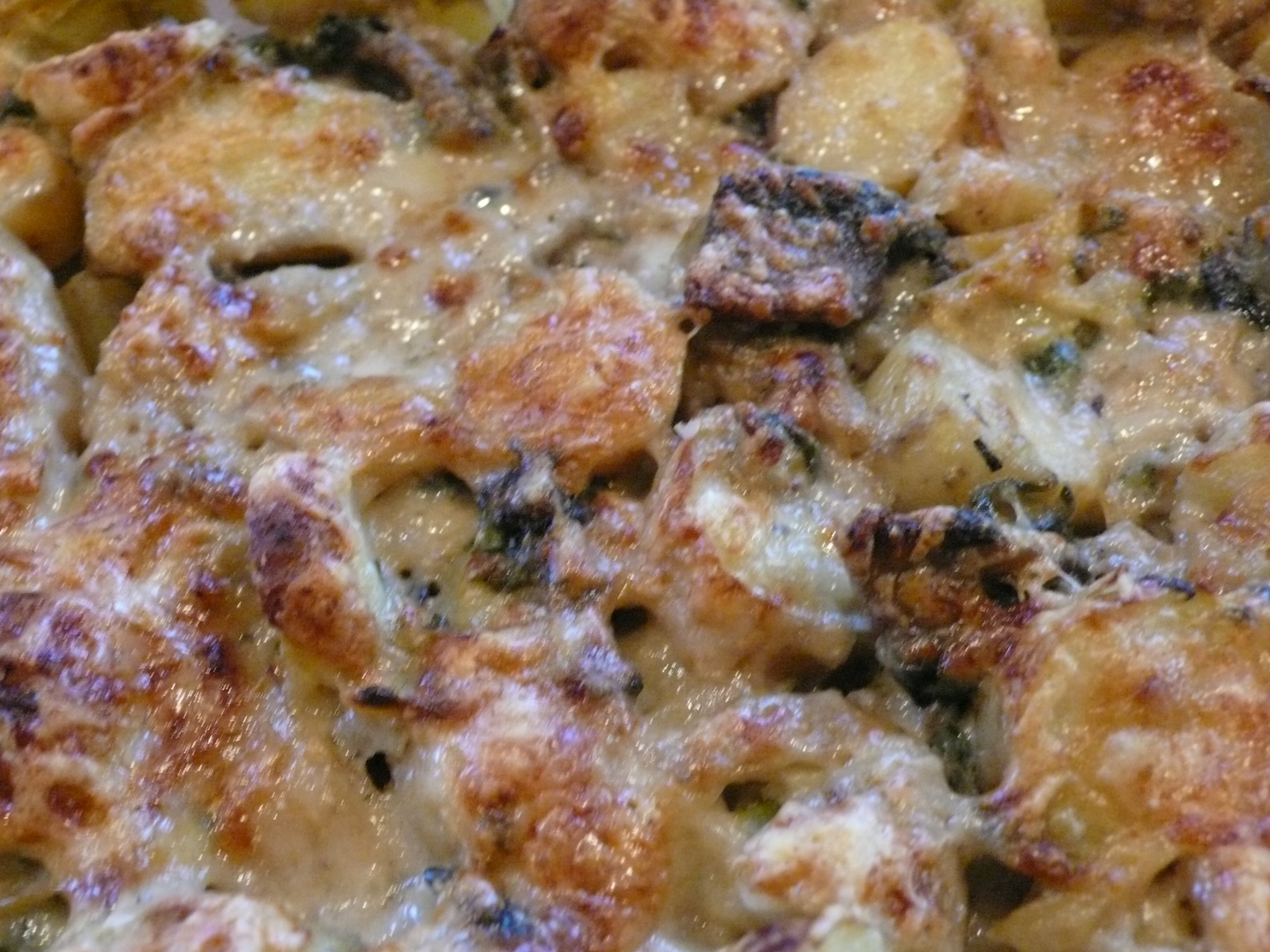
With VegetablesToday was full on all the time. It never let up and it never stopped. M came home at 6, after a crazy work day, and the beautiful baby Z was done. M went up to put her to bed, and I knew that she would be downstairs within an hour, ready to eat something before falling into bed herself. I wanted to cook something that would be simple, warm and most of all, give us all some comfort. I came up with this potato gratin, using baby fingerling potatoes, with artichoke hearts, mushroom and spinach. It was good and simple, easy going down, and felt like a big hug.

Just note that if you want, you can use coconut milk or almond milk, though Im not too positive that they will be great substitutions for a vegan diet. I read in a book the O sisters gave me for my birthday about whizzing up raw cashews and using their milky goodness in place of cream, but to be honest, tonight was one of those nights where I just couldnt think of vegan … we needed the proteins from the milk and cheese, and I needed to be able to pull it all together in under an hour.

I put no spices, garlic, onions or flavourings into this dish. I wanted the vegetables to speak for themselves, and I wanted it to be a calming, tasty but not aggressive dish, because sometimes, during very tiring days, we just want softness and stillness.

I succeeded, and the best compliment was my sister, hugging me, and telling me how happy she was to come back, from such a hard day, and have a home cooked meal waiting for her. This is what cooking is about – loving and supporting and comforting your family and friends, in a way that is fleeting but whose sayang is always remembered.

This will serve 4 as a main course. Leftovers are really good the next day, chopped up, pan fried and served with an egg for breakfast!

  • 1 – 1 1/2 lbs baby potatoes (I used baby fingerlings), chopped
  • Salt and pepper for seasoning
  • 1 tbsp olive oil
  • 1 tsp truffle oil
  • 1/2 cup mushrooms (I used 1 large portobello), peeled and sliced
  • 1/2 cup fresh baby spinach, sliced fine
  • 1 cup milk (I used low fat)
  • 1/2 cup artichoke hearts (or asparagus or peas – something green is good)
  • 1/4 cup + 1/4 cup grated parmesan (or other cheese to your liking)

Preheat the oven to 200 C. Slice the potatoes into a large pot, cover with water, add salt, and bring to the boil. Keep simmering until the potatoes break when crushed by the times of a fork – about 25 – 30 minutes.

While the potatoes are simmering, heat the oils in a frying pan, and saute the mushroom until it starts to colour a bit and burn around the edges. Add the spinach all at once, and allow it to wilt. Once the spinach has softened, add the milk, and season with salt and pepper to taste. Let this mixture simmer for a few minutes, or until the milk has just thickened a bit. Add the artichoke hearts and mix well, and then add 1/4 cup parmesan. Set aside.

Once the potatoes are done, drain them, and then tumble them into a small baking pan. Pour in the sauce and mix well. Taste for seasoning and adjust.Sprinkle the remaining parmesan over.

Bake in oven for at least 10 – 15 minutes. You will see the liquid becoming absorbed by the potatoes. Switch your oven to broil, and allow the gratin to brown for a few minutes before serving.

Enjoy the love and hug of this complete comfort meal.

Tomatoes + Garlic +Quinoa + Spinach

1 Sep

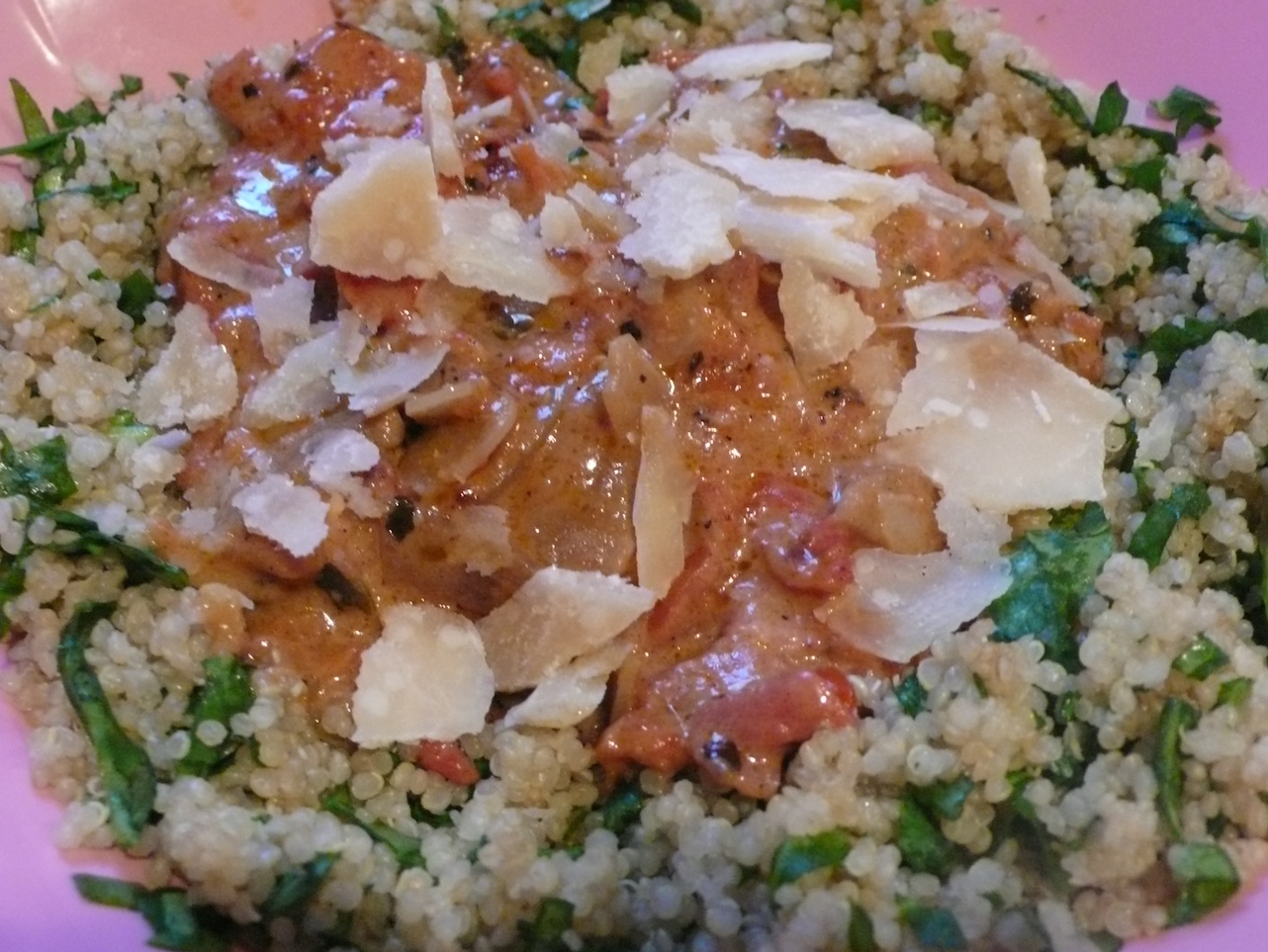
Spinach + QuinoaToday was yet another eventful day – our mother left, and by the end of the day, we were all really tired. We needed a quick meal, but I wanted something delicious. Something that would be comforting and yet incredibly fresh. Nothing too heavy, but definitely delectable, lip smacking, delicious. I decided to lightly saute some garlic until it was soft, mix it with some burstingly fresh tomatoes, encourage the sweet sweet sauce with a lick of cream. Mix that up with some protein rich quinoa and fresh spinach. A meal that is a balm on the senses – pretty, delightful and happy making.

Because its summertime, the tomatoes are so luscious I cannot even begin to describe them. The smell of them is heady, almost perfume-y. Their juices dribble and drip as soon as they even see a knife. I did not really want to do much with them – certainly not cook them for too long. I wanted that fresh tomato taste to be honoured and respected. I managed to ensure this by cooking them only briefly, and mixed in a little bit of cream for richness. If you are vegan, you dont have to use cream – add some soy or almond milk if you want, or just leave the tomatoes without cream.

I chose quinoa because of its high protein content. I chopped fresh baby spinach fine, and as soon as the quinoa was ready, I mixed the hot quinoa with a teaspoon of butter and the spinach. It wilted the spinach, and added a pure green flavour to the quinoa, a lovely contrast to the richness of the tomatoes. This meal was really good! We finished everything and as I write this, the house is quiet, happy and satisfied. Exactly right 🙂

This recipe will serve 4 people, and can be adapted to be vegan

Tomato + Garlic

You can serve this sauce with pasta, quinoa, couscous, or even on toast – its fresh, easy and delicious

  • 1 tbsp olive oil
  • 1 tbsp truffle oil (if you have it – it adds a depth of flavour)
  • 4 – 6 cloves of garlic, thinly sliced
  • 1 tsp dry basil
  • Salt and pepper
  • 1 – 2 tbsp balsamic vinegar
  • 2 cups ripe tomatoes, chopped
  • 1/2 tsp light brown sugar (optional)
  • 3 tbsp heavy cream (or soy or almond milk if you are vegan)

Heat the olive and truffle oils in a medium non stick pan, over medium high heat. Turn the heat to medium low and saute the garlic in a single layer for about five minutes or more. You want the garlic to soften and infuse the oils. This also enables the garlic to cook off its bitter taste. You will have that lovely hit of garlic, but without the sharpness.

Sprinkle the garlic with basil, and liberally season with salt and pepper. Raise the heat to medium high and drizzle the balsamic over. Add the tomatoes, and cook them long enough so that they release their juices. Taste. You may need a little bit more salt and pepper, or you may need to enhance the natural sweetness of the tomatoes with a little bit of sugar. The fresh late summer tomatoes I used were so sweet I didnt need any sugar, but trust your instincts. This sauce should be sweet with tomato-y juices.

Add the cream if you decide to use it, and let it cook down and reduce over low heat for a few minutes. Set the sauce aside while you prepare the quinoa.

Quinoa + Spinach

  • 1 cup quinoa
  • 2 cups water
  • 1/2 tsp salt
  • 1 tsp butter
  • 1 cup baby spinach, chopped fine

In a small saucepan, mix the quinoa with the water and 1/2 teaspoon of salt. Place on high heat, and allow to come to the boil. Lower heat so that the quinoa is at a simmer, and cover. Simmer for 20 – 25 minutes until the quinoa is cooked through, and all the liquid has been absorbed.

As soon as the quinoa is ready, spoon into a serving platter. Cut butter over the quinoa, and using a spoon, mix in well. Taste for salt, and adjust. Mix in the fresh spinach and mix well. The spinach will wilt just a little bit and flavour the quinoa.

To Serve

Spoon the tomato + garlic over the quinoa + spinach, and, if you want, scatter a few parmesan shavings over the top. Serve at room temperature. Delight in the freshness of summer!

The Best Blondies

31 Aug

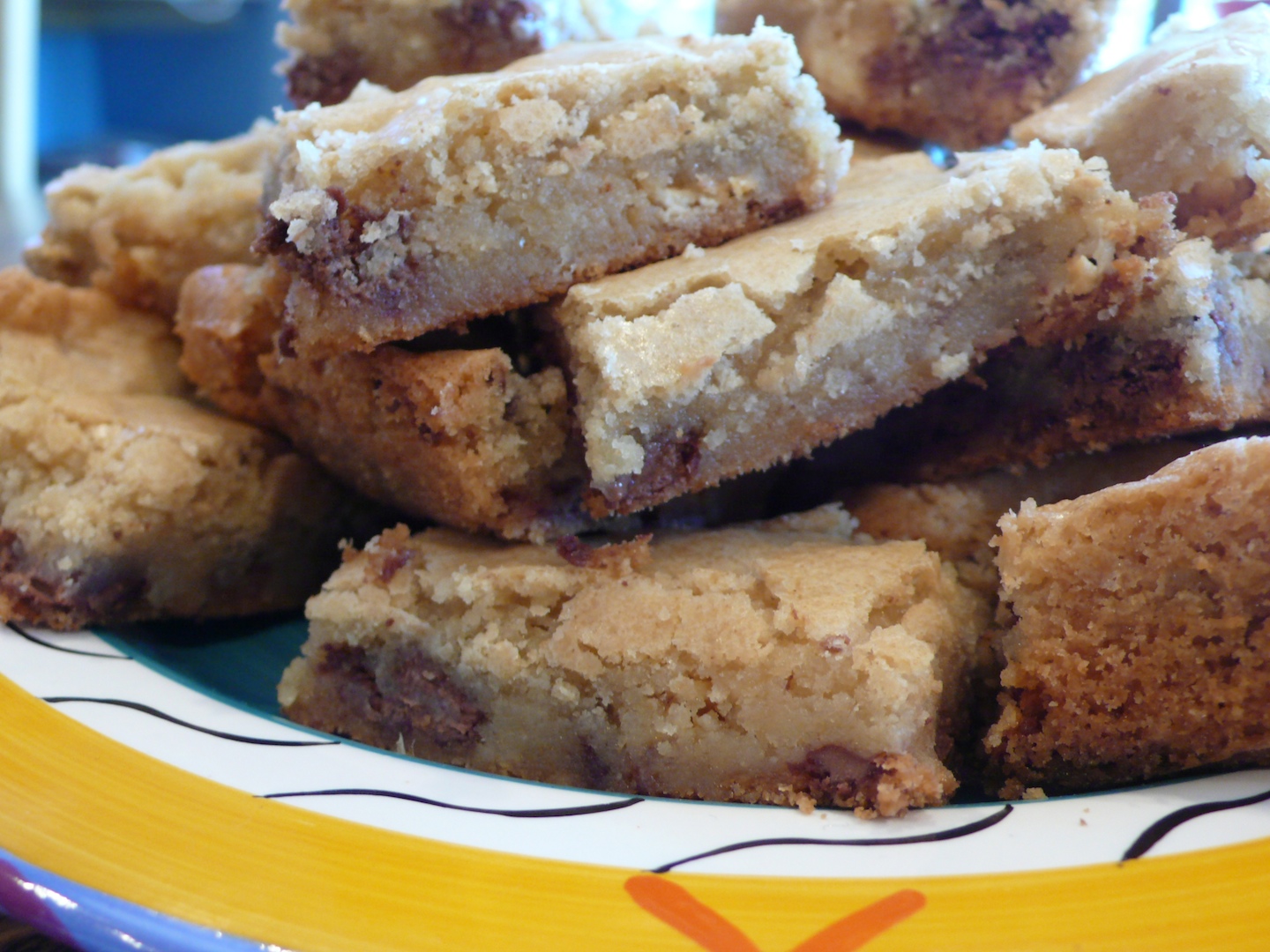
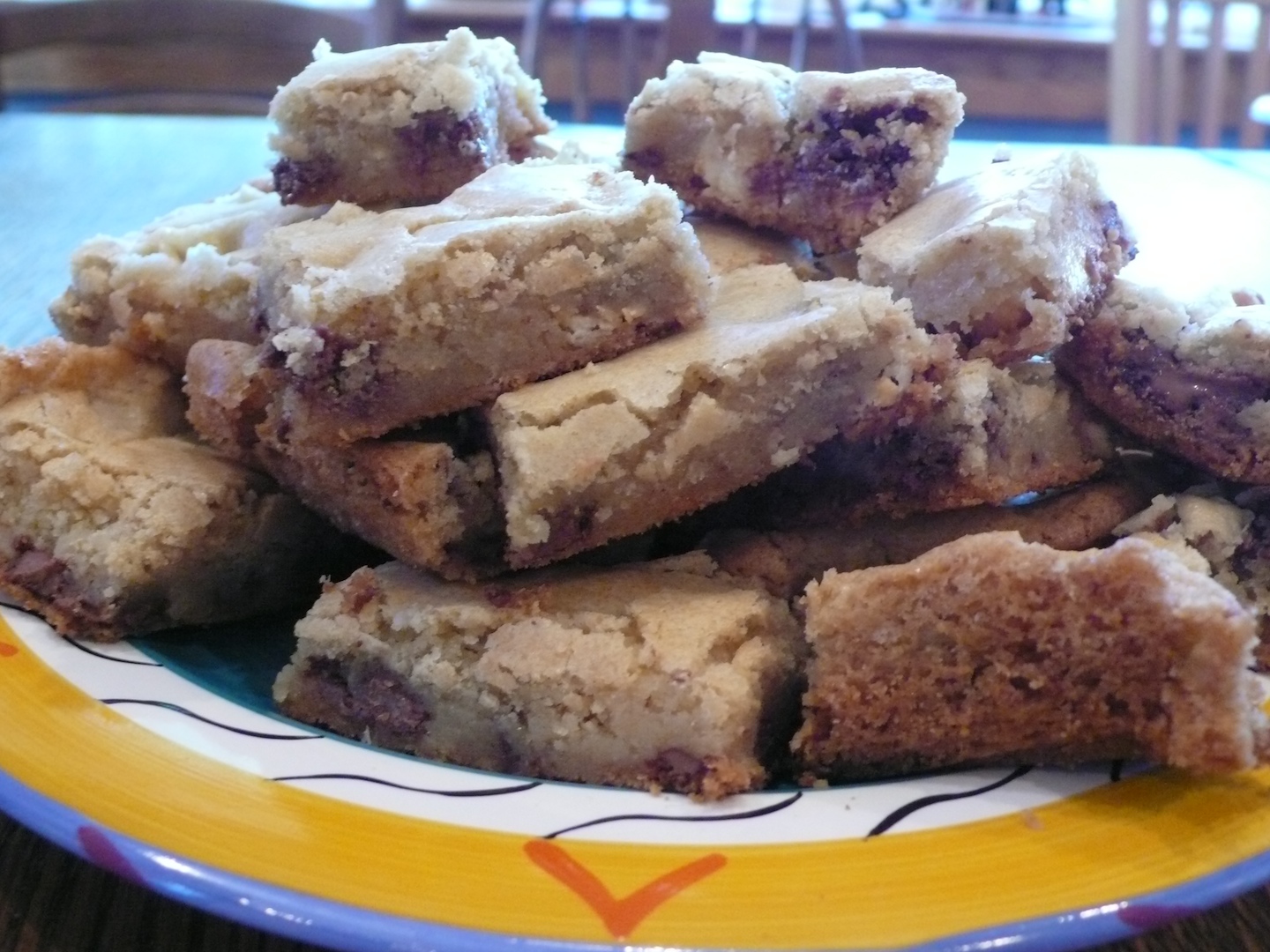
utter perfectionThis is my 100th post! Hooray! I never thought I had the discipline or the strength of purpose to actually commit to sit down and write a recipe a day, no matter what is happening or where I am. I have to say, I am impressed with myself 😉 Long may it continue 🙂 Today, in celebration of this personal milestone, I decided to try a new recipe. I love blondies. I am not so hot on brownies to be honest. They are too overwhelming – that mix between fudgy and crusty, and intense intense chocolate. I dont know what it is, but I like chocolate in almost all ways, but brownies are probably 100th on the list (keeping with the 100th theme!)

But blondies are another story entirely. Studded with chocolate, but not overwhelmed by fudge dough, blondies are chic brownies – brownies with an edge. I used Callebut white and milk chocolate here. Chopped it into chunks and mixed it with a caramelised vanilla batter. It baked shiny and crispy, with edges that were brown and crunchy, but with interiors that were the best of melted chocolate and soft vanilla cookies. Sooo good. Delicious, delectable, and amazingly easy. It took me about 20 minutes to put everything together, and another 20 – 25 to bake. Do not overbake these! They need to be cooked (and when you stick a knife in, they can be squishy, but not liquid), but if you overbake, they will get stone hard and yucky.

I adapted these blondies from a recipe on the Cook’s Illustrated website. I dont do nuts with my sweet baked goods (well on very rare occasions, but thats the exception rather than the rule). I dont know by, but its true. By the by, I also dislike chocolate and orange or lemon. Just does not do it for me. We each have our own tastes, and especially in brownies or blondies, I am a no nuts kind of person. Oh and in carrot cake, but thats another story. Anyway! The Cook’s Illustrated recipe required 1 cup of toasted pecans for these blondies. If you like nuts, toast some pecans (or walnuts or cashews, go crazy with it) and substitute the nuts for 1 cup of chocolate. Otherwise, do as I do, and revel in both milk and white chocolate 🙂

The other major thing I did was I let the butter burn a little as I melted it. I remembered the recipe for the best chocolate chip cookies ever, and how the butter, burnt to a dark brown, added a depth of flavour to the cookies. Well, I didnt burn the butter to that extent, but I let it get a little toasty. Just a hint of light brown colour. It worked really well in the finished product – the blondies had a deep caramelised flavour that came from the union of slightly burnt butter, light brown sugar, vanilla and eggs. Sublime.

This recipe will fit into a 14″ x 8″ pan. Make sure that you double line the pan with aluminum foil, and allow some foil overhang. This lets you lift out the cooled blondies easily. Also, butter that foil to within an inch of its life! With all that caramelisation going on, you want to be able to lift the blondies out easily, and buttering well really does help.

For 1 pan of totally delectable blondies, you will need:

  • 1 1/2 cups all purpose flour
  • 1 tsp baking powder
  • 1/2 tsp salt
  • 12 tbsp butter (1 1/2 sticks), melted, slightly burnt, and then cooled + 1 tbsp for buttering
  • 1 1/2 cups light brown sugar
  • 2 eggs
  • 4 – 6 tsp vanilla essence
  • 2 cups best quality chocolate, chopped, chunks or if you have to, chips (I used 1 cup Callebaut white + 1 cup milk chocolate, chopped)

Preheat your oven to 175C. Prepare your baking pan. Line a 14″ x 8 ” pan (at least 2 – 3″ deep), with double layer of aluminum foil. Allow some overhang, and push it well into the corners. Use 1 tbsp of butter and butter the foil extremely well. Set aside.

In a small bowl, combine the flour, baking powder and salt. Use a fork to mix well together. Set aside.

Melt butter in a saucepan, and allow to burn just a little bit. You want it to foam, subside, and then just start turning light brown. Take off heat and allow to cool.

Meanwhile, in another small bowl, whisk together 2 eggs and 4 – 6 tsp of vanilla. You will know how much vanilla to use, depending on the quality of the vanilla you have. Your judgement is important here, but remember you want a strong vanilla taste. Its the main flavour of the blondie, and you want it to come out well. Set aside the eggs and vanilla.

In a large bowl, whisk together the melted butter and brown sugar. Add the egg mixture and whisk well. You will have a glossy, shiny, almost caramel like batter. Taste for vanilla and adjust if need be.

Fold the flour in gently, in three parts. Dont overmix. Fold in the chocolate (or the chocolate and pecans if you are so inclined). Using a spatula or wooden spoon, coax the batter into the baking pan. Spread it around to make sure that the entire pan is filled. It may not look like much, but heat is magic – it will puff up the batter and create a phenomenal blondie.

Bake in the centre of the oven for 20 – 25 minutes, checking a few minutes before hand to make sure they have not overbaked. The top will be shiny, slightly cracked, and light brown. A toothpick stuck into the blondie will come out with crumbs sticking to it – but if it comes out covered in batter, it needs more time.

yummmOnce done, take out of oven and allow to cool in pan for at least 20 minutes or so. Use the aluminum foil to remove the blondies from the pan, and cut into squares. The tops will be crisp and crackly, the bottoms will be golden and the centres will be squishy and vanilla-y and bursting with melted chocolate. Serve with vanilla ice cream if you want to be overly decadent.

Perfect Dinner

30 Aug

Tonight, after all the celebrations, birthdays, feasts, intricate foods and menus, we had the perfect late summer dinner. Simple, direct, earthy, satisfying. Tasting exactly of the vegetable and fruit that were served because almost nothing was done to them except to cook them lightly and serve them with love. A feast for the senses, and pleasure for the palate.

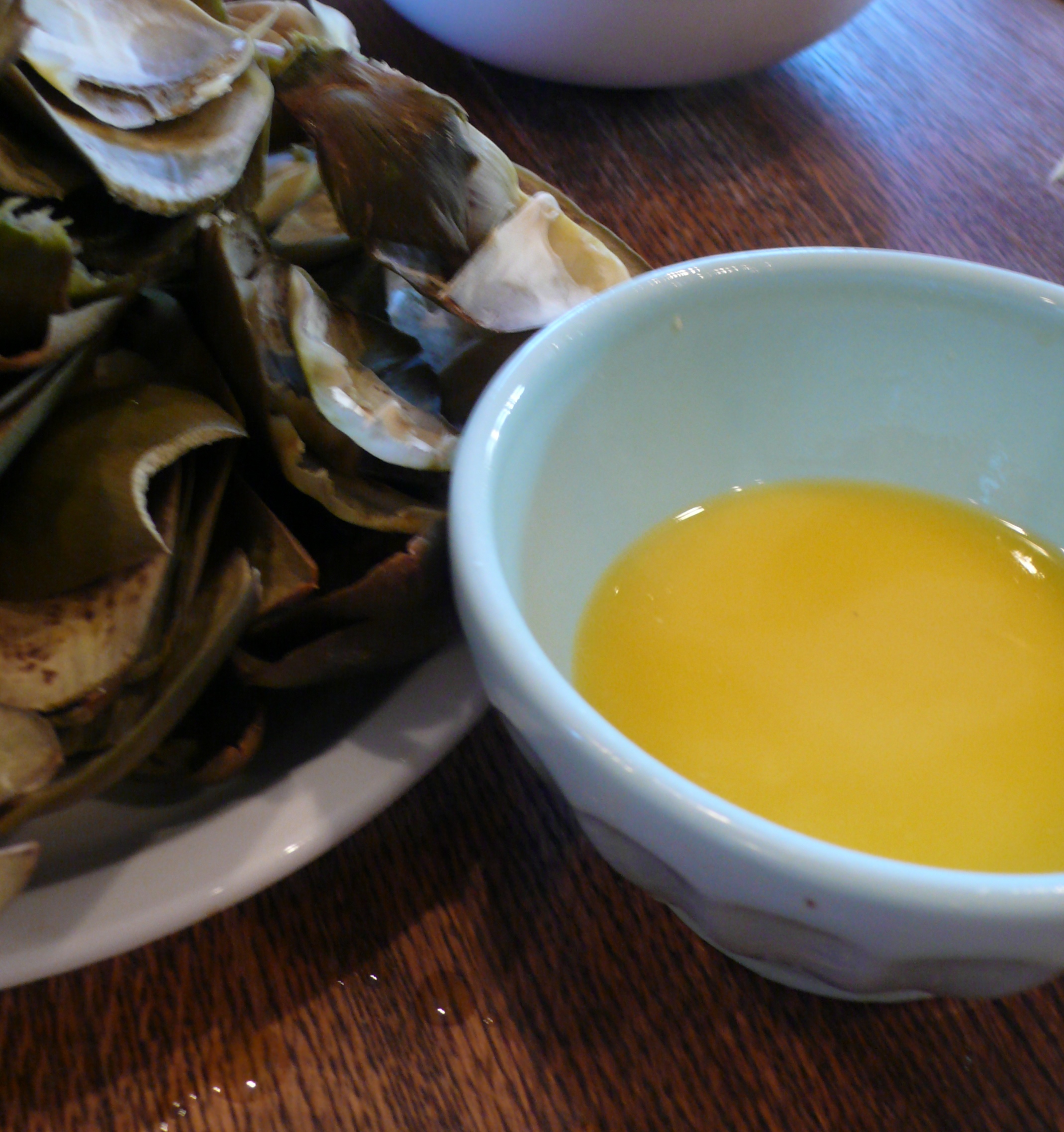
Artichokes, steamed in the microwave – a methodology of MZ’s which worked well, and produced succulent artichokes in 15 minutes. Served with a sparkling bright yellow lemon butter sauce.

with lemon butter sauce

The lemon butter sauce was made by whisking together a melted stick of butter, 2 tbsp olive oil, some salt, and the juice of half a lemon. We ate the artichokes with our hands, sharing a paring knife when we got to the heart, to get the prickly bits out. The bowl of lemon butter was communal. Truly a family meal.

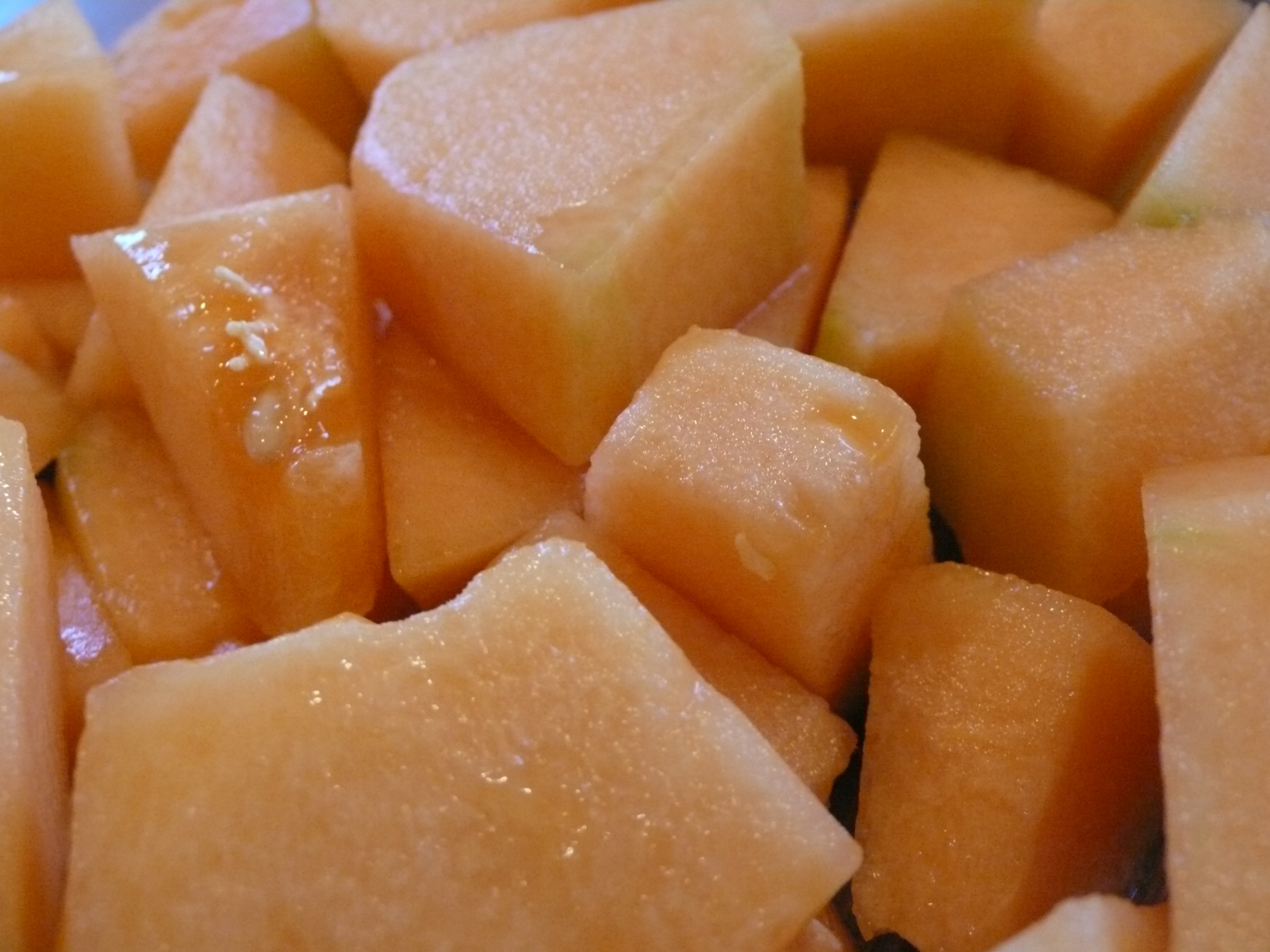
Finished by the most beautiful, ripe, sweet, honeyed cantaloupe. Cut into chunks.

Perfect summer taste

Unadorned, tasting of summer sun. So sweet, so succulent. M said it was the most perfect cantaloupe she had ever tasted. I agreed. I didnt think it could get any better than that. But then…

and cantaloupe

Vanilla ice cream and cantaloupe. Have you ever tried it? Unbelievable mind blowing perfection.

The simplest of meals… The most perfect combination. How gorgeous.

Quick Palak Paneer

28 Aug

Iin America! went to Whole Foods today, and was again overwhelmed by the bounty that was there. But I knew I had a load of things to do today, so it was a quick trip (my Mum was also with me … that slows and speeds things up in a strange way). It was an in and out shop – and I was thinking of what to make for dinner. There was a huge bunch of gorgeous baby spinach. And there was ready made paneer (a bland Indian cheese that cooks well, and soaks up all the flavour of what ever dish you put it in). And that was it. Tacos for the young-uns (well, the adults had some too), and palak paneer for the adults. It took less than 20 minutes, and it was delicious.

It was also a palak paneer that was cobbled together with what I could find at the shops. I didnt really have access to the kind of spice cupboard that I would have back home. This palak paneer you can make just about anywhere in the world! And the great thing about this dish is that you can make it vegan. Use a firm tofu, ready spiced and baked if possible, and slice it and add. It has the same creaminess as the paneer, and adds similar protein. Use coconut cream (not milk) in place of the cream or milk, and you have a delectable vegan feast.

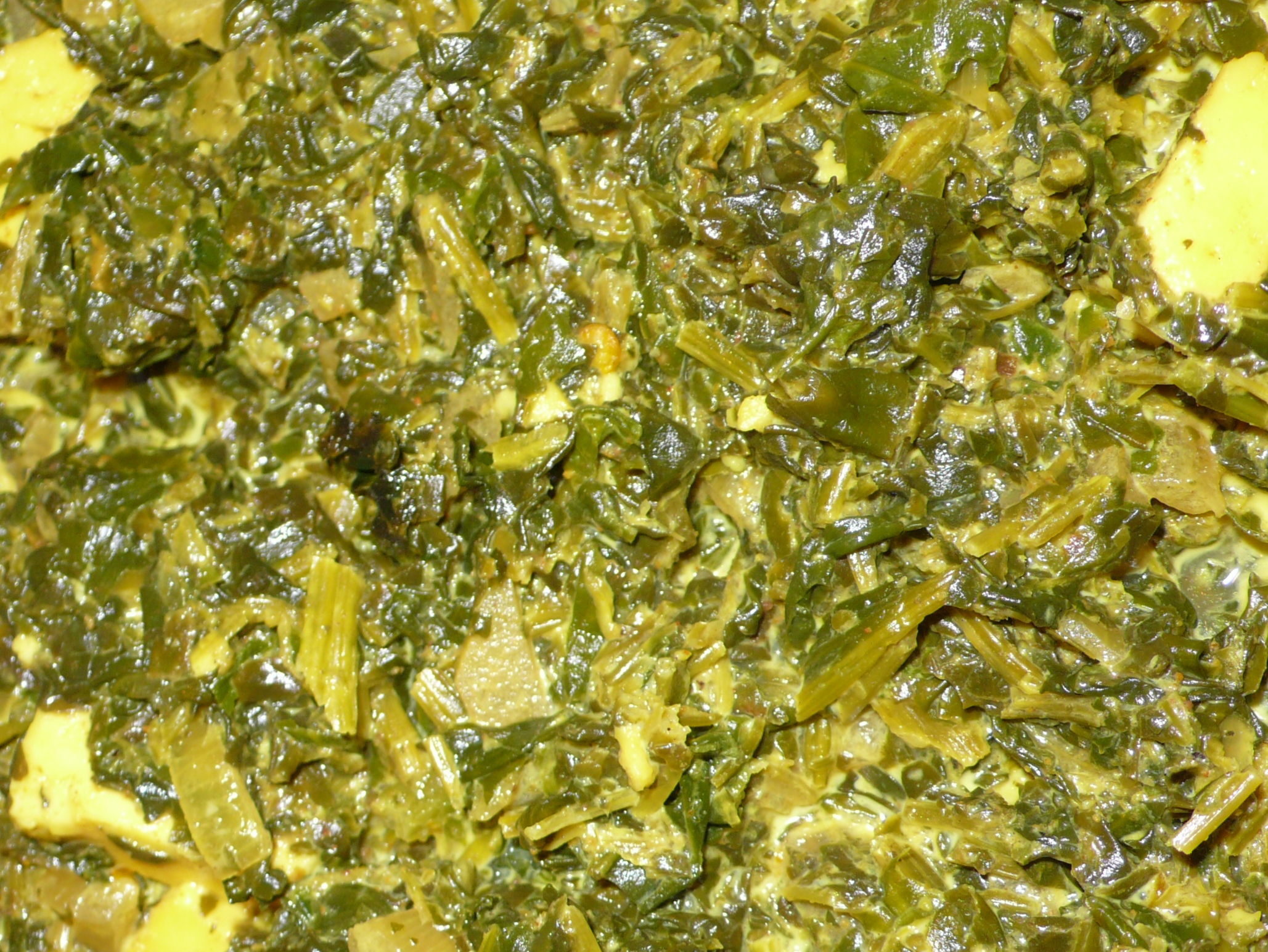
Just imagine a gorgeous green mass, with a turmeric yellow sauce, and creamy chunks of cheese. It was satisfying and healthy, and oh so easy. Just remember to taste and adjust for seasoning. You put in so much spinach that you might well need to add more salt and pepper at the end.

Serves 4 – 6, with rice

  • 2 tbsp olive oil
  • 1 tbsp toasted sesame oil
  • 1/2 large onion, minced
  • 3 cloves garlic, minced
  • Knob of fresh ginger (about the size of your pinkie), grated
  • 1/2 tsp paprika
  • 1 tsp garam masala
  • 1 tsp turmeric
  • 1 tsp red chili pepper flakes
  • 1 tsp salt
  • 1/2 tsp pepper
  • Large bunch of fresh baby spinach (about 4 – 6 cups, chopped) or 1 bag frozen chopped spinach, defrosted
  • 1/2 cup boiling water
  • 1/2 cup milk, half and half, cream, or coconut milk
  • 1 packet paneer (about 1 cup chopped) Note: if you cannot find paneer, substitute with Mexican queso blanco, or firm ricotta, sliced and pan fried. Or, if you want to be vegan, add firm tofu, preferably one that has been baked and flavoured.

In a large saucepan, heat the olive oil and sesame oil until shimmering. Add the onions, garlic and ginger, and stir to combine. Let the onions soften a bit, and then add the spices and salt and pepper. Let saute for at least 5 minutes or so, on medium low heat. You want the spices to become fragrant, and cook a little. This will impact hugely on the end taste of the dish. Just make sure they dont burn!

Add the spinach all at once. Raise heat to high, and wilt the spinach completely, mixing it in well with the onions and spices. Add the water, and let cook down, and taste and adjust for seasoning. Add the milk or cream, and let reduce a little. Adjust for seasoning again, and add the paneer. Cook for at least 5 minutes on a medium low fire. You want the paneer incorporated into the gravy, and you want it to taste of spices and spinach.

You can make this ahead at least a few hours. Reheat on low for a few minutes, and serve with rice and some chutney.

Mixed Vegetable Phyllo

27 Aug

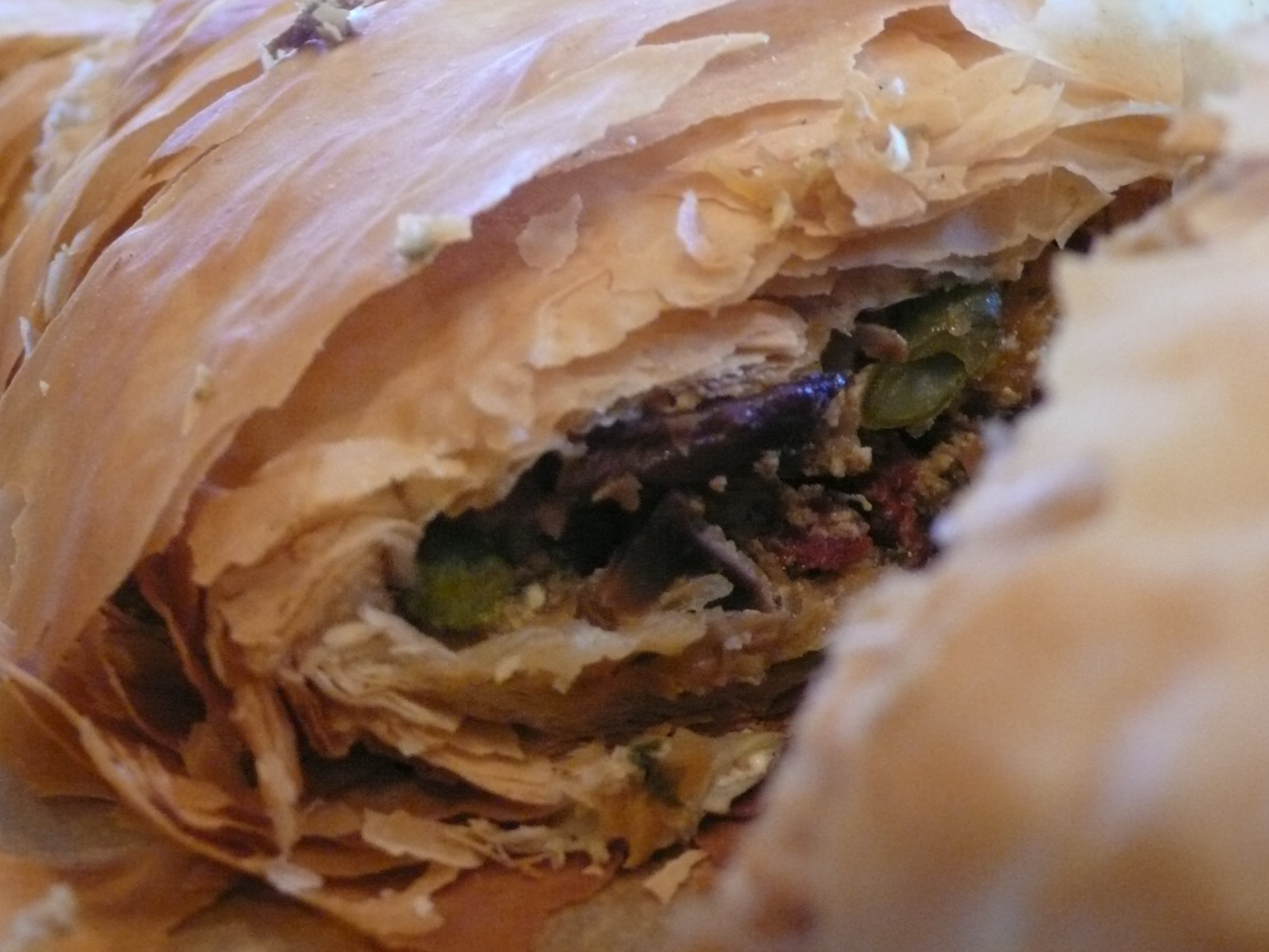
With loads of mixed vegetables!Oh what a day! Blissed out baby mode, and when it came time to make dinner, I realised we had nothing in the fridge but bits and pieces – a handful of spinach, a few artichoke hearts, quarter of a butternut. Some days, you dont have one thing to work with, but many many little odds and ends of things. On days like these, I like to make something that will incorporate all the left over bits – a pie, tart, pasta sauce, even a bread pudding …

Tomorrow we go to Whole Foods once again, but tonight was incorporate all the remaining handfuls and try and make something yummy night. This is one reason why I love phyllo dough. I am not a master Greekie cook (like my beloved Osisters – their spanakopita is phenomenal!) but I do like its ease of use, its pliability and its wonderful presentation. I dont know why, but people feel very manja-ed (Malaysian word – means spoiledbelovedcaredforlookedafter all rolled into one!) when you present them with a baked good – pies, tarts, pastries of all kinds. People love them, and the presence of a crust seems to elevate a rather normal meal into something special. On a night like tonight, phyllo dough enabled me to incorporate lots of things quickly and seamlessly… and delectably!

I would never ever try and make my own phyllo dough. Its waaaaaay too delicate and intricate a process. Rather, I purchase the best phyllo I can find, and am thankful to those who take (almost) all the work out of it for me! There are a few general rules for working with phyllo. Use butter if you want a rich tart, and use olive oil if you want a slightly lighter version. Set up everything you need before you even begin to unwrap the phyllo because as soon as you do, you need to work quickly and efficiently. Phyllo will dry out or start to melt and stick together, so know what you want to do, and do it fast. And always try and work on grease proof or wax paper. This allows you to preheat your pan (I use a jelly roll or large flat cookie pan for this free form recipe) in the oven, and then slide your creation onto it, still on the wax paper. The bottom of the phyllo pie will be crisped because of the immediate contact with hot pan, and you wont get that soggy bottom which generally occurs when you bake the phyllo on a cold pan. And finally, try and drain as much of the moisture out of the filling as you can. You need some moisture to bind the vegetables, but dont put a very wet filling into the pie – it will leak and get soggy and be yucky. If you are making a vegan version, just boil all the juices down into a thickened sauce and use it in place of the ricotta and egg.

This will serve 6 hungry – 8 people

I am going to tell you what I put into this pie, but really, use up what you’ve got in the fridge – from tomatoes and carrots to spinach and pine nuts. You will need about 4 – 6 cups of cooked filling in total.

For the filling

  • 2 tbsp olive oil
  • 1/2 large Vidalia onion, minced
  • 3 – 4 garlic cloves, minced fine
  • Small handful (may be 1/4 cup) sun dried tomatoes
  • Salt and pepper
  • 1/2 – 1 tsp oregano
  • 1/2 tsp paprika
  • 1/4 – 1/2 butternut
  • 1 + 1 cup boiling water
  • 1 cup mixed dried mushrooms – I used chanterelles, porcini and shiitake
  • Pinch of cinnamon (optional)
  • 1/2 cup chopped spinach
  • 1/2 cup chopped french beans
  • 1 cup chopped asparagus
  • 1/2 cup artichoke hearts
  • 3 heaping tbsp ricotta (optional)
  • 2 eggs (optional)
  • 1/4 cup crumbled feta (optional) – use toasted pine nuts instead if you are a vegan!

In a large, non stick frying pan, heat the olive oil and saute the onions, garlic and sun dried tomatoes together until the onions are softened and glossy, and have browned a little.

Add salt, pepper, oregano and paprika, and stir well.

Chop the butternut quite fine – you want little cubes about the size of the nail on your pinkie. You want it to have body, but you want the butternut to cook quickly. Add to the pan, and saute for a few minutes, stirring constantly. Add 1 cup of hot water, and allow to bubble and cook for a while on medium high heat.

In a separate small bowl, immerse the dried mushrooms in another cup of boiling water. Leave for at least 10 minutes, whilst the butternut is bubbling away.

Once the mushrooms have softened, take them out of the water, and chop roughly, and add to the pan. Most of the water from cooking the butternut should have boiled away. Add about half a cup of the mushroom water, and allow to cook for a further five minutes or so. Taste and adjust seasoning. Sometimes I add a little cinnamon for depth of flavour, or more salt, pepper and spices.

Turn off the heat (you should still have a significant amount of liquid in the pan), and transfer the contents of the pan to a sieve set over a small bowl. I usually use the mushroom bowl, cleaned out! Let the liquid drip through, and using your spatula or spoon, press down on the onion-butternut-mushroom mixture so that most of the liquid drains through. Reserve the cooking liquid, either to use as the base of a sauce for the pie, or as the binding liquid if you are baking for vegans.

Transfer the mixture back to the pan, and over medium heat, add the spinach, beans, asparagus and artichoke hearts. Saute briefly until completely combined, but make sure that the greenery does not cook too long – you want it to retain its colour and taste!

Tumble the vegetable mixture into a bowl, and set aside for at least ten minutes to allow it to cool.

If you are cooking vegan, transfer the cooking liquid to the pan, and boil it down until reduced by at least half. It needs to be thick and syrupy. You could add some wine to this if you like, though I didnt have any available. Add a few tablespoons to the vegetable mixture to bind it properly, and give it some body.

Otherwise, beat together the ricotta, eggs and feta, and mix gently through the vegetable mixture. Taste and adjust for seasoning, and set aside.

Phyllo Assembly

  • 7 – 9 large phyllo leaves
  • 1/4 cup olive oil and pastry brush
  • 1/4 cup crumbled feta or toasted pine nuts

Preheat the oven to 200 C and put a jelly roll or cookie pan into the oven to preheat.

Lay out your work surface. On a clean tea towel or a strip of waxed paper, unroll your phyllo dough. Have a small bowl with olive oil and a pastry brush handy. Also have a small bowl containing your feta, and your bowl of prepared vegetables.

Tear a strip of waxed paper long enough to fit your baking pan. Lay a phyllo sheet on the paper (my phyllo dough covered almost the entire paper), and gently brush with a bit of olive oil. Continue to layer leaves of phyllo dough, brushing each layer with olive oil. Its okay if the phyllo tears – just patch it up with olive oil, and keep going. You want to work quickly but surely, and dont worry about covering every inch of the pastry with olive oil – you really just want to give it a gentle brushing. I used 7 layers, but you can use as many as you want.

Sprinkle your crumbled feta onto the dough, going straight down lengthways the middle of the dough. Leave a 2 inch space on either side.

Spoon your vegetable filling over the feta, mounding it, and leaving space on either side. You will now have what looks like a log of vegetables centred on your phyllo dough.

To complete the pie, fold over both short sides, like an envelope, and then fold the longer ends over each other. Using the waxed paper, flip the phyllo log over on itself, so that the seam is bottom side down. Centre the phyllo log on the waxed paper. Brush the top with olive oil.

Using oven mits, take the hot baking pan out of the oven. Using the waxed paper, transfer the paper and the phyllo log onto the hot pan, and put back into the oven.

Bake for about 25 – 30 minutes, or until the phyllo is browned and crispy.

Let sit for a few minutes once out of the oven before slicing and serving.

With Sauce!Sauce

If you are not baking a vegan version of this, use the reserved cooking liquid as the basis for a lovely sauce to serve with the phyllo pie. I boiled the cooking liquid until slightly reduced, and then lowered the heat and added a few tablespoons of creme fraiche, a tablespoon of pesto sauce, some salt and pepper, and a few drops of balsamic. I whisked everything together, and served in a little jug to pour over. It was delicious!

Roast Butternut Salad

26 Aug

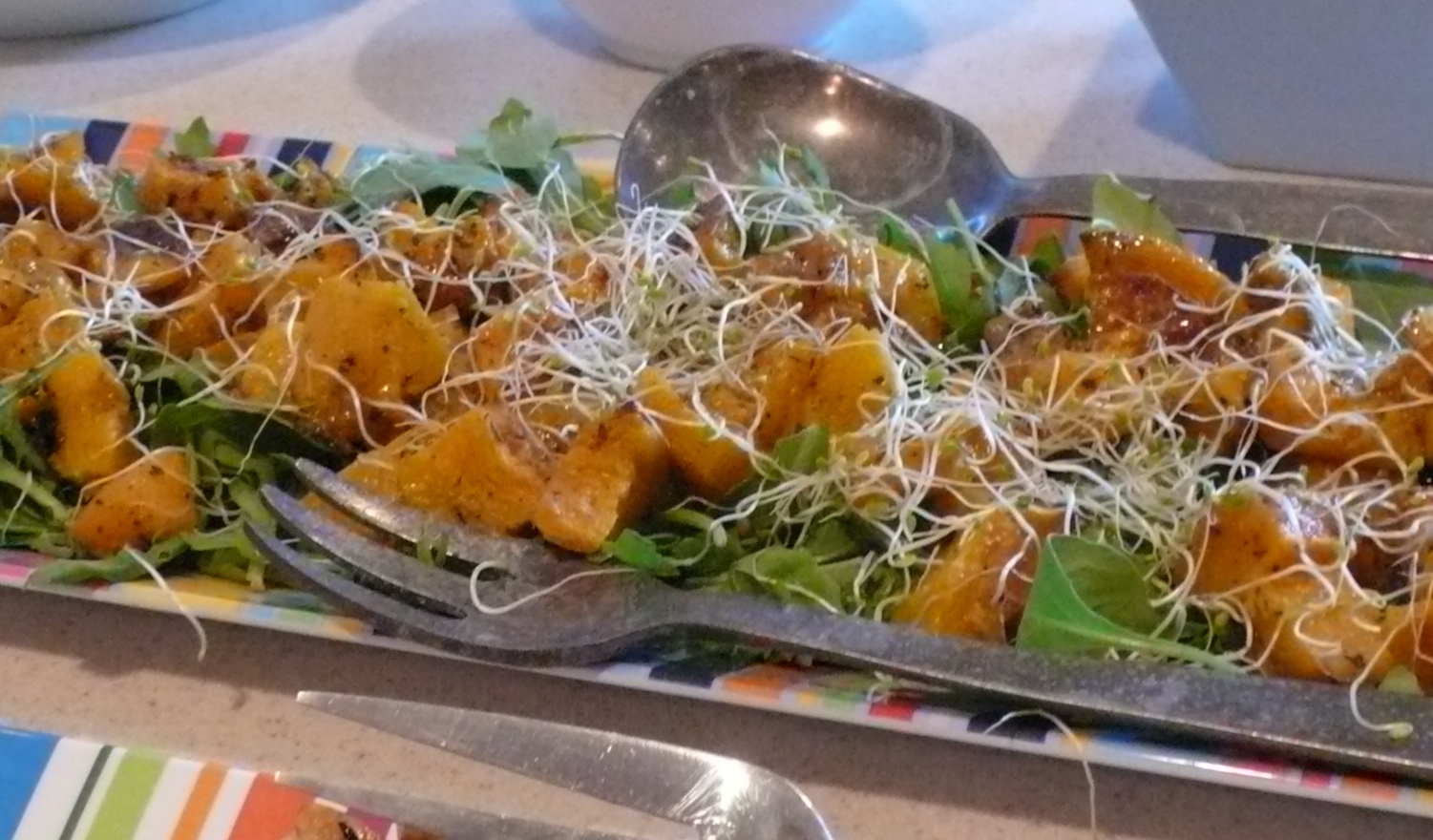
I am exhausted tonight so this will be a short post! So it goes in a house with baby and multiple generations! I loved this salad. Perfect as a side dish – or if you want, add a few shavings of parmesan, or some salty feta, or a couple dollops of creamy sweet ricotta – or if you are vegan, a few chickpeas – for the protein, and you have lunch! Best served cold, the butternut is oven roasted ahead of time and refrigerated. So when it comes time to serving, its really a matter of putting it all together and devouring.

I love the golden orange happiness of butternut, and I adore how easy it is to cook. Its forgiving, and its natural sweetness automatically caramelises in a hot oven, so you dont really need to add anything in the way of herbs or spices – the vegetable flavours itself beautifully. This is a meal I crave over and over again. I love juxtaposition in my food – the spicy, slightly bitter bite of arugula, and the sweet creamy richness of the butternut are wonderful partners. They compliment and play off each other and make me very happy.

Serves 8 – 10 as a side  or 4 with left overs for lunch or dinner

  • 1 medium / large butternut, peeled, seeded and chopped
  • 2 tbsp olive oil
  • Salt and pepper
  • 4 – 5 cloves of garlic
  • 2 – 3 cups (I used about 1 packet) arugula / rocket or other bitter green salad leaf
  • 1/4 cup olive oil + 3 tbsp balsamic vinegar
  • Toppings: sprouts, cheese (parmesan, feta or ricotta are my favourites, but go wild – try it with blue cheese if you want!), toasted walnuts or pine nuts, avocado

The night before (or morning before) you intend to serve the salad, prepare the butternut.

Preheat your oven to 190 C.

Peel, seed and roughly chop 1 medium to large butternut. Put in a bowl, and pour over 2 tbsp olive oil. Using your hands, mix well, ensuring that all the butternut is coated.

Arrange the butternut on a jelly roll pan or other large shallow baking pan, in a single layer. Salt and pepper well. Arrange the garlic cloves amongst the butternut.

Roast for about 45 minutes, or until you see the butternut beginning to caramelise. I usually try and flip the butternut over half way through the cooking time as well, so that both sides get a bit of browning.

Take out of the oven and let cool to room temperature. Return to bowl, and refrigerate for at least 4 hours or overnight.

Just before serving, take the butternut out of the fridge.

Fish the garlic cloves out of the butternut mixture. They should be very soft. Pop them into a small bowl or cup and mash the garlic with a fork. Whisk in the olive oil and balsamic vinegar.

Find a lovely large flat serving platter or plate. Strew the baby arugula over the plate in one beautiful bright green layer.

Tumble the butternut over, and pour about half the dressing over. Reserve the rest to serve on the side if you wish.

Sprinkle one or two toppings of your choice over all, and serve.

Perfect for a hot summer’s day!

Lemon Broccolini

25 Aug

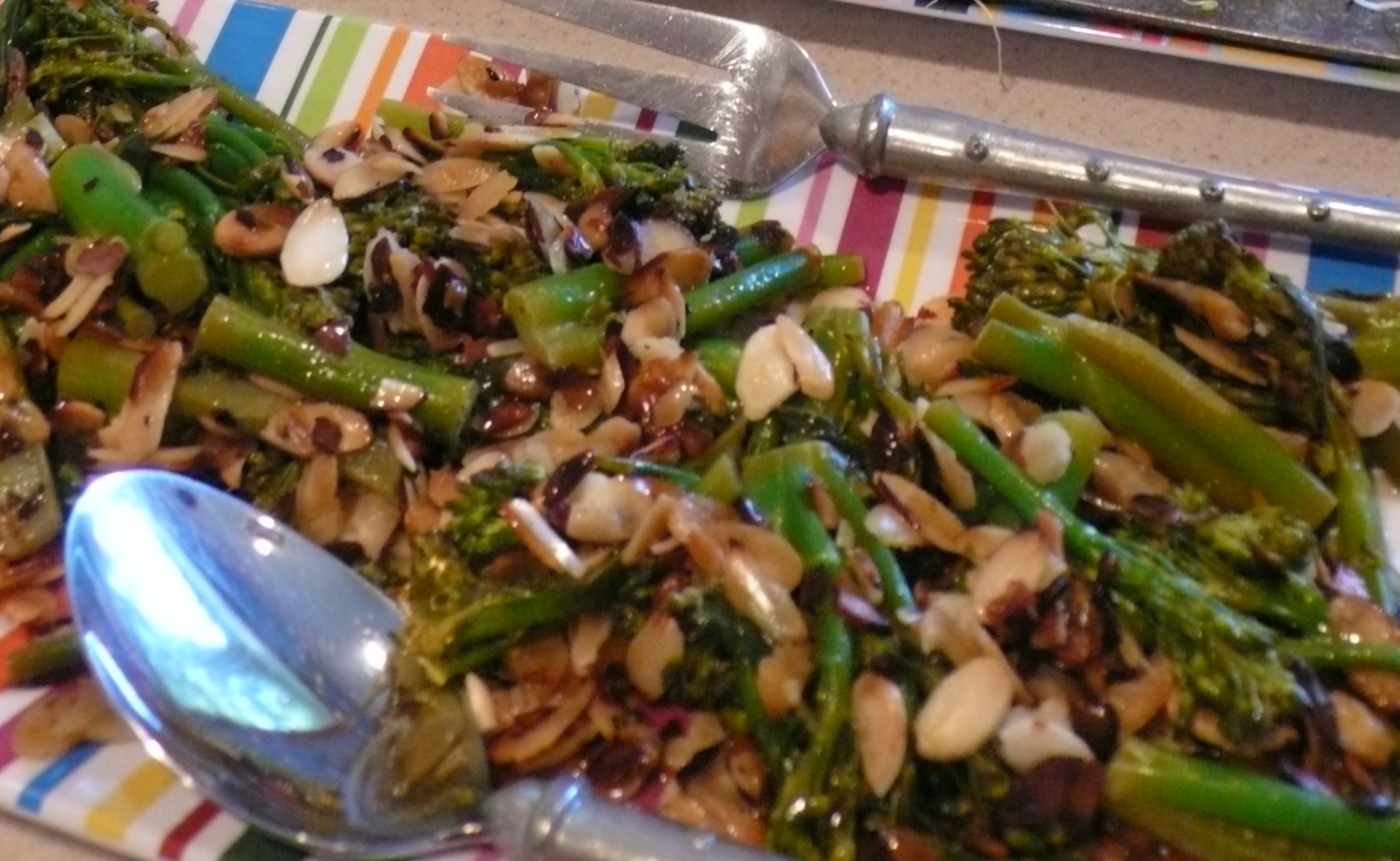
Tart Bright Beautiful and Green!This is another dish from my sister’s feast – the perfect side dish as far as I am concerned. Bright, green, beautiful, and amazingly tasty. Plus, it tastes best if served cold, so you can make it up to one day ahead (though not more) and it will be gorgeous on the day. I love broccoli and broccolini (which is just the baby version)… there is no taste quite like it. I hate it when its boiled to death though, because I think it tastes of *green* and too much cooking just decimates its pure flavour.

You can use broccoli in place of broccolini here, but if you can find it, do use the baby version. Its so delicate, very sweet, and incredibly tasty. It needs very little prep too – the stalks are tender, and all you need to do is just trim the edges and slice them into 2 – 3 inch chunks. I like broccoli with anything – in a soup with some aged cheddar cheese, in a gratin (with more cheese), tossed with butter… but I think this is my absolute favourite. The lemon just enhances that very bright clear flavour – and its surprising because we usually expect the broccoli to be heavy and rich. Toasted almonds add creaminess and a nutty richness to this dish – they are a wonderful balance to the lemon and broccoli.

Two days after our birthday feast, I used the left over broccolini and almonds as the base for a cold vegetable soup (whizzed up with the help of the adored immersion blender!) – it was superb – and the almonds added texture and great depth of flavour.

You can double, triple, or even halve this recipe. Its great to take on a picnic, and wonderful to serve to hoardes of people. Its a tasty addition to a feast, and a perfect side dish for dinner or lunch.

Serves 8

  • 3/4 cup sliced almonds (I liked this to be very almondy – but use less if you like)
  • 2 – 3 cups broccolini or broccoli
  • 1 tsp + 1/2 tsp salt
  • 1/2 tsp pepper
  • 1/3 cup olive oil
  • Grated peel of 1 lemon
  • Juice of 1 lemon

In a dry, non stick pan, over medium high heat, toast the sliced almonds. Use a wooden spoon or spatula to keep the almonds moving in the pan – they can burn in the blink of an eye! Once they are toasted, set aside to cool.

Prepare a bowl with water and ice, if possible. If not, have cold water standing by.

Also, prepare the lemon dressing. In a large-ish bowl, add 1/2 tsp salt, 1/2 tsp pepper, olive oil, the grated peel of a lemon, and all its juice. Organic lemons have a huge depth of flavour that cannot be matched, and are so worth it in this recipe! Whisk together well. The lemon juice and olive oil will emulsify, and you will have a creamy looking very lemony dressing. Set aside.

Fill a large pot with water, and add 1 tsp salt. Bring to the boil.

While the water is coming to the boil, trim your broccolini or broccoli spears. For broccolini, just trim the ends, and slice into manageable chunks… I usually just cut them in half. For broccoli, divide the head into florets, and trim the woody bits off the stalk, and cut into bite sized chunks. Wash briefly in cold water.

As soon as the water has come to the boil, put all the broccolini in. Watch carefully – you may only need a minute or two. Broccoli might take longer, but you want a crisp tender vegetable, with a little bit of crunch left. Do not over boil. You will lose all the freshness!

As soon as the broccolini is snap tender, drain, and pour the bowl of ice water or the cold water over. The broccolini will still be a little warm – this is okay. Shake to drain off as much of the water as possible, and immediately dunk the broccolini into the lemon dressing. Add the almonds, and mix thoroughly. Taste for salt and pepper.

Cover and refrigerate for up to 24 hours. Serve cold or at room temperature.