Archive | Recipe RSS feed for this section

White Chocolate Semolina Pudding with Damson Jam

4 Aug

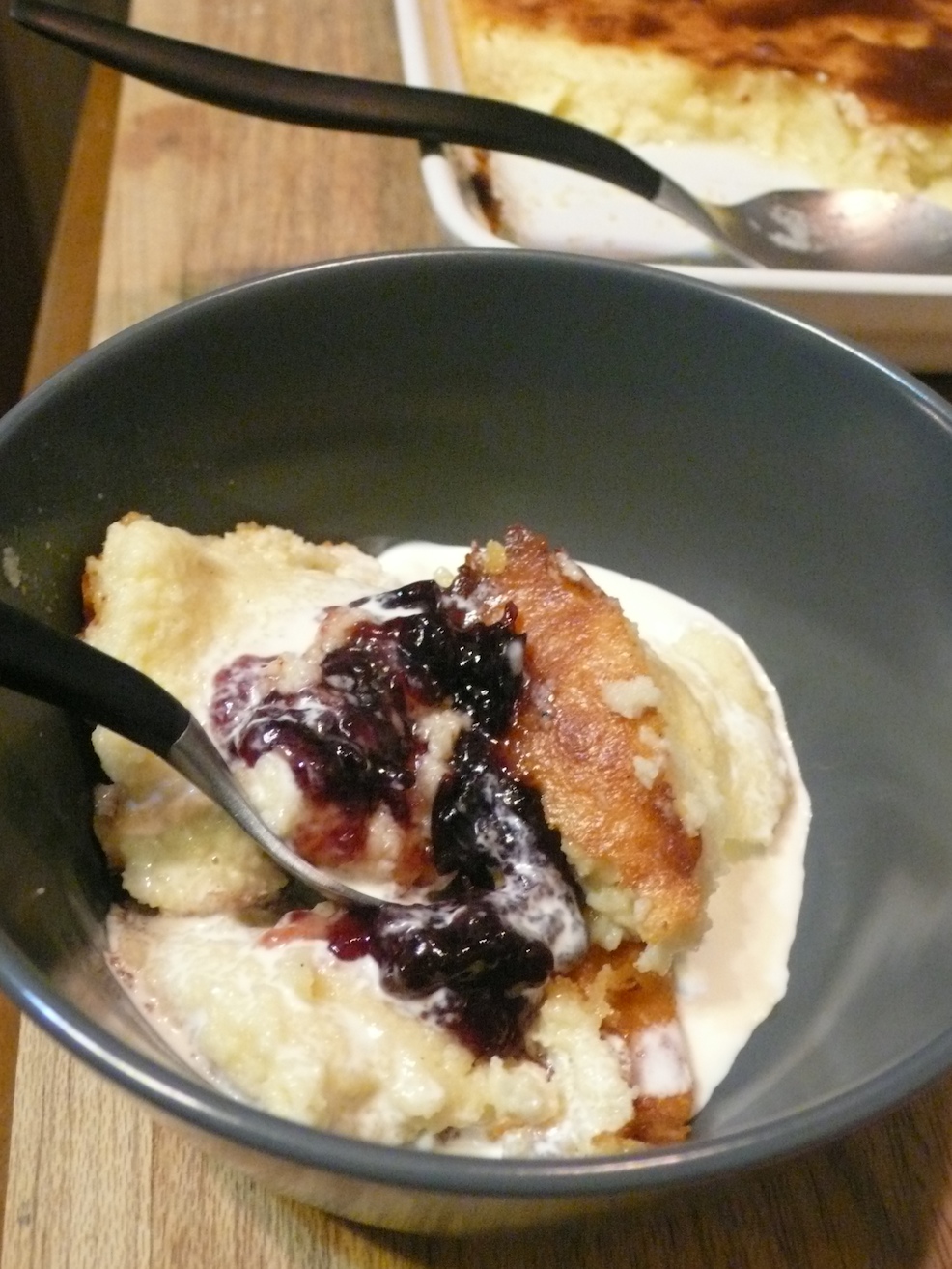
White Chocolate Semolina Pudding with Damson Jam and a touch of CreamThis is not your school days semolina pudding. I promise. No lumps or bumps or tasteless paste. This is semolina pudding for sensualists. This pudding is smooth, moist, golden, scented with vanilla, creamy with white chocolate. Sexy and yet comforting at the same time – yes its possible. Just think of the scent and feel of your favourite partner’s worn t-shirt enveloping you, and you will know what I mean… Or not! You might just have to take my word for it!

Its a doddle to make – and I needed something simple, yet decadent, because I came home from an almost six hour shopping spree with ZaZa and my feet hurt! I am expecting people for dessert tonight, and I was thinking of making a cake, or cookies, but this is so much easier. And it can all be made in one pot if you are super lazy (though transferring the cooked semolina into a nice looking baking dish is pretty simple too), and tastes like you slaved over the stove for hours. I love that kind of cooking.

This does not require a huge amount of technical cooking, chopping, slicing, dicing or sauteeing. Its a little bit of waiting (for the vanilla to infuse), a little bit of stirring, some pouring (if you are putting it in a pretty baking pan) and some more waiting while it bakes golden. It does however depend on your sense of taste and balance – how much vanilla? How much white chocolate? How much, if any, sugar, to balance the chocoalte? I have to rein myself in in regards to chocolate, but if you feel like going wild, you have my blessing! Substitute dark or milk if you wish, but I think this pudding is perfect with white chocolate.

Here in Malaysia we call semolina suji or sooji and it is used for cakes, puddings, and a huge variety of Indian dishes. Its also used extensively in Italian and European cooking for pastas and breads, amongst other things. Its used as the base to make couscous, and is basically the coarse pieces of starch or endosperm (what a word!) from milling of durum flour. It is awesome.

And the jam? Well, when you have Duchy Organic damson jam, theres not much point in making your own. Its the best jam ever. Dark purple, and tasting like mystery … superb with this pudding, on a slice of dark brown bread, with a bit of cheese. Its only available in the shops on a seasonal basis (which I like very much), so when I see it, I grab at least 3 or 4 jars and hoard it with pure adoration. Use whatever jam is your personal favourite!

This will fit a large-ish baking dish, serving about 6 – 8 people, depending on greed 😛

  • 4 cups milk (or a mix of milk and cream – or for the lactose intolerant out there, almond or oat milk, or even coconut milk)
  • 1 vanilla pod (or up to 2 tsp vanilla essence, added later)
  • 1 scant cup semolina
  • 1 cup white chocolate, chopped plus addition 1/4 cup optional
  • 1 tbsp light brown sugar (or to taste – optional)
  • 2 eggs
  • 1 – 2 tbsp butter
  • Jam and a bit of cream to serve

Pour 4 cups of milk into a medium saucepan. If you are using a vanilla pod, slice it in half lengthways, scrape the vanilla seeds into the milk, and drop in the pod as well. Bring the milk almost to a boil (when you see little plip plops of milk at the surface, take it off), stirring with a whisk all the while, and take off the heat. Leave, covered, for about 15 minutes, to allow the vanilla to infuse the milk. If you are using vanilla essence, leave for a few minutes to cool down, and go on to the next step.

Preheat your oven to 180 C and butter a large-ish baking dish (I use two small pretty white ceramic dishes because thats what I have!).

After 15 minutes, uncover the milk, and slowly whisk in the semolina. Whisking in the semolina off heat, in warm instead of boiling milk, ensures that the finished product is smooth like silk. Put the saucepan over medium heat, and allow the mixture to come to the boil, whisking all the while. As you bring the semolina milk mixture to the boil, it will start to thicken. It will eventually get quite stiff. It is boiling when the semolina starts to bubble at the surface. Make sure you whisk the entire time to ensure that it does not burn, and stays smooth.

Off heat, fish out the vanilla pods, and add the white chocolate. I usually add about 1 cup of white chocolate, and then taste. Chocolate varies so much in quality and sugar levels, that sometimes you may need the addition of a tablespoon (or even two) of light brown sugar. Most of the time, if you are using good chocolate, you dont really need it. I leave it to your (sweet) palate to decide. Remember though, that if you decide to serve it with jam, it will have a very sweet addition, and so needs to be mildly sweet, rather than overly sweet. You can kill this pudding with too much sugar!

If you did not use a vanilla pod, add your vanilla essence now, to taste.

Switch to a spatula, and beat in the eggs, and the butter. These two ingredients act as softeners and thickeners as the pudding bakes.

If you are feeling very decadent, and are a chocolate fiend, feel free to sprinkle extra chocolate over the pudding just before it goes in the oven (that would be me!). It might be nice to have a white chocolate semolina pudding, and sprinkle over with shards of bittersweet chocolate. Though I would then serve a seville orange marmalade with the pudding rather than damson jam. You could also, if your heart so desires, sprinkle some nutmeg or cinnamon over, though for me, these tastes are too much for the delicacy of this pudding.
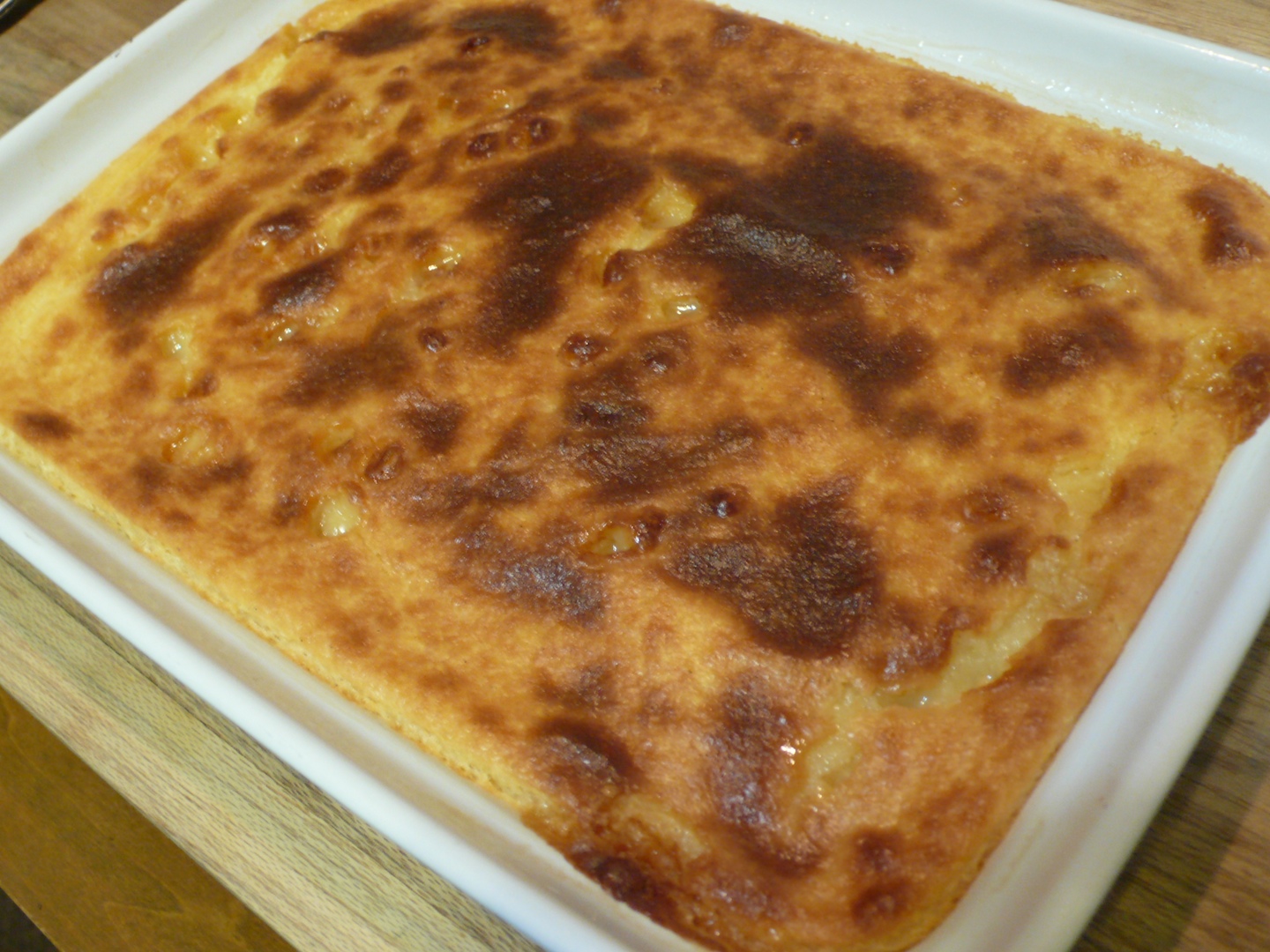
Baked Pudding Cooling Down with dots of White ChocolateBake in the oven for about 30 – 35 minutes until the top is golden, and the pudding is slightly puffed. Take out of the oven, and allow to cool at least 10 – 15 minutes before serving. You could leave the pudding in a switched off warm oven while having dinner if you like…

Serve with some jam and may be some extra cream on the side for those who want it (and I dont know anyone who wouldnt!)
Creamy Eggs

2 Aug

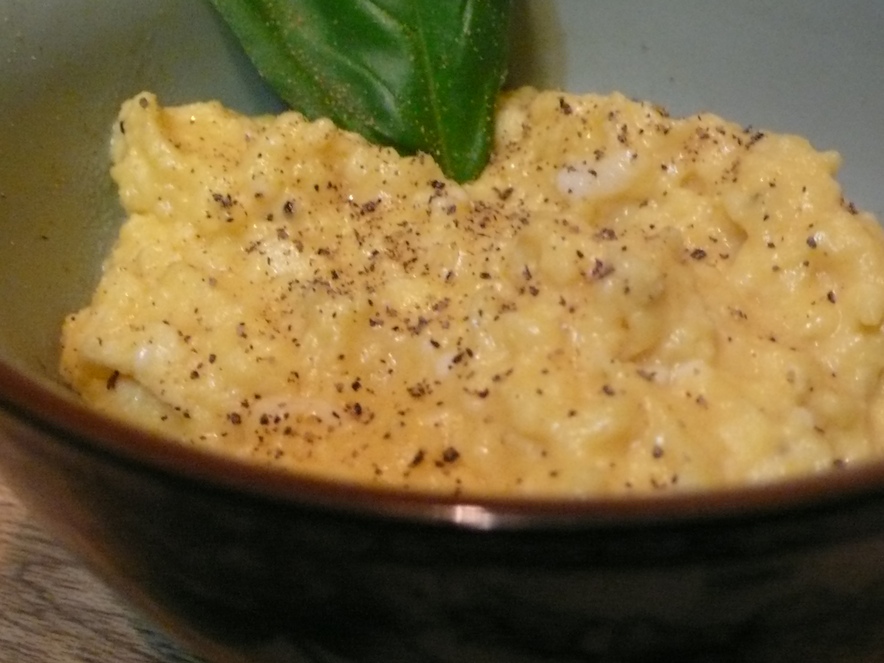
Creamy EggsEggs are humble things, but they taste spectacular, and they add their special golden glow and richness to lots of different dishes. They therefore should be treated with great honour and respect. I love making things with eggs – custards, quiches, cakes, ice creams. But sometimes, what I really want is the perfect egg in all its glorious eggy-ness. When that happens, I turn to this recipe for creamy eggs. Well, in all honesty, these eggs are scrambled, but the methodology and the finished product are just so different from the regular garden variety scrambled eggs that we started to call them differently. They deserve it.

These eggs are creamy to the point of custard, but still most definitely not. They are scrambled, and yet silky, unctuous, rich and light in a way that eggs whipped in a pan could never be. The secret is in the preparation, and because of that, these creamy eggs are really a gift of love. They take a while to make – may be 15 minutes – may be half an hour. It all depends on your heat source, on how well you cushion your eggs from the heat, and how many people (and thus how many eggs) you are feeding. As a result, I would not make this for more than 4 people – but I prefer making it for just 2. Or even, as a gift to myself, for just one. For breakfast or a light supper, these eggs are perfect.

These eggs are also really good for someone who isnt feeling very well. They are so easy to eat. They slip down the throat, and fill the belly. Their golden colour, and tantalising scent perk up even the most jaded or weary of appetites…

Remember though, as a cook, this is a meditative dish. The constant stirring, the thoughtfulness about thickness and balance, the tasting… you have to be in the present when you make these eggs, and what you put into them is what you get out of them. Make sure that you are happy and loving when you make this dish, because if you arent, you will surely taste it in the eggs.

You can serve these eggs with lots of things. For non-vegetarians, snippets of silky smoked salmon layered atop the eggs seems like silk on velvet. For the rest of us – the sharpness of basil or another herb, snipped fine, might be a perfect contrast to the sublime richness of the eggs. To be honest though, I serve them with nothing but a crack of black pepper and a silver spoon, nestled in a pretty bowl like golden curds. Sometimes toast might get a look in – just for that crunchy contrast, but honestly, you need nothing but these eggs to bring sunshine and smiles to those you love… incluing yourself!

For each person, you will need:

  • 2 fresh organic eggs (preferably at room temperature)
  • 1/2 tsp sour cream or creme fraiche
  • Salt and pepper to taste
  • 1/2 tsp cold butter cut into tiny slivers
  • Bain marie – double boiler set up

A bain marie or double boiler can easily be made by putting a metal bowl over a saucepan of boiling water. Just make sure the bowl doesnt touch the water, and have a kettle of boiled water standing by in case you need to replenish the water at a critical moment. Start off by filling the saucepan about 1/4 full with water, and setting over low heat to come to the boil.

Meanwhile, break the two eggs into a bowl, and very gently, mix in the sour cream or creme fraiche with a fork. Try not to beat the eggs or whip them or form too many bubbles in the mixture. Water and air are the enemy of creamy eggs – they form steam which help puff up the eggs as they cook. You want something much deeper and darker and sensual. Fluffy eggs have their place – but not here!

Crack some black pepper and a pinch of salt over. You can adjust later. You just want a tad right now.

Once the water is boiling, put the metal bowl on top of the saucepan, and slide your eggs in. No butter, no oil. Just eggs and a little sour cream. With a spatula, start stirring the eggs…. Find a pace and rhythm that works for you. Figure eights usually do it for me. Watch the eggs carefully, and just keep stirring and stirring. Slow and even, no sudden movements, just a gentle silky pattern. You will see the cream slowly dissolve into the eggs, and the mixture go from slightly glossy and transparent to thick and yellow and opaque.

Keep stirring. (Thats the basic recipe. Eggs and stir!) Your eggs will go through quite a few stages. They will start gaining thickness, and will look like golden oatmeal porridge. Basically, what you are doing is cooking the water out of the eggs, and encouraging the proteins to thicken and cream. This takes time and gentleness – in heat and in touch. Go fast, and your eggs will respond and go rubbery.

When they look like thick oatmeal porridge, you can add a little bit of cold butter for silkiness and smoothness and creamy taste. But you dont have to if you dont want to. What you should do at this point is taste for salt and pepper and adjust accordingly.

Keep stirring. 🙂 When the eggs look like a firm cottage cheese or ricotta, take them off the heat immediately.

Serve atop crisp toast, or in a bowl with a silver spoon.

Taste the love.

Blackout Cake

1 Aug

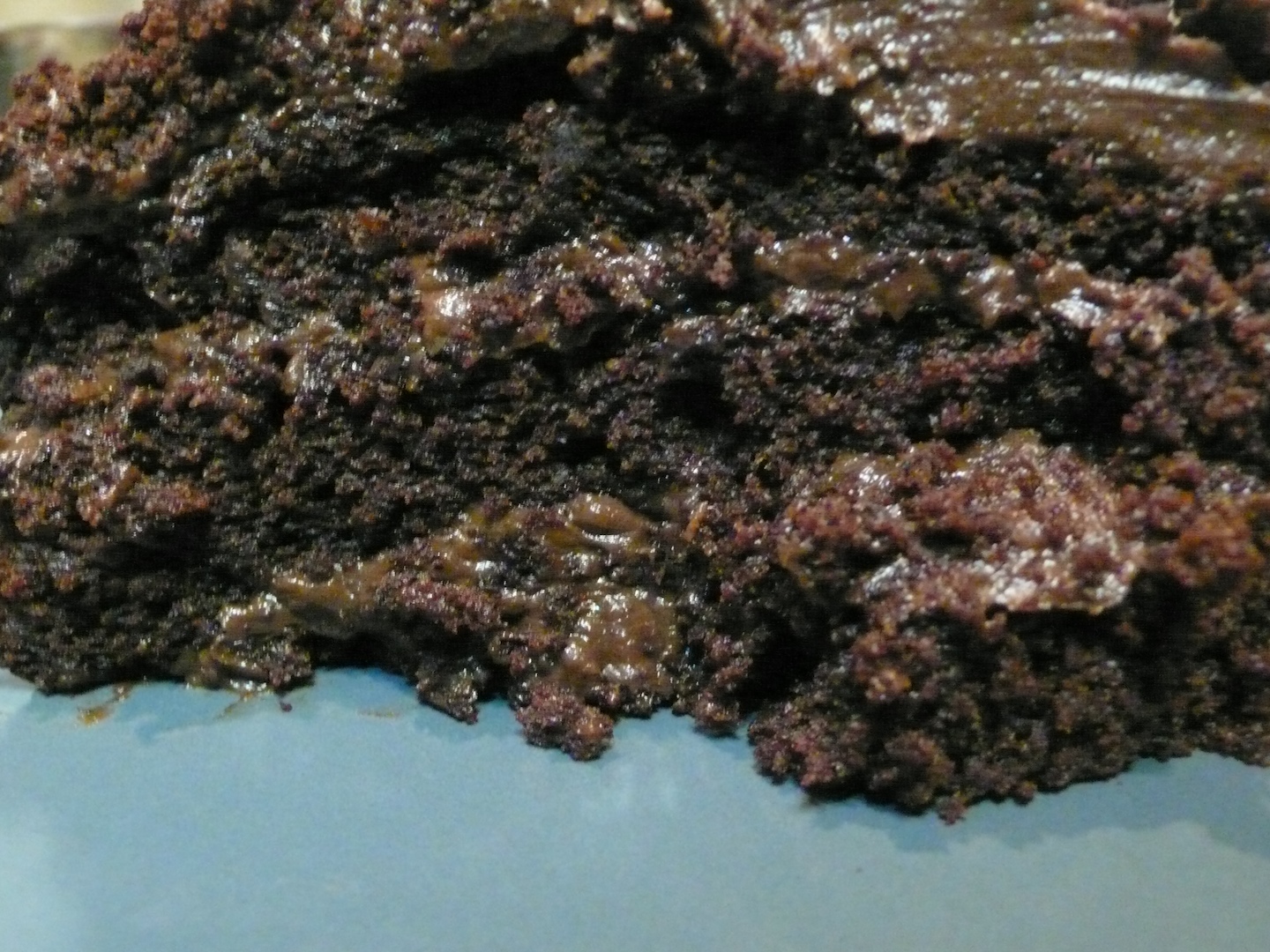
blackout cake version 1What is blackout cake? Simply put, very dark, almost bitter sweet, very soft cake, layered and iced with dark chocolate pudding. Cake crumbs adorn the outside of the cake. Its a study in chocolate, with no distractions. Not too sweet, rich but not overbearing, so dark that light will never penetrate. Cream is a good accompaniment, but you dont really need anything at all … Just a deep respect for all things chocolate.

If you say the words Ebinger’s Blackout Cake to people who lived on the eastern seaboard of America during the 1970’s, from New York to DC, but particularly those who lived in Brooklyn, you will be greeted by moans of delight and loss. Blackout cake is a cake from a very specific time, but oh my good goddess, it is perfection in chocolate. Ebinger’s was a bakery in Brooklyn that unfortunately closed down in the mid 1970’s — and the recipe for the original blackout cake went with them. There is a huge amount of online debate about the true recipe for blackout cake, and I have often wondered which one tastes the closest to my own memory.

I grew up in Washington DC during the 1970’s and 80’s, living in an Embassy. We hosted fancy dinners for dignitaries and my mother’s go-to dessert was a version of blackout cake. It was served in long rectangular logs, each serving 20 people. My sister and I used to hover in the kitchen, making sure that any scraps were summarily dealt with. We looked at each full slice of blackout cake, floating in cream, with longing and hope… May be when we were grown up, we would have blackout cake at our dinner parties too!

I have done a lot of research about blackout cake, and I have finally decided to try the recipe posted in The Week in 2008, from Jeremy Sauer in Cook’s Country. I had hoped this cake would come close to my memory … but unfortunately, it didnt. Dont get me wrong, it was superb. Dark, chocolaty, very moist… but there was something missing. It was just a little too not-blackout. Not sure why, or where, or how, but it wasnt the cake of my memory. I have one more recipe which I will try next weekend… but for now, this blackout cake version has made us all very happy.

Pudding

  • 1-1/4 cups granulated sugar
  • 1/4 cup cornstarch
  • 1/2 teaspoon table salt
  • 2 cups half-and-half
  • 1 cup whole milk
  • 6 oz unsweetened chocolate, chopped
  • 2 tsp vanilla extract

Whisk sugar, cornstarch, salt, half-and-half, and milk in large saucepan. Set pan over medium heat. Add chocolate and whisk constantly until chocolate melts and mixture begins to bubble, 2 to 4 minutes. It will thicken like a pudding. Make sure that you mix it well enough so that the pudding does not burn at the bottom.

Stir in vanilla and transfer pudding to large bowl. Lightly butter the top of the pudding, and butter one side of sheet of greasproof paper. Place the greaseproof paper over the top of the pudding so that a skin doesnt form, and refrigerate for at least 4 hours and up to 1 day.

Cake

  • 8 tbsp unsalted butter (1 stick), plus extra for greasing pans
  • 1-1/2 cups all-purpose flour
  • 2 tsp baking powder
  • 1/2 tsp baking soda
  • 1/2 tsp table salt
  • 3/4 cup Dutch-processed cocoa powder, plus extra for dusting pans
  • 1 cup strong black coffee
  • 1 cup buttermilk
  • 1 cup packed light brown sugar
  • 1 cup granulated sugar
  • 2 large eggs
  • 1 tsp vanilla extract

Adjust oven rack to middle position and heat oven to 165 C. Butter two 8-inch cake pans, line the bottom with greaseproof paper, and shift a bit of cocoa powder over the buttered cake pan. This will help in removing the cake from the pan after baking.

Whisk flour, baking powder, baking soda, and salt in bowl. Set aside.

Melt butter in large saucepan over medium heat. Stir in cocoa and cook until fragrant, about 1 minute. You will smell the perfect smell of cooking chocolate.

Off heat, whisk in coffee, buttermilk, and sugars until dissolved. Whisk in eggs and vanilla, then slowly whisk in flour mixture.

Divide batter evenly between prepared pans and bake until toothpick inserted in center comes out clean, 30 to 35 minutes.

Cool layers in pans 15 minutes, then invert onto wire rack. Cool to room temperature, at least 1 hour.

Assembly

Cut each cake in half horizontally. Crumble one cake layer into medium crumbs and set aside.

Place one cake layer on serving platter or cardboard round. Spread 1 cup pudding over cake layer and top with another layer.

Repeat with 1 cup pudding and last cake layer.

Spread remaining pudding evenly over top and sides of cake.

Sprinkle cake crumbs evenly over top and sides of cake, pressing lightly so crumbs adhere. Serve. (Cake can be refrigerated for up to 2 days.) Serves 10 to 12.

Sour Cream Almond Coffee Cake

31 Jul

Sour Cream Coffee CakeThis weekend is rainy and damp – the perfect time for baking. Cakes and cookies, the scent of warm cinnamon and chocolate – all these are, to me, the ultimate comfort. A slice of cake, be it carrot, coffee or chocolate, is a welcoming gift to present a visitor, and they pack wonderfully for on-the-go presents. I love cake – the beautiful crumb, the creamy icings, the melding of flavor and texture. Baking a cake is immensely satisfying – the finished product is an act of magic, bringing together simple ingredients and creating a stunning finished product. I dont trust people who dont like cake 😉

And oh, this cake. A humble coffee cake, something you could whip together in half an hour or so, even though it has a filling, topping and batter. Its a simple cake, and it bakes up beautifully – fluffy, cinnamon specked, cream-cheesy interior, with little specs of baked apple, streusel topping. Its surprisingly balanced, and not over-the-top sweet. A wonderful snack, and a delightful breakfast with a cup of hot coffee. My idea of the perfect thing to have in the fridge at all times 🙂

This cake is adapted from Tamasin Day-Lewis from her Kitchen Classics book. She got the recipe from her assistant, who got it from her Auntie Fei. So this recipe has been handed down and redrafted at least four times – which is one of the things I love about cooking. You can tell someone how you made a dish, you can even write out a recipe for them. As soon as they get it home, look in the fridge and realise they have raisins rather than an apple, or creme fraiche rather than sour cream, they substitute and change around and add. Its human nature, but its also what makes cooking so personal. As soon as you have any confidence in the kitchen, you know what you like, and you adapt things to that sense of taste and artistry. Its why I love eating other people’s cooking so much. They expose their sense of taste, colour, texture, flavour and fun through what they cook, and how they cook it.

And I must admit something here. This cake actually has nuts in it! I usually dont go for cake with nuts. Ever. I took the nuts out of the sublime carrot cake from yesterday. I would never make anything chocolate with nuts. I love nuts, but not with sweet, except in this cake (well, may be I would use almond meal in a cake in place of flour in a pinch, but thats another story). Here, the nuts act as the texture component, and elevate the coffee cake with their smoky crunchy bite. They also cut the creaminess of the cake well – its made with sour cream, and layered with cream cheese, so its very rich. The nuts help that richness stay balanced. I use almonds because I find them the least offensive of nuts in sweet things, but you could use hazelnuts, walnuts, pecans, or even macadamias if you like.

Making this cake is not hard, but I would certainly make the filling and topping first, before making the batter. That way, the final assembly is quick and easy. Also, you can make it in a bundt pan, but I didnt want to, so I made it in a cake tin. Cooking time is about 10 – 15 minutes less in a bundt pan so watch for that.

Eat this at breakfast or during a coffee break, for a tea time snack or as dessert. Its delicious any which way, but I particularly like it warm from the oven.

Filling

  • 3/4 cup cream cheese
  • 1 egg
  • 1 tbsp light brown sugar
  • 1/4 tsp salt

Please make sure you get a good cream cheese. That Philadelphia stuff is full of stabilisers, gums and other chemicals. If you can find a natural, organic or locally made cream cheese, get that. The difference is huge.

Beat all ingredients together till light and creamy, and set aside.

Topping

  • 1/2 cup flour
  • 1/2 cup light brown sugar
  • 1 tsp salt
  • 2 tsp cinnamon
  • 1 cup toasted sliced almonds, divided (note: you can use any nut you like)
  • 4 tbsp melted butter
  • 1 tsp vanilla extract

In a medium to large frying pan, toast the almonds (or other nuts) until they become light golden. Divide into 3/4 cup and 1/4 cup. Set the smaller amount aside to use with the filling, and place the 3/4 cup of almonds in a bowl along with the flour, sugar, salt and cinnamon. Melt the butter, add the vanilla extract to the melted butter, and mix into the almond-flour mixture. It will be crumbly. Set aside.

Cake

  • 1/4 cup butter
  • 1 1/3 cup light brown sugar
  • 4 eggs
  • 2 cups flour
  • 1/2 tsp baking soda
  • 1 1/2 tsp baking powder
  • 1 tsp cinnamon
  • 1/2 tsp salt
  • 200 ml (about 1 cup) sour cream (you can substitute creme fraiche if you like)
  • 2 tsp vanilla extract

In a mixing bowl, cream the butter and sugar until light and fluffy. Beat in the eggs, one at a time.

Meanwhile, sift together the flour, baking soda, baking powder, cinnamon and salt. In a separate bowl, mix together the sour cream and vanilla.

Beat the dry ingredients and sour cream into the butter-sugar-egg mixture bit by bit – I usually mix in a couple tablespoons flour, then a couple tablespoons sour cream, etc, until you have a smooth batter.

Assembly

  • Cake batter
  • 1 large apple (I used a Fuji apple) peeled, cored, and diced (you could use dried cranberries, raisins, or any other fruit you like)
  • 1/4 cup reserved almonds
  • Filling
  • Topping

Preheat oven to 180C.

Butter a cake pan, or  a bundt pan with removable sides, well. I usually put some baking paper on the bottom of my cake tin, and butter that as well, just to make removal a bit easier.

Pour about half of the cake mixture into the prepared cake tin, and smooth. Sprinkle on the diced apple, and then the reserved almonds. Spoon over the cream cheese filling, making sure you get it smeared up against the sides, and dropped throughout the interior of the pan. Top with the remaining cake batter. Smooth the top, and sprinkle over the filling. Using a fork or spoon, fold over a little batter so that you have spots of batter peaking through the filling.

Bake for 55 – 65 minutes depending on your pan, or until a cake tester comes out with crumbs.

Allow to cool on a rack for at least 20 – 30 minutes before unmolding, cutting and devouring.

Enjoy with friends.

Carrot Cake (The Best EVER)

30 Jul

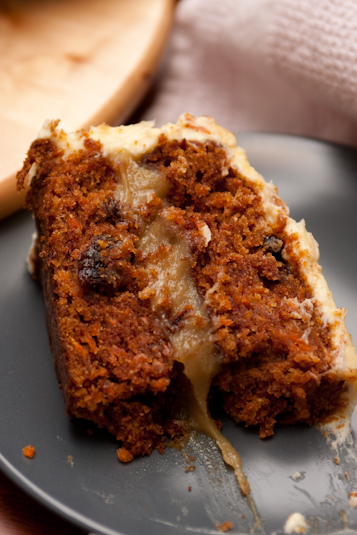
Carrot Cake from heaven I cant tell you how much I love this cake. It looks like a huge effort but if you break it down into its component parts, and you start at least two days in advance, it’s a doddle.

The recipe for this cake comes from the Frog Commissary Cookbook – probably my favourite cookbook of all times. My first version was so battered, I could barely read the recipes anymore, but it didn’t matter – I had cooked the food so often, I kind of knew what needed to go in and where. Steven Poses totally innovated the Philadelphia food scene, and this cookbook really highlights easy, casual, scrumptious American cooking.

This carrot cake is something that once you make, every single person who has tasted it will ask you when you are making it again. You will become known for this cake, and you will be begged for the recipe. It will become your signature, and people will talk of you and the carrot cake together, in the same hushed awed tones. Its really that good!

As a breakfast after cooking a feast, it is a sublime cooks treat. It’s a pain to make in one go because there are so many steps, but easy enough if you cook the caramel stuffing and assemble the cream cheese frosting a day or two before hand. The cake can be baked the night before, and everything put together on the day. Seriously, this recipe will become something which will bring you fame, and depending on who you serve it to, may be even love! Heh.

We have the opportunity here to look at how our shopping choices affect the taste of our food. Its carrot cake. PLEASE buy organic carrots for this. It will make a world of difference. Get the slightly more expensive French butter if you can for the frosting – but you can use the cheaper butter for the caramel stuffing. If you are watching your budget, these things are important. Because the frosting is butter, cream cheese and vanilla, whipped together and uncooked, the actual flavour of the butter is very important. Because you cook the butter into the sugar for the caramel stuffing, the flavour gets muted and changes, and thus does not have so much responsibility.

I have made changes to the original recipe.  I hate nuts in dessert. I don’t know why, I just do. I love nuts but don’t mix them with chocolate or cake or brownies for me. They interfere with the original taste, and don’t do anything to add to it.

In this carrot cake, especially, I don’t like anything to interfere with its smooth unctuousness. There is something so luscious about how this cake feels in the mouth that nuts just interfere with the sensual experience for me.

I have taken out the pecans in the cake and the caramel stuffing – add in if you like nuts. Ugh.

I have also added mixed-spice as I like the low musky note it adds, and I have upped the cinnamon as I don’t think you can ever have enough cinnamon!

Serves 16 – 20

This cake is most easily made if you start it at least one day ahead, preferably two, since the caramel filling, for one thing, is best left to chill overnight, and the cake needs at least a day or so to firm up. The different components can be made even up to several days in advance and stored separately until you are ready to assemble the cake (as early as the night before you will serve it).

Caramel Stuffing

(This is the “stuffing” of the carrot cake – between the two layers of cake).

  • 1 1/2 cups sugar (I use a mix of white sugar, vanilla sugar and organic brown sugar – 1/2 a cup each)
  • 1/4 cup flour
  • 3/4 teaspoon salt
  • 1 1/2 cups heavy cream (I use the pouring cream you can buy in the long life milk cartons)
  • 6 ounces (3/4 cup) butter (I use salted – but you can use unsalted)
  • 2-3 teaspoons vanilla extract (or more – depending on your taste)
  • 1 tsp to 1 tbsp Maldon or Fleur de sel to sprinkle over the stuffing
  • OPTIONAL: 1 1/4 cups chopped pecans (I dont use nuts in this cake because I dont like cake with nuts, but feel free to add them if you like. You can use walnuts, or even dried coconut if you like).

In a very heavy saucepan, blend well the sugar(s), flour and salt.

Gradually stir in the cream. Make sure they are blended – the dry ingredients will slowly absorb the cream. Leave this for a few minutes to let the sugar really melt into the cream.

Chop up the butter and add to the saucepan.

Put the saucepan on low heat and stir as the butter melts. You will see the butter getting absorbed into the creamy mixture as it melts.

Once the butter is absorbed, stir in 1 teaspoon of the vanilla.

Simmer the mixture for 20 – 30 minutes (up to an hour depending on the heat), stirring occasionally. It will start to pop and sizzle. Make sure you stir so the bottom and sides of the pan get scraped down.

Once the caramel is golden brown to nut brown in colour (again, depending on your taste), and the mixture is thick, take off the heat and cool to lukewarm.

Add the remaining vanilla (I usually add at least another teaspoon because of how weak the vanilla is in Malaysia), and the nuts or coconut if you are using them (don’t!).

Let cool completely and refrigerate, preferably overnight. If its too thick to spread when you are ready to assemble the components, let it warm a little to spreading consistency. Just before spreading, sprinkle the Maldon or Fleur de sel over the caramel.

Any extra is SUPERB with vanilla ice cream as a topping.

Carrot Cake

  • 1 1/4 cups corn or other clear light vegetable oil
  • 2 cups sugar (I use a mixture of white and organic brown)
  • 2 cups flour
  • 3 -4  teaspoons cinnamon
  • 2 teaspoons mixed spice
  • 2 teaspoons baking powder
  • 1 teaspoon baking soda
  • 1 teaspoon salt
  • 4 eggs
  • 4 cups grated carrots (about 1/2 kilo bag) – if you dont have enough carrots, you can add a few apples
  • 1 cup raisins
  • OPTIONAL 1 cup chopped pecans (see above re nuts in cake).

Preheat the oven to 175 C

Line the base of two 10 inch cake pans with baking paper, and grease well with butter

In a large bowl whisk together the corn oil and the sugars until the oil is absorbed into the sugar. Leave to let the mixture meld for a while.

Meanwhile, mix the flour, cinnamon, mixed spice, baking powder, baking soda and salt together in a separate bowl.  Sift half of the dry ingredients over the sugar-oil mixture and blend.

Alternately sift in the rest of the dry ingredients while adding the eggs (lightly beaten), one by one.

Combine all well, and leave to sit for a bit while you grate the carrots.

Add the carrots, the raisins and (if you are using them) the pecans.

Pour mixture into prepared pans and bake for about 25 – 30 minutes, or until a knife inserted comes out clean.

Cool upright in the pan on a cooling rack. Unmold the cake before you refrigerate it if you are not using the cake that day. Wrap it well in plastic wrap or a clean kitchen towel.

I think this is best made at least 1 – 2 days in advance. Too fresh a cake makes it very difficult to cut – I used a very fresh cake at my last party, and after the first few slices, the cake was unfolding herself like a blowsy lady who had too much to drink at a party!

Cream Cheese Frosting

  • 1/2 stick to 1 stick of butter (salted) – I usually use less butter than cream cheese, at room temperature
  • 1-8 ounce package of cream cheese at room temperature
  • 200 – 500 g of powdered sugar (I usually use less, and add more to taste)
  • 1 – 3 teaspoons of vanilla

Using electric beaters, cream the butter well.

Add the cream cheese and beat until well blended.

Sift in the sugar and the vanilla.

Depending on the consistency of the frosting, leave in fridge for a few minutes (if too soft) or add a little sour cream or milk (if too stiff).

Assembly

Centre the cake on your serving plate.

Depending on your taste, use a serrated knife to cut the cake into 2 – 3 layers.

Spread the caramel filling between the layers of cake. You may have to use a spoon and just drop the thick caramel onto the layers.

Spread the frosting over the top and sides.

Refrigerate to let the cake hold itself together.

Serve cake at room temperature.

Variations

  • The assembled cake freezes very well
  • You can substitute apples or zucchini for the carrots
  • Batter can also be baked as cupcakes, loaves, sheet cakes

Braised Broccoli with Red Wine Pasta

28 Jul

Braised broccoli with red wine pastaWhen I started cooking and writing regularly for this blog, I decided to let my whim take me where it would .. and of course, it lead me down the paths of cream, butter, and lots and lots of chocolate. But woman cannot live on that alone (well, she can try, but will end up as big as a house)… suddenly my cravings have changed. Gotten simpler, greener, more robust and earthy. I crave broccoli and butternut, spinach and beetroot. I am enjoying this change of focus (notwithstanding macaron class and the occasional batch of cookies) and I adore the food that I am cooking for its simple satisfaction, its beautiful taste, and its health(ier) context.

I am also enjoying the fact that finally my body is starting to listen to itself, and enjoy food for its sensual pleasures, and health giving properties, rather than rely on it for comfort. Its a nice change of pace 😉

Given all of that, this pasta is something that I have been wanting to try for ages. I found myself with a bottle of wine left over from the World Cup, and so … Braised broccoli, succulent and green, chili, garlic, and toasted almonds top plain pasta that has been finished in a bottle (yes, a whole bottle) of red wine. The pasta gets cooked in regular water first, and after five minutes, gets drained, and then finished off in wine. Because the pasta is already part of the way there, its pores are open, so to speak. It soaks up the wine, gaining a wonderful slightly bitter winey intensity, and glorious colour. Zinfadel is best for colour, but I only had a cabernet – didnt turn out half bad if I say so myself.

This meal is a quick meal that feels like a celebration. Its so dramatic, the colours are so beautiful, and its soul satisfying.

Serves six (greedy) to eight people

Braised broccoli

  • 1/3 – 1/2 cup almond flakes or chunks (about 60 – 90 g)
  • 500 – 750 g (1 – 1 1/2 lbs) broccoli and cauliflower of your choice (I like a mix of regular broccoli, romanesco broccoli and purple cauliflower)
  • 2 – 3 tbsp olive oil (add some butter if you are not vegan just for depth of taste)
  • 7 – 9 cloves of garlic, sliced thin
  • 1 – 2 tsp red chili flakes
  • 1 tsp oregano
  • Salt and pepper
  • 1- 2 cups vegetable stock (made from a stock cube if you like) or white wine or water
  • 1 tbsp lemon juice

In a large, dry, non stick frying pan, over medium to low heat, toast the almonds until they are golden brown. Pour off into a bowl, and set aside for later.

Peel the leaves off the broccoli, trim the stems, separate the head into small flowers, and chop the large stalks into medium sized chunks. Keep the stalk chunks and the separated flowers of broccoli separate. Rinse the broccoli under cold water.

In the same large frying pan, heat olive oil (and butter if you are using), over medium high heat, until the oil starts to shimmer.

Add the garlic and allow it to soften for a few minutes. Add the chili flakes and oregano, and the chopped stalks of broccoli, and allow to cook for 5 – 10 minutes until just tender crisp. Add the flower heads of broccoli to the pan, season with salt and pepper, and allow the heads to just sear in the hot oil. You will have a pretty full pan at this point.

Add about half a cup of vegetable stock and let the broccoli braise in this liquid for at least 5 – 10 minutes. Test for doneness – add more braising liquid if needed.

Once the broccoli is cooked to your liking (I like it still with a bit of bite in it rather than boiled to within an inch of its life), sprinkle over the lemon juice and set aside on the stove top.

Red wine pasta

  • About 1 tsp of olive oil or canola oil
  • 1/2 tsp salt
  • 500 g (1 lb) spaghetti or fettucini (nothing too fragile like angel hair)
  • 1 bottle (3 cups) red wine – preferably Zinfadel for the colour, but you can use anything
  • 1 tsp sugar
  • 1 cup cooking water from first pasta boil

First of all, lightly oil the inside of a large pot with olive or canola oil. This will encourage the pasta not to stick to the inside of the pot as it cooks.

Boil about 3 litres of water in the pan, and add salt. Add the pasta and cook for exactly 5 minutes. The pasta will have softened, but will not be al dente yet.

Drain the pasta, reserving about 1 cup of the cooking water.

Return the pot back to the heat, and pour in the bottle of wine and add sugar. Allow the wine to come to the boil, and reduce slightly, about 3 – 5 minutes. Add the pasta to the wine, and with tongs, turn the pasta in the boiling wine, allowing all of it to be covered by the wine. Check often, but after about 6 – 10 minutes the pasta should be a beautiful wine colour, and al dente. You might need to add the additional cup of cooking water in case the pasta is taking a little longer.

To serve

  • Red wine pasta
  • 1/4 cup grated parmesan or pecorino (with additional to serve) – optional
  • Toasted almonds
  • 1 tsp olive oil
  • Braised broccoli

Using your tongs, transfer the red wine pasta onto a serving platter. If there is any boiling liquid left in the pot, make sure to let it drip off the pasta as you transfer it.

Add the parmesan (if you are using), half the toasted almonds and the olive oil, and toss the pasta. Add the broccoli, reserving a few pretty florets for presentation) and all its cooking liquid to the pasta, and toss, making sure that there is an even distribution of garlic and broccoli throughout. Taste and adjust salt and pepper as needed.

Arrange a few florets on top, sprinkle with the remaining almonds, and serve immediately.

Port Wine Poached Figs Oven Roasted with Cashel Blue

25 Jul

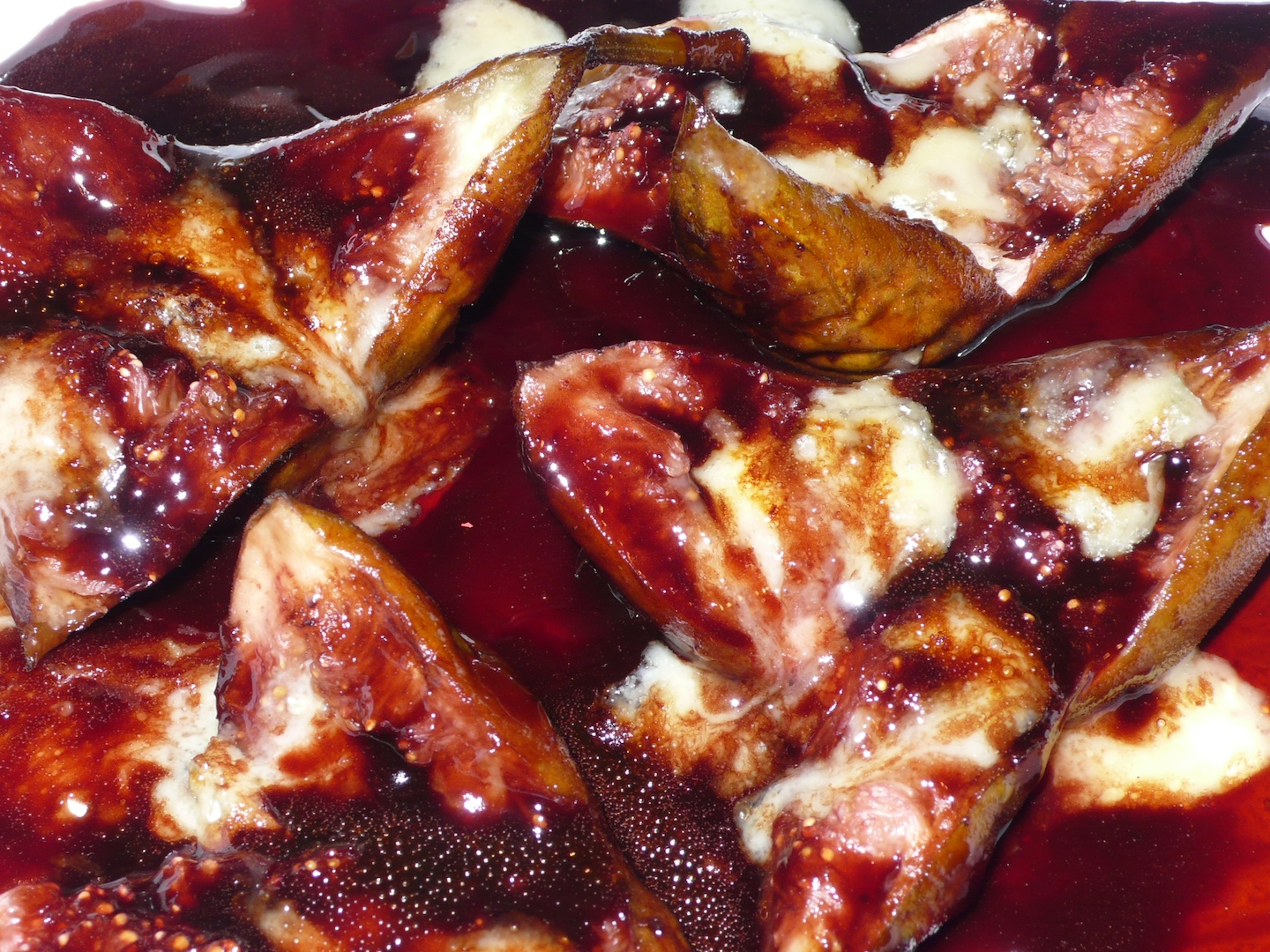
Figs roasted in port wine with Cashel BlueAs I have written before, I am being inspired by things all around me. Recently, I read a post on Facebook about oven roasted figs with a gorgonzola sauce and thought, hmmmm, I want to do that! But of course, I wanted to work with what I had, and I wanted to make it perfect for my taste. This dish seems to be “high-falutin gourmet food” (as my friend Jobby said), but actually, its so easy to make, and so dramatic and beautiful to present. I adore figs – they have a luscious, sensual earthy appeal. They are perfect just as they are, but add port wine, a touch of spice, and some deep oven roasting and you get ambrosia. These can be served as starters or main courses, and one per person with a bitter green salad is perfection. Though the greedy ones in your family might demand more, so be prepared!

You could actually make these with dried figs, especially because of all the poaching in wine. But I prefer fresh figs… there is something so inspiring about these deep purple swollen fleshy fruits. And obviously, something downright sexy. I used to really dislike figs, but as I grew older, they somehow just grew on me. I am still not a fan of dried figs – the intensity of all that flesh and sugarsweet is just not for me. But fresh figs have a unique place amongst fruit, and they are surprisingly good for you too – a rich source of potassium, dietary fibre, and manganese. That, and they are yummmmmmy.

This recipe is really easy. You dont even need measurements, though if you are a stickler, I have given you some broad strokes. Work with what you have. Port wine for me, juice for you and red wine for someone else. Add or subtract things you like and dont like. Figs are precious. Make them as YOU want them, not someone else!

For 4 people you will need:

  • 4 – 8 figs
  • 4 cups (2+1+1) port wine (you could make this up in a variety of ways – port wine + red wine + a berry based fruit juice or use all of one or a mix)
  • 1 cup water
  • 1/2 tsp mixed spice (or cinnamon or nutmeg)
  • 1 tbsp butter
  • 2 tbsp old balsamico vinegar
  • 1 tsp Cashel blue (or other blue cheese) per fig

In a large saucepan or frying pan, over medium-high heat, poach the figs in 2 cups of port wine and 1 cup of water for about 20 minutes. You want the figs to plump up and the port wine to reduce by at least half. If you are using dried figs, add about half an hour of poaching time, at a slightly lower heat. You can leave them largely unattended, though it is nice manners to go over a few times, and bathe them in juices 🙂 About 10 minutes in, sprinkle over the mixed spice.

When the figs look lovely and thick and plump, take them out, and transfer to a heatproof serving pan. Try and get the figs to fit just nicely in the pan – something too big will make the gorgeous juices dissipate and possibly burn. Leave to cool for a moment.

Meanwhile, pour another cup of port wine, or some juice, into the bubbling thickened juices from the poaching. Boil this down to a very thick jammy sauce. As it thickens, stir in the butter to give more body, and taste – you might want it a bit peppery or slightly more spicy. If so, adjust accordingly. Set aside to serve with the figs.

Using a kitchen scissors, cut the figs open from the top. I usually cut them with one “half” bigger than the other, and then split this “half” in two, so I have a three petaled fig. Open up the fig, and drizzle some very old very delicious balsamic vinegar in the centre. Pour the remaining port wine into the pan, and oven roast the figs for about 30 minutes, in a 180C preheated oven.

Take the figs out of the oven, and switch on the broiler. Stuff the figs with a teaspoon (or more if youre feeling wealthy!) of Cashel blue (or Stilton or other blue cheese), and broil for 5 minutes or so or until the cheese is melted and bubbling.

Serve with a walnut and rocket salad, with the port wine sauce on the side.

Divinity.

Butternut and Spinach Tart with a Parmesan or Pecorino Crust

24 Jul

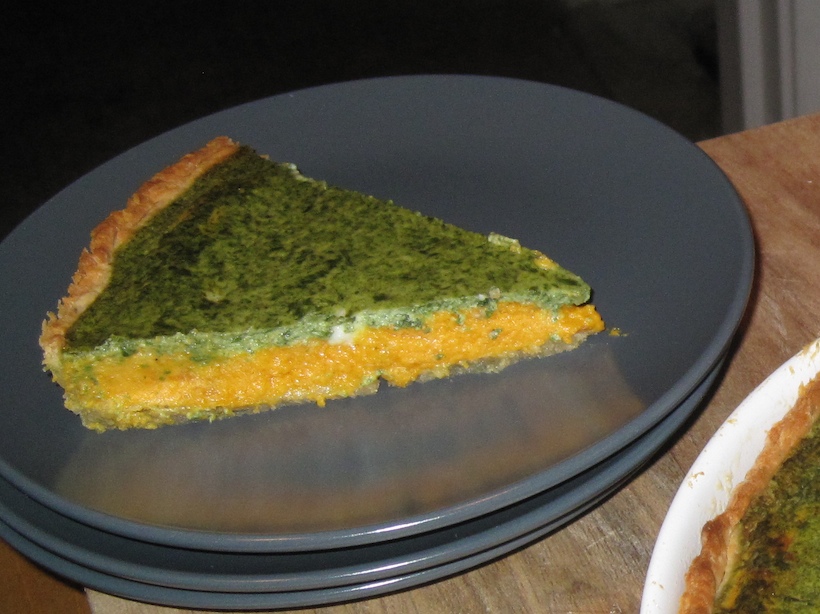
goldorange perfectionI am really in a tarty mood these days. Not sure why. Must be something to do with the moon 😉 I must admit that tarts and pies have always fascinated me. I love the idea of a pastry enveloping delightful fillings – and I have always believed that the pastry should be as good as the interior, if not better. I made a raspberry curd tart the other day, and now I am trying my hand at a savoury one. I love butternut and spinach together – their colours, green and orangegold are so complementary, and, more importantly, they taste so good together. Roasted butternut and lightly sauteed spinach are a knockout taste combination. But what would happen, I wondered, if you made them both very smooth and creamy, a touch of herbs and garlic, and combined them together, side by side. May be some shards of very salty, briney, goats cheese. That would stand up to the spinach and butternut. And a crust that had a hint of pecorino in it, so it too was a taste explosion.

So I set out to make this tart of my dreams … and I must admit it is a process. I made it over one evening, and an afternoon. This is a tart for a family gathering or celebration, a picnic or a birthday. I have to say that the actual cooking processes are easy, and really not focus consuming at all – you just need to be around as things get roasted and sauteed, and you need to let the crust rest, and then prebake it. Its a doddle if you break it down into smaller components (much like life) and then tackle each individual piece slowly and with great enjoyment. I roasted my butternut and prepared my tart dough the night before while watching tv. The actual work time was about 15 – 20 minutes, and the rest was allowing the ingredients to do their magic.

What I adore about this particular tart is that it is layer up on layer of perfection. When you serve it, it looks like a spinach tart, which in and of itself, is pretty damn delicious. Underneath the bronzed deep green spinach, is the goldenorange perfection of butternut, and nuggets of melted goats cheese. What an astounding mixture, what a brilliant taste sensation, what delightful surprises hidden within that beautiful crust.

Tarts are wonderful things because they can feed many people, in great style. They accommodate fillings pretty much at your whim and desire, and can be savoury or sweet at your discretion. A slice of tart will almost never go unaccepted – and when youre in the mood for just a bite, a sliver of tart can hit the spot perfectly. Plus they are so beautifully dramatic to present. Such a wide expanse of pretty colours and melting goodness. And you can serve them warm from the oven (but never hot), or cold from the fridge the next day (if there’s any left!).

If you decide to make this tart, do think about timing. If you make it all in one afternoon, roast the butternut first, make the dough and put it in the freezer while the butternut is in the oven, then cool the butternut, then make the spinach, etc. You will need to give each element time to rest, cool and intensify their flavours and textures, so be aware of what you make and when.

And just a note, I used pecorino in this recipe, but you could just as easily use parmesan. I love pecorino because its a more tangy version of parmesan, and its made with ewe’s milk so it goes easily with the goat’s cheese.

Pecorino Pastry

  • 1 cup all purpose flour
  • 1/2 cup pecorino, grated
  • 1/2 cup / 110 g / 8 tbsp butter, frozen and grated
  • 1 egg
  • 1 tsp dijon mustard
  • 1/2 tsp oregano or sage or rosemary

In a large mixing bowl, combine the flour and parmesan. Grate the frozen butter over, sifting it into the flour with the tips of your fingers. I pause and do this twice as I grate.

Beat the egg, dijon, oregano (or other herb) and salt together, and pour over the flour-parmesan-butter mixture. Bring the dough together with the tips of your fingers and let it rest in the fridge for about half an hour or up to two days.

When you are ready to use the pastry, roll out on a floured board. Drape over your rolling pin, and centre it in your tart pan. Prick with your fork, line with aluminum foil, fill with beans, and bake in a preheated oven for 20 minutes. Take out the foil and beans, prick again with the fork, and bake for about 5 – 10 minutes until lightly browned. Allow to cool a bit before filling with butternut and spinach.

Roasted butternut (and a garlic head!)

  • 3 – 4 cups butternut (about 700 g), roughly chopped
  • 1 tsp or less olive oil
  • Salt
  • Freshly ground pepper
  • 1 head of garlic
  • 3 tbsp light sour cream
  • 2 eggs + 3 yolks, beaten well together

Preheat your oven to about 220C. Prepare a baking tin with greaseproof paper.

Skin and chop the butternut, and arrange it in one layer on the baking tin. Using your hands, lightly coat the butternut with some olive oil. When I say lightly coat, I really mean lightly – you dont want the butternut swimming in oil because it will most definitely steam in the oil rather than roast and slightly char. You want that caramelised burnt butternut flavour, and a tiny bit of olive oil will really help with that. Too much will be a hindrance.

Using a sharp knife, cut about 1/4th inch off the top of a head of garlic, skins intact.

Place the garlic on the baking tin, and pour olive oil into the cloves.

Salt and pepper everything liberally.

Roast in the oven for about 30 minutes, or until the butternut is soft, and slightly burnt around the edges.

At this point, you can refrigerate the butternut, covered, for up to two days. Take the cloves of garlic out of their skins, cut away any very burnt bits (they can be bitter), and store in the fridge too, covered with olive oil. If you are serving the tart that day, go on to the next step.

Using an immersion blender, combine the butternut and 3 tbsp of sour cream.

Beat 3 eggs and 2 egg yolks together until light and frothy. Use 2/3rd of this in the butternut mixture, and reserve the rest for the spinach. Fold the eggs lightly into the butternut.

Set aside.

Spinach

  • 120 g of baby spinach, washed
  • 3 cloves of roasted garlic
  • 3 tbsp roasted garlic olive oil
  • Salt and pepper to taste

Wash a packet of baby spinach well in salted water. Let it sit for a minute in the water while you heat 3 tbsp of olive oil that has been sitting with the roasted garlic cloves, along with three of the cloves, in a large frying pan over high heat. You can mash the cloves into the olive oil.

With your hands, lift the baby spinach out of the water, allowing some water to cling to the leaves. Fry in the very hot oil until it is bright green and soft, about 3 – 5 minutes only. You dont want to over cook the spinach, but you do want it to be wilted completely. Season liberally with salt and pepper.

Transfer the hot spinach to a mixing bowl. Add 3 tbsp sour cream, and using your immersion blender, make sure the spinach has been completely pureed.

Fold in 1/3rd of the egg mixture from the butternut into the spinach and set aside.

Assembly

  • Baked tart crust
  • Butternut mixture
  • Goats cheese – about 3 – 5 tbsp, roughly chopped
  • Spinach mixture

Preheat the oven to 200C.

Pour the butternut mixture into the tart crust. Sprinkle the goats cheese all over the butternut, and then pour the spinach mixture over all, using a spatula to smooth the top completely.

Bake in the oven for 25 – 30 minutes.

tart heavenLet rest for 10 minutes or so before cutting into wedges and serving.

Perfection can be hard work, but it is so bloody satisfying when it comes off!

Rice Pudding

23 Jul

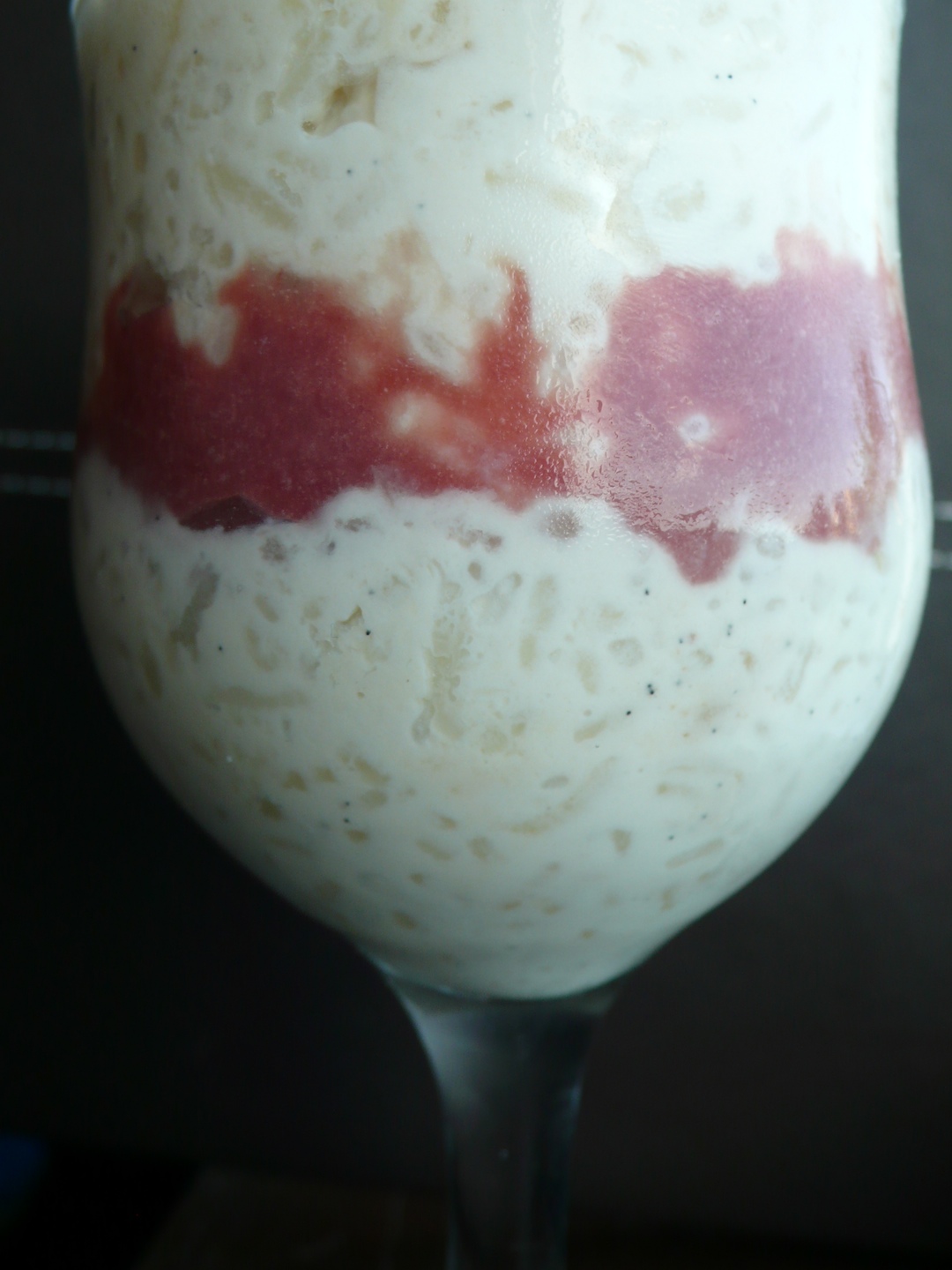
with a raspberry curd rippleRice pudding. At its best, its a quietly satisfying indulgence, clean, smooth, delicious. There are so many different ways to make rice pudding, and I probably have tried them all. Its one of the things I make when friends are feeling poorly, or when I am cooking for someone who is very ill and needs to get their weight and stamina up. Rice is food of the Goddesses. If, like me, you have that Asian gene in you, life is incomplete without rice almost every day. I crave rice when I havent had it in a while, and I eat it every which way. I love all the different kinds of rice – black, red, brown, arborio, jasmine, basmati… Pulut, nasi lemak, risotto, fried rice, buttered rice, plain rice with a touch of sambal and some soy sauce, rice with a fried egg on top, dripping golden yellow yolk into the pristine whiteness. I can eat rice in a myriad of ways, and one of the things I love about it is its just so good for you.

Rice pudding is a very friendly food. You dont have to make it fancy for it to be received with great pleasure and its incredibly easy for invalids to consume. And, if you want to dress it up and put on dancing shoes, it can take a dollop of raspberry curd, as in the photo, or some shavings of chocolate, or even be bulked up with smooth pumpkin – and suddenly, a new and delicious dish. Oh, rice pudding, how I love you, let me count the ways…

I know there are people who like to bake their rice pudding, but Im not too hot on the skin that develops. But then, in life, there are skin people and no skin people, so figure out who you are. I like a smooth, satiny white rice pudding. You can only achieve this by cooking very slowly over the stovetop, at an incredibly low heat. It takes 45 minutes – 1 hour, but most of that time, you just leave it alone. If you are cooking for someone who is ill, or who is struggling to get enough nutrients, you can beat in a few eggs right at the end to enrich the pudding. You could also add more cream, some yogurt, use all full-fat milk. You get the idea – bulk it up with fats and nutrients which will go relatively unnoticed in the consumption of the dish. A little sprinkle of nutmeg, or cinnamon, or both, also add depth of flavour.

I have to admit though, I am a purist. Rice, milk and a bit of cream, vanilla, sugar, and sometimes a touch of butter at the end. Eaten warm or cold, this is one of my favourite comfort dishes. Its like a pillow of softness, the rice melding in and flavouring the milk, and vice versa. Happy happy belly.

For about  3 cups of rice pudding (enough to serve 6 people or 4 very greedy ones), you will need:

  • 1 cup rice (any one you want, though note that brown, black, red rices do tend to take longer to cook because they are more natural. I borrowed a cup of rice from MamaLila, my upstairs neighbour, not sure but I think it was basmati she gave me, and it was goooood)
  • 5 cups of milk, divided into 4 cups + 1 cup – you can use any kind of milk you like. Try coconut, almond or soy milk. I try and use a mix of 2% and lowfat, and a dollop of cream. I have also been successful in adding buttermilk and sour cream, in small amounts to the mix. Try and get some whole or half and half in if you are cooking for someone who needs the extra fats and nutrients. All skim milk is not really that successful to be honest.
  • 1 vanilla pod, split, with the seeds scraped out, or 1 tsp vanilla essence
  • 3 tbsp (or to taste) light brown sugar
  • 1 tsp (or more) butter

In a medium saucepan, over extremely low heat, combine rice, 4 cups of milk, vanilla pod and beans (or vanilla essence), and 3 tbsp light brown sugar. Give it all a stir and leave it there for 45 minutes or so, stirring every 15 minutes to ensure that the rice doesnt stick to the bottom of the pan. You want this to cook at a very very low simmer – no boiling, but more like tiny little bubbles plopping to the surface. The rice will plump up and absorb the milk, but this process will seem as if it is never going to truly happen – it will, and it is, just trust the rice.

After about 45 minutes, you should have rice thats almost al dente. Use your instincts. I usually put in all of the final cup of milk, because I dont mind rice pudding that is quite soft, but if you think it doesnt need it all, use half or less. Taste for sweetness, and add more sugar if you think it needs it. Continue cooking at a very slow simmer for another 10 – 15 minutes until almost all the milk is absorbed. Dont take it off when its too dry – as it cools, the milk, which is now full of the starch of the rice, will become much thicker and richer.

Stir in a teaspoon or so of butter, if you like (if you are vegan, obviously, leave this out!), and let cool. You can serve it warm or cold from the fridge (which is the way I like it), snowy and soft and comforting. Add a dollop of curd or jam for colour and flavour if you like, or go purist and enjoy it in all its pristine beauty.

And enjoy how much those you love, love this!

Rice pudding!

Raspberry Curd Tart

22 Jul

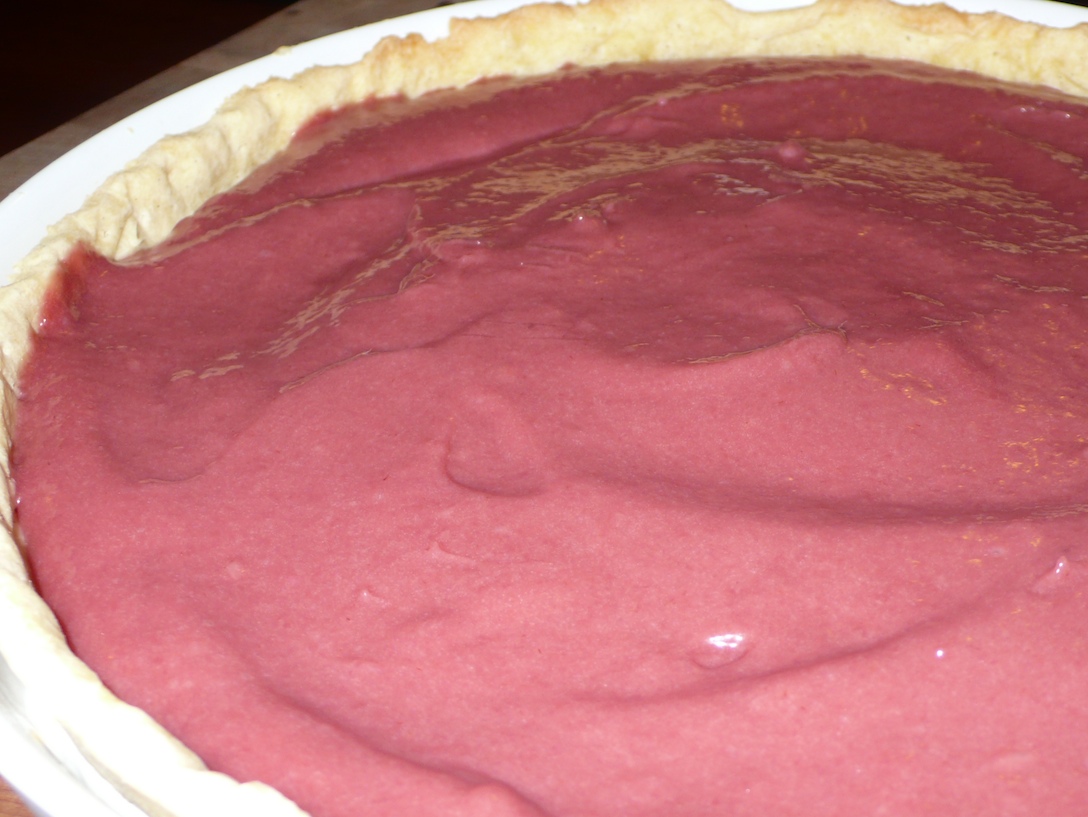
intense raspberry flavourSometimes, simple is the most beautiful. I made some gorgeous raspberry curd last night, and decided to present it two ways – with a beautiful cold rice pudding, and in a stunning tart. Both are easy to make with the addition of the raspberry curd – and both ways of presentation really highlight the flavour and texture of the raspberry curd. It is incredibly intense, and a wonderful dessert for a dinner party or high tea.

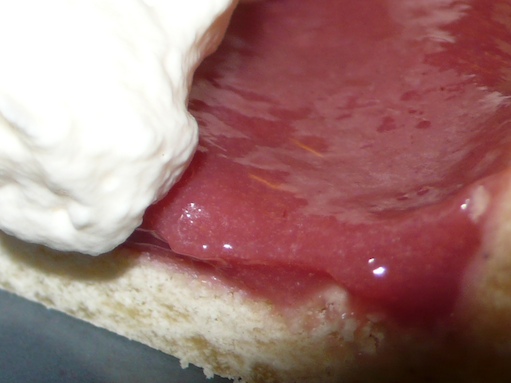
This is an amazingly dramatic and beautiful tart. Such a pretty looking tart – very girly and yet totally sophisticated. I like to serve it with a blossom of lightly whipped cream flavoured with vanilla. The cream helps to balance the strong flavour of the curd, and adds another textural element to the whole.

Preferably, you should prepare this the day before to allow the curd some time to settle into the tart shell… though if you really want to serve it day of, its fine, it will just be a little bit more unctuous, and the curd will flow out when you cut into it.

First, prepare, your tart shell. This recipe makes enough so you can make two thin shells. I often flavour it with lemon instead of vanilla because lemon really complements the raspberry wonderfully.

For a 12 – 14 inch tarte shell, you will need

  • 2 1/2 cups of cake flour
  • 1 cup / 8 tbsp / 110 g of butter, frozen, then grated
  • 3 tbsp of icing sugar, or more to taste
  • 1 tsp of vanilla extract or the seeds from 1 vanilla pod scraped out or 1 tsp of lemon juice and the rind of a lemon, grated
  • 1 egg, beaten
  • 1 tbsp or more cold water

Measure out the cake flour into a large bowl. Grate the frozen butter directly over the flour, stopping twice during the grating to gently mix in the butter shards with the flour. Use the tips of your fingers, and just make sure you dont over mix. You want this to be a very gentle process.

Sieve the icing sugar over the flour-butter mixture, and sprinkle over the vanilla or scrape the seeds from the pod, or lemon if you are using. Mix gently again with your fingers.

Add the egg and toss the flour with your fingers, mixing to make a dough. Taste and add up to 1 more tablespoon of icing sugar if you want a sweeter dough. If the mixture doesnt come together as a pastry dough, add a tablespoon of very cold water. Be gentle. It will come together if you have patience, and mix properly.

Form the dough into a ball, cover in cling wrap, and put in the fridge for at least an hour to firm up.

Once the dough has been refrigerated, roll out on a floured surface, sprinkling with a little bit of flour if needed. Transfer to a pie plate, and prick with a fork.

Cover the pie dough with tin foil, and fill in with beans or other pie weights. Bake in a pre-heated 200C oven for 20 minutes. Remove from oven, remove the beans and tin foil, and prick again with the fork. Brush with some egg white if wanted, to proof the tarte shell so it doesnt get soggy when you add the curd. Bake for another 5 minutes or so or until very lightly coloured.

Let cool.

Assembly

  • 2 – 2 1/2 cups raspberry curd, cooled
  • 1 cooled tarte shell
  • 1 – 2 cups cream, whipped with a little icing sugar and vanilla

mmmmmmmmmmmmmPour the cooled raspberry curd into the tarte shell, cover with cling wrap and refrigerate for at least 6 hours, preferably overnight.

Just before serving, whip the cream with a little icing sugar and vanilla.

Serve in wedges, with a few tablespoons of whipped cream.