Archive | Recipe RSS feed for this section

South African Potjiekos

4 Jul

The South African Vegetarian Potjie is a classic and traditional Afrikaans recipe, usually made in a cast iron pot over a campfire. This version is basically a vegetable stew, but its how you cook the veggies, and how you present them that really makes them shine. This dish is usually made with lamb or meat, but occasionally you will find a vegetarian version. This is my favourite combination. It is a simple recipe because it comes down to which vegetables are available, and knowing how to combine said vegetables so that they sparkle.

Shopping is an integral part of cooking. Organic vegetables are always more expensive (they shouldn’t be but they are!) and so if you cant afford to go all organic, shop smart. Go to the organic section first and figure out what is freshest, ripest, smells and feels the best. Prod and touch and sniff and stroke your vegetables (much like the old lady in Tampopo) and choose a balance of colour and flavour. Max out your budget here, and then round out your vegetable selection with non-organic staples, that might have a larger range or more interesting choices then the organic aisle.

The single most important rule to remember when you make potjiekos is to let your imagination, wallet, and the state of your vegetable aisle combine in magical partnership! In terms of the vegetables you use, I would try to remember that you need something from each of these groups: aromatics to pull the entire dish together, such as onions, garlic, or for those who abstain, peppers and celery; starchy and firm vegetables that will standup to being on the bottom of the pot, and will cook the longest; sweet vegetables like pumpkin; vegetables that will release a lot of water, and flavour into the broth like mushrooms or tomatoes; and strong savoury green vegetables.

The potjiekos below will feed at least 12 – 16 people, and was made in a 32cm round (not oval) cast iron dutch oven. Get one if you can. Whatever you make in here will feed hoards, and it will last a lifetime. I quite like the smaller oval dutch ovens, but the round one is just fantastic.

I chose vegetables that were at their peak in terms of ripeness, luciousness and I tried to include a nice balance of organic and regular vegetables. I used a mix of tastes and textures that I like and enjoy, and layered the roughly chopped vegetables with a sludgey jam that I made from the onions and garlic.

I find this is a meditative dish. Cutting the vegetables, layering them, thinking about what goes where and how they will taste with each other – all these processes make you intensely aware of the food you are eating and serving. It’s a loving dish.

You can certainly adjust this recipe for much smaller crowds – though if youre cooking for 2 I would make enough for 4, and puree the remainder the next day for a comforting vegetable soup.

Potjiekos is beyond delicious! The best part, in my opinion, is the extraordinary, and scant, sauce that pools at the bottom of the cooked dish. It is the essence of the vegetables you used, and needs no seasoning. Sublime.

For a large crowd, you will need:

  • 3 – 4 onions roughly chopped
  • 8 – 12 garlic cloves, either chopped or smashed
  • 2 bay leaves
  • Oregano, basil or any other dried herb that you like
  • Salt & Pepper
  • White wine vinegar (or red wine vinegar or port wine or regular wine or juice – just something acidic and liquid)
  • Mustard for that little hit of fire
  • Vegetable oil
  • 2 – 4 tbsp butter

Combine all the ingredients above, in your dutch oven, and cook until the onions are wilted and slightly jammy in consistency. Transfer almost all of this mixture into a bowl, allowing a thin film of oil and onions to remain at the bottom of the pot.

Take your pot off the heat.

Roughly peel and chop

  • 3 – 4 red potatoes
  • 3 white potatoes
  • 1 parsnip
  • 1 – 2 large carrots

They should cover the bottom of the pot. Mix them with the left over oil and onion coating the pot.

  • Roughly peel and chop
  • 4 Japanese sweet potatoes
  • ½ medium sized butternut squash

and layer on top of the potato mixture. You should almost cover it. Spoon a bit of the onion mixture over this.

Roughly chop

  • 4 -5 large Portobello mushrooms
  • 4 – 5 small very ripe tomatoes

and layer on top of the butternut mixture. You should almost cover it. Spoon a bit of the onion mixture over this. You could also layer a few fresh herbs – rosemary, thyme, basil – here as well.

Roughly chop

  • 1 large yellow zucchini
  • 1 large green zucchini

and shuck and slice

  • 1 ear of corn

and layer on top of the mushroom mixture. Spoon over your onion mixture again.

Roughly chop

  • 1 – 2 small heads of broccoli
  • 1 -2 small heads of broccoli rabe or cauliflower or purple broccoli
  • 1 bunch of spinach
  • A few baby corns

And layer on top.

Your dutch oven should be full now. If its not, add more vegetables as you see fit. DON’T mix the layers.

Spoon over the last of your onion mixture.

Either make a vegetable broth with an organic broth cube, or use plain water, add enough water to come about 1/4th of the way up the pot.

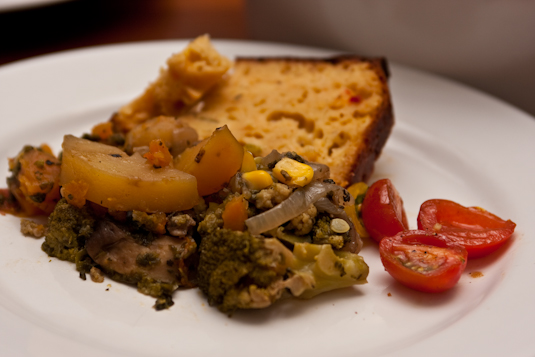
Cover. Do not stir whatever you do! Check only occasionally as you cook this over a lowish to medium heat for an hour or more. You will know when its ready. Everything will have steamed, lightly. All the vegetables retain their individuality, but the gorgeous elixir which has been created by their mingled cooking steam will unify the dish. It is truly a case of the sum being more than the parts. Check for salt and pepper.

To make this look “presentable” and party perfect, sprinkle a few breadcrumbs and over the top for the last five minutes. Pop into a hot oven, with the broiler on. Alternatively, chop up a few bright green asparagus or some broccoli, and put on top in the last 5 minutes. They will stay bright green and make the dish look delicious. Or sprinkle the top with some Italian parsley.

Day Two: If you have leftovers, you can do much with this stew. Blend in food processor or blender for a vegetable soup that is beyond delicious.
Mushrooms and Couscous

3 Jul

I first had this dish in a “wymyn friendly” cafe in Observatory, Cape Town. The place was a little intimidating (identifying as I do as a woman 😉 ) but the cooking was outstanding. Unfortunately, it closed down because the chef and the front of house manager were partners, and when they ended, the cafe ended. But while it was operational, I ate here on a regular basis to have this meal. Its charm is in its simplicity and clarity, and yet its attention to colour, texture and taste. Its an easy meal to make, but incredibly satisfying for a vegetarian, and a vegan too if you substitute olive oil for butter, and leave out the parmesan.

I made this for MZ one evening when everyone was exhausted and tired. It was so comforting, you could feel the mood around the table change. It was good.

The other thing I love about this is that is so easy to adapt – you can make it for yourself, or you can serve it on a platter, with the golden fluffy couscous, and the beautiful steaming mushrooms arranged in generous synchronicity. Such pleasure.

I usually make this for 4 – 6 people but feel free to double or halve or even quarter!

Couscous

  • 2 tbsp olive oil
  • 1/2 white onion, minced
  • 1 clove garlic minced
  • 1/2 tsp dried basil or 1 tbsp fresh basil, minced
  • 500 g box of couscous
  • 1 1/4 cups of boiling salted water or vegetable stock (see note)
  • Couple tablespoons of butter or olive oil
  • Salt

First, pour out your couscous and measure the number of cups. Most boxes of couscous can vary by up to half a cup of couscous, though you should get about 2 1/2 cups of couscous in a 500 g box. You will want exactly half the amount of couscous, for your boiling water or stock. Set aside.

In a large saucepan, over medium heat, soften the onion and garlic in the olive oil. When soft and glossy, add basil and a little salt and mix well. Take off heat, and add the couscous. Mix well so that the onion is completely combined with the couscous.

Pour over boiling salted water or vegetable stock, and immediately cover for 5 – 1o minutes, until the water is completely absorbed into the couscous.

Using a fork, fluff the couscous, adding small slithers of butter or a glug of olive oil and tasting for salt. Set aside, covered until ready to serve.

Mushrooms

  • 3 -4 tbsp olive oil
  • 1/2 white onion, minced
  • 2 – 3 cloves garlic, minced
  • 2 – 3 cups mixed mushrooms (portobello, white, Swiss brown), peeled and roughly chopped (you want large pieces)
  • 1 – 2 tbsp balsamic vinegar
  • 1 tbsp soy sauce
  • 3 tbsp butter
  • 2 – 3 tbsp dijon mustard
  • 1/4 cup red wine
  • 1/4 cup water or veegetable stock
  • 1/4 cup half and half (very optional)
  • Salt and pepper
  • Handful of baby spinach + handful of fresh basil

In a large frying pan, over medium heat, soften onion and garlic, and season with a little bit of salt and pepper. When the onions are glassy, turn heat up to high, and add mushrooms in batches of 1 cup each. You want them to sear a bit, and burn a bit before releasing their juices. Stir well, and continue moving the mushrooms about the pan.

When all the mushrooms have been added to the pan, add the balsamic and soy sauce all at once. This will quickly steam in the pan, caramelising some bits of the mushrooms, but also encouraging them to release their juices. As the liquids begin to come out of the mushrooms, do not stir. Add a few slivers of butter over the mushrooms and allow the heat and steam to melt the butter into the mushrooms. This will do two things: it will flavour the mushrooms, and bring out their incredibly rich and meaty taste, but it will also thicken and encourage the sauce that is being created from their juices. The alchemy of heat and ingredients!

Add the dijon, wine, water and half and half (if using) and mix extremely well. Taste for seasoning and adjust. Allow to boil down by about half, but ensure you still have some liquid at the bottom of the pan. Set aside until ready to serve, or serve immediately.

Just before serving, reheat gently, and add a handful of baby spinach, and a handful of fresh basil to the pan, stirring to wilt.

Assembly

To serve this dish you will need:

  • Couscous
  • Mushrooms
  • About half a cup of toasted pine nuts
  • Another handful of fresh basil or Italian parsley, chopped roughly
  • Thin slices / shards of old parmesan (optional)

On a beautiful serving platter, arrange the couscous so there is a small well or dip in the middle. Mound the mushroom mixture into the well, and pour sauce over the sides, so you soak the couscous, but still allow its fluffy goldenness to shine through. Sprinkle the pine nuts over, and then the basil or parsley. Finally top with shards of parmesan if using.

Delicious!

Dulce de leche

2 Jul

This is so simple, I feel silly posting it as a recipe. I have always loved this stuff. Sweetened condensed milk cooked for so long that it becomes a rich dark toffee caramel. Its the base for banoffee pie, and to banish sweet cravings, there is nothing better than a teaspoonful.

Most people recommend boiling cans of unopened sweetened condensed milk over the stovetop for 3  hours or so. This is the easiest way to create dulce de leche BUT its also very dangerous. When I was about 13, I was overnighting at an Aunts house in St Johns Wood in London. I was flying out the next day, and she was not there. I was craving something sweet, so decided to make dulce de leche the traditional way. I put my cans of unopened condensed milk in a deep saucepan, and covered with water. And then I proceeded to fall asleep on the couch! I woke up to a HUGE bang and could not, for the life of me, figure out what had happened, until I walked into my Aunts gorgeous gourmet kitchen to find caramel dripping from the ceiling, and every available surface. It took me HOURS to clean up (and I dont think I got everything because a few weeks later, had a very uncomfortable conversation with her!).

Ever since then, I have been a tad nervous about making this. You can pop steam vents into the top of the cans, so that they dont explode, but you still have to check for water every fifteen minutes or so. I prefer this way. Safer, and you can leave it for up to an hour at a time.

Unfortunately, here in Malaysia, we only have sweetened condensed filled milk – which has palm oil as a stabiliser and additive. This method still works, but the preference is obviously for sweetened condensed milk which is just milk and sugar.

You will need one deep roasting pan, filled about 1/3 with cold water, and one smaller roasting pan which can fit inside the deeper one.

Preheat your oven to 170 F.

Place the deep roasting pan into the oven to heat gently.

Pour up to 3 cans of sweetened condensed milk into the second roasting pan, and cover tightly with aluminum foil.

Place this second pan into the first and leave in the oven for up to 3 hours. I would certainly check every hour or so to make sure the water is still there, and to mix the slowly caramelising milk well.

Be careful when you open the oven. A lot of steam gets generated from the water bath, and everything is really really hot.

After about three hours, when you take it out of the oven, dont worry. It will look curdled and lumpy. Some bits will be dark caramel brown, some bits will be lighter and smoother, and some bits will look like milk curds. Just pour and scrape into a clean bowl, and beat with a wire whisk until smooth. Let cool before even thinking of tasting it!

You can flavour this with some vanilla if you like. Unspeakably delicious.

Pear Crumble

2 Jul

When I visited MZ, it was supposed to be warm, but it turned suddenly cold. I remember thinking to myself that we needed something soul satisfying. I realised there were a few almost over ripe pears sitting on the counter, and so I made this very quick, very easy, very healthy (suprisingly) pear crumble. Its good just from the oven, warm and scenting the house with cinnamon. Its also pretty lovely the next morning, cold, from the fridge, with some half and half poured over, as a decadent breakfast.

Because the pears were over ripe, they were bursting with fruity sugars. I actually needed to add a few apples for tartness and to counter balance the pear sweetness. Be very light with the sugar here. You really dont need it.

You can use just about any fruit that is in season. Make sure the fruit is ripe to almost bursting – this will ensure a strongly scented and very sweet crumble. Its a wonderful way to use up fruits that you would otherwise not eat.

Serves 4 -6

  • 4 over ripe pears, peeled, cored and cubed
  • 2 apples (pink lady/blush), peeled, cored and cubed
  • Scant 1 tbsp brown sugar (if needed) – you could use honey instead for flavour
  • 1 tbsp lemon juice (or another fruit juice if you dont have lemon) or a tiny splash of vanilla essence
  • 1 – 2 tsp cinnamon
  • 1 tsp ginger
  • 1 – 2 tsp flour

Preheat oven to 175C.

Cube the pears and apples straight into a 7×11 baking pan. Mix together well and taste. If you need to up the sweetness, add sugar. Mix spices with juice and pour over. Sprinkle flour over the pan, and using a spoon mix in well. This will help thicken the juices while the crumble is baking. Mix well and leave to rest while you make the crumble.

  • 1 – 1 1/2 cup oatmeal
  • Scant 1/4 – 1/2 cup brown sugar
  • 1/4 – 1/2 cup cubed cold butter
  • 1/2 tsp salt
  • 1 tsp cinnamon
  • handful of slivered almonds

In a clean bowl, toss together the oatmeal and sugar. Work the butter in with your hands, until the mixture resembles coarse meal. I tend to use the lower amount of sugar and butter, and then taste. If it needs to be sweeter, or the mixture needs to stick together more, I add where necessary. Add salt, cinnamon and almonds, and work together well. Taste and adjust seasonings.

Give the fruit mixture one last turn before sprinkling crumble over. Make sure you have an even layer over the entire pan.

Bake in oven for 45 minutes to an hour. You might want to cover the crumble topping with aluminum foil if it becomes too brown.

Serve with cold cream or half and half poured over, and warm up your soul 🙂

Pesto

1 Jul

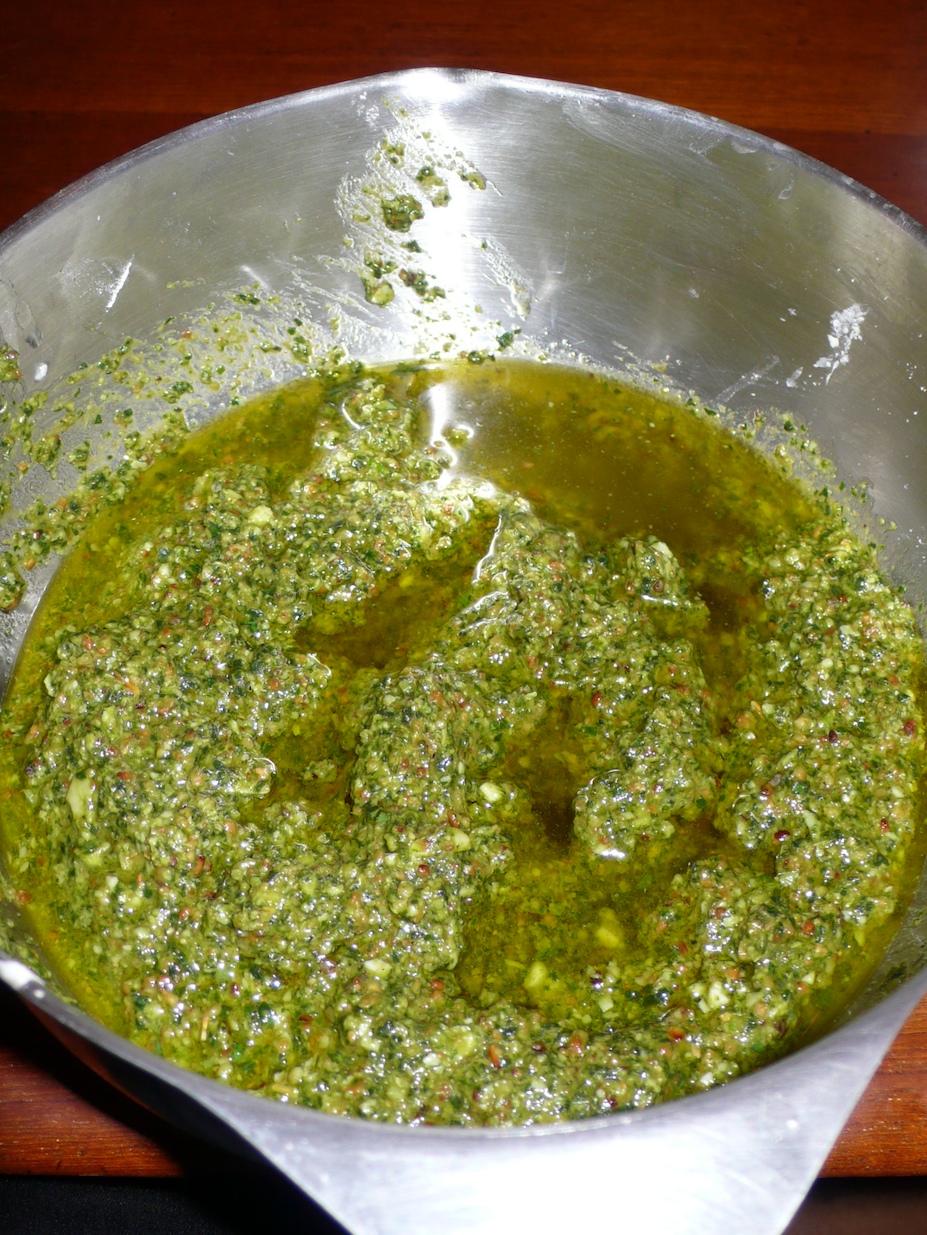
Glowing green. Scented with basil, pine nuts, pecorino and garlic. Goopy, gooey goodness. I am nuts about pesto. Its so easy to make – about 5 minutes cooking time to toast the nuts, and the rest a few pulses in your food processor. You can eat this so many ways: straight from the bowl (as per usual!); stirred through pasta or even rice; as an amazing addition to a sandwich or salad dressing; and, as I will be using it, as the base of a terrific lasagne.

Pesto can be made with so many things – any green vegetable – or go further – let your imagination take flight – use butternut, sun ripened tomatoes, mushrooms even. Try it with almonds, macadamias, walnuts, and change the cheese – blue, parmesan, etc. Its so flexible, and so delicious.

Note that I use some rocket in this recipe (about 1 to 3 in terms of the basil) because basil in Malaysia is very strongly flavoured. If your basil is the gentler variety, feel free to omit the rocket entirely.

For about 2 cups you will need:

  • 1 1/2 cups pine nuts
  • 2 cups (150 g) well packed, washed basil
  • 3/4 cup rocket
  • 5 large cloves of garlic, chopped into chunks
  • Pinch of salt
  • 1 cup grated pecorino or parmesan
  • Up to 1 cup good quality extra virgin olive oil

First off, toast the pine nuts. In a non stick pan, over medium heat, layer the pine nuts. Make sure you keep stirring with a spatula. These go from golden toasty to burnt in a split second, so be careful.

Put your basil into food processor and add about 1/4 cup olive oil. Pulse a couple times so its completely chopped. Add the rocket, and pulse again.

Add the pine nuts, and pulse well, adding a little more olive oil if you feel it is needed.

Add the garlic and salt, and pulse again. Add the pecorino or parmesan, and mix with spatula. Turn out into a bowl, and add a little more olive oil until its the consistency that you prefer.

I would certainly make this at least 1 day in advance to allow the flavours to meld. Save covered with a slick of olive oil, covered, in the fridge.

Banana Cake

1 Jul

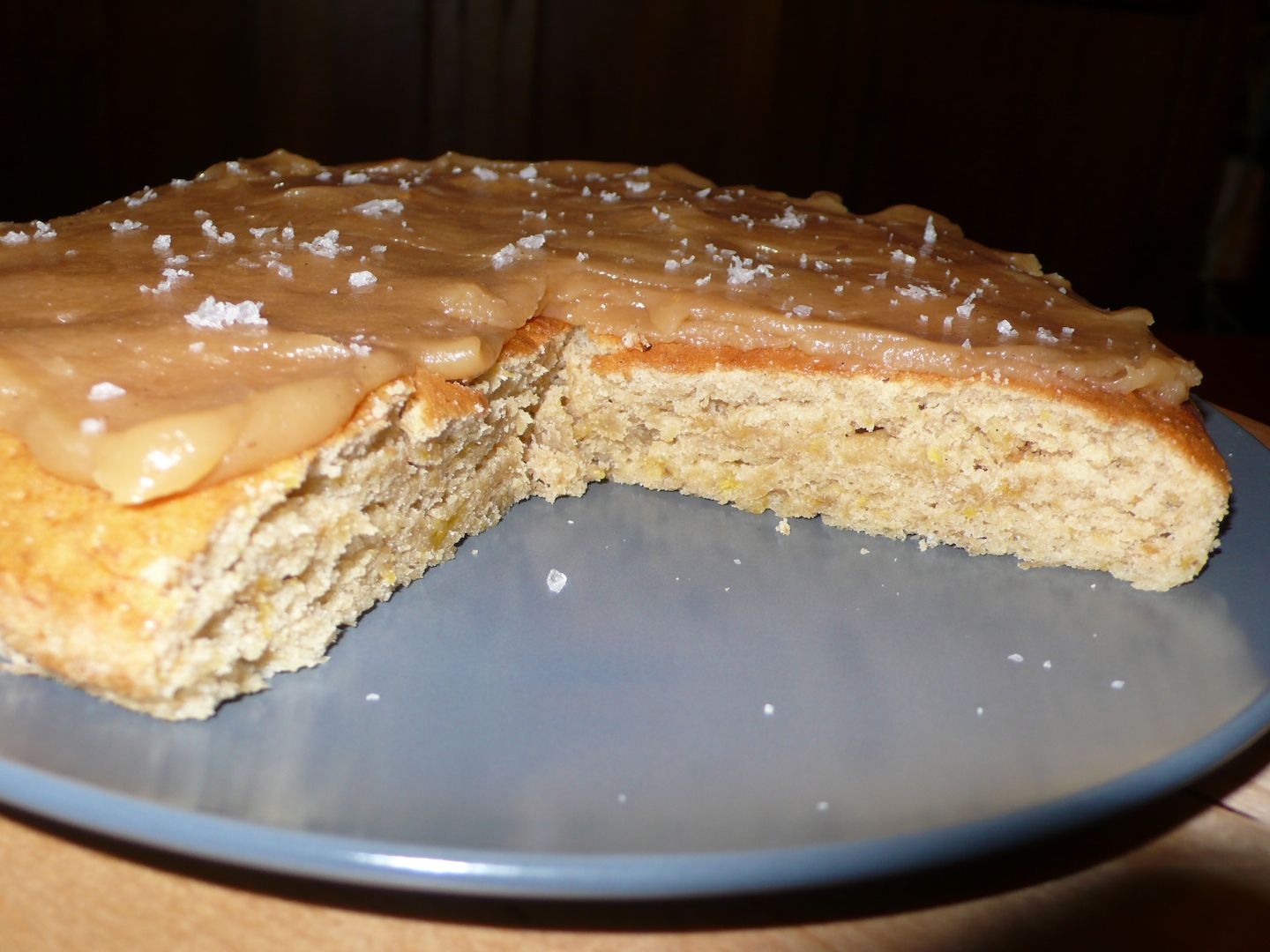
This cake is soooooooo good! Its got such a beautiful banana taste, light, fluffy, perfect crust. It does not bake up high, so if you are going to stuff it with salted caramel, make sure you make two layers. You wont be able to slice in half lengthwise because of the tenderness of this cake, and the gentleness of the crumb, so dont try!

If you are serving this as a dessert for a nice dinner, it would be perfect iced with a cream cheese and vanilla frosting (beaten with a few tablespoons of powdered sugar), or stuffed with salted caramel. However, if its for an afternoon tea, or just because… it needs no embellishment. Its beautiful and light, satisfying and happy making!

My Toh used to eat pisang mas (the tiny gold banana common here in Malaysia) and so, in memory of him, that is one of my favourite fruits. I look for it everywhere, and was so thrilled when my wonderful organic delivery guy had them. I used pisang mas for this recipe, but please feel free to use any very ripe (even black) sweet banana.

  • 2 1/4 cups cake flour
  • 3/4 teaspoon baking soda
  • 1/2 teaspoon baking powder
  • 1/2 teaspoon salt
  • 1 1/2 cups mashed ripe bananas
  • 1/3 cup buttermilk
  • 1 teaspoon plus 1 tablespoon vanilla extract
  • 1/2 cup unsalted butter, room temperature
  • 1 1/4 cups sugar
  • 2 large eggs

Preheat oven to 175°F. Lightly butter two 8-inch-diameter cake pans with 2-inch-high sides; dust pans with flour.

In a small bowl, combine cake flour, baking soda, baking powder and salt. Set aside.

Mash bananas well and measure – we used about 8 or 9 small pisang mas. Mix bananas with buttermilk and vanilla and set aside.

In an electric mixer, beat butter and sugars in a large bowl until blended well, and light. Add eggs one at a time, beating after each addition.

Add dry ingredients alternately with banana in 3 – 4 additions, beating for a few seconds until just blended. Let rest for a few minutes.

Divide equally between the cake pans, and bake, one at a time for approximately 25 minutes, or until a cake tester comes out with a few crumbs attached.

Let cake cool on a cake rack, in the cake pan, for about 10 minutes, and then turn out and allow to cool completely.

Ice (or stuff) with salted caramel, and sprinkle with a little bit of Maldon.

Try not to eat before the guests come – unlike me (as you can see from the picture!)

Salted Caramel Filling

1 Jul

This is food of the goddesses. Sweet, salty, caramel perfection. This is so good, so easy, so quick to make. I got it from one of my favourite cookbooks of all times – The Frog Commissary Cookbook – and its used as a stuffing for a sublime carrot cake.

Use this as an icing, as a stuffing, or even warmed as a caramel sauce for ice cream or anything else. My nephew likes to eat it straight from the bowl. So do I, which is why I try NOT to have it in the fridge on a regular basis.

  • 1 1/2 cups sugar (I use a mix of white sugar, vanilla sugar and organic brown sugar – 1/2 a cup each)
  • 1/4 cup flour
  • 1 teaspoon salt
  • 1 1/2 cups heavy cream (I use the pouring cream you can buy in the long life milk cartons)
  • 1/2 cup butter (I use salted – but you can use unsalted)
  • 2 teaspoons vanilla extract (or more – depending on your taste)
  • 1/2 tsp or more to taste Maldon or fleur de sel

In a very heavy saucepan, blend well the sugar(s), flour and salt. Gradually stir in the cream. Make sure they are blended – the dry ingredients will slowly absorb the cream.

Chop the butter and add to the saucepan, and put saucepan over low heat, stirring gently as the butter melts. You will see the butter getting absorbed into the creamy mixture as it melts.

Once the butter has been totally absorbed, stir in 1 teaspoon or so of vanilla.

Simmer this ambrosia for a minimum of 30 minutes, and up to an hour, depending on the heat, and how deep you desire your caramel flavour to be. Stir every 5 – 10 minutes. Make sure you stir so the bottom and sides of the pan get scraped down.

Once the caramel is golden to nut brown, and the mixture is thick, take off the heat, and add at least 2 – 3 more teaspoons of vanilla, taste, and add a little Maldon or fleur de sel. Stir.

Let cool to lukewarm, where you can really taste the flavours, and adjust the salt to your liking.

Glamorgan Sausages – My Favourite!

30 Jun

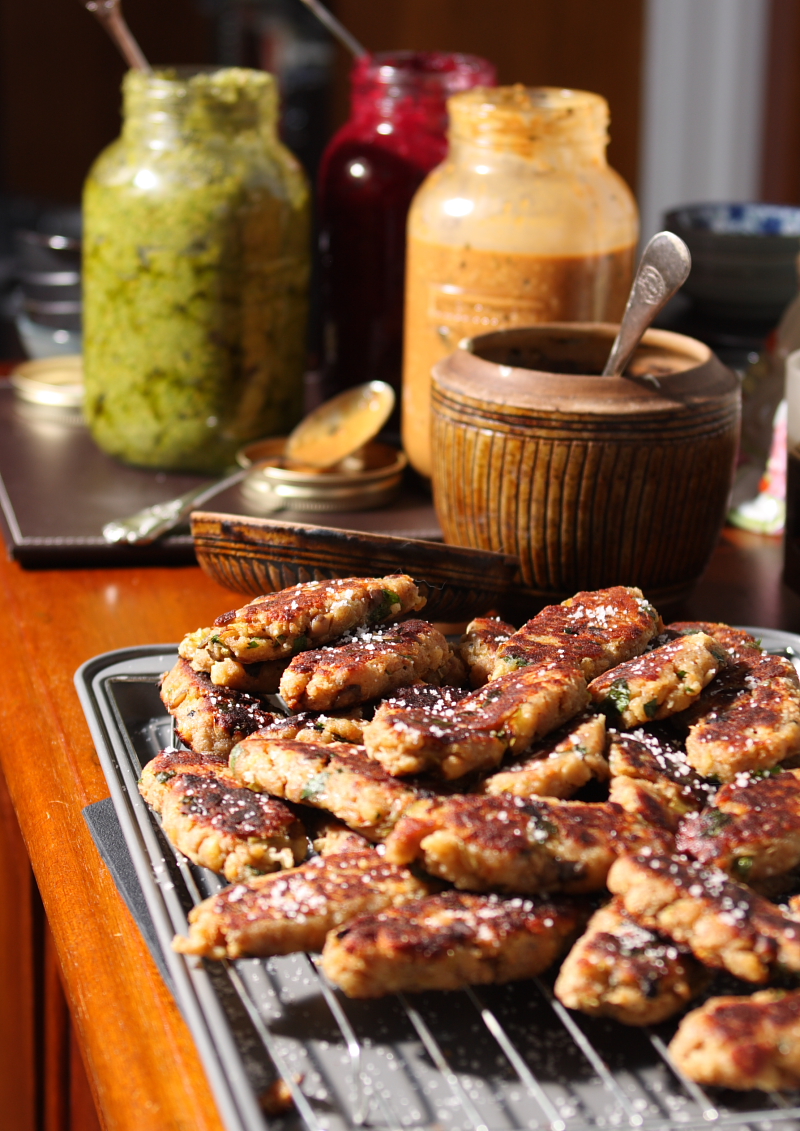
Glamorgan sausages are a simple, easy Welsh specialty. These vegetarian sausages were born out of poverty — a way to make readily available ingredients stand in for more expensive meat. Amazingly, I have had non-vegetarians try this, and they swear I have given them meat sausages! They are filling and rich, and incredibly forgiving. You can add or subtract ingredients as available. Though the base of breadcrumbs, eggs, cheese and onions should stay, if you have some lovely sautéed mushrooms, or a few shreds of ruby red sun dried tomato, or some deep green sautéed spinach or kale — by all means add!

I try and use leeks (for their Welsh-ness, and for their soft nuttiness when braised in butter) instead of an onion, but if I don’t find any leeks in the shops, an onion – red, white, yellow, or even spring – will do. I use cheddar here, but if you want, substitute it with Caerphilly or another kind of melting cheese. Parmesan gives it a sharp richness, feta makes a thicker smoother mouth feel. Try changing the breadcrumbs – from white to sourdough to nutty brown, and see how the taste (and texture) changes. White bread adds lightness, while brown makes these sausages much more dense and thick.

These sausages are amazingly flexible as they can take on the identity of many different ethnic cooking — feta and olives or spinach with the basic recipe makes them Greek; sun dried tomatoes and parmesan delivers a sunny taste of Italy; sesame seeds and oil, a teaspoon of miso paste, some soy and seaweed elevate these to an Asian favorite.

I serve these almost exclusively for dinner, but they would be fantastic as a Sunday brunch, with fried or scrambled eggs, mushrooms, and some home-made baked beans. A Sunday fry-up beyond compare!

These are the version of Glamorgan sausages that I make all the time. I add portobello mushrooms for a meaty texture and taste. They don’t really stand out, but the sausages taste better for them. I make the base ahead of time, a day or so, and store it in my very hardworking fridge! This enables the flavors to meld. I also make my own breadcrumbs – ridiculously easy, and store them in the freezer, or an airtight container.

I know it seems like a lot of work, but if you do things in stages, and a few things ahead of time, its a simple matter of assembling all the ingredients and frying the sausages up. I cannot tell you how delicious these are – the cheese melts through the sausages, making them stick to the pan and burn a little. Oh the joys of burnt cheese! And their hearty, meaty texture is a filling and fulfilling meal.

This recipe feeds about 12 people +/- so feel free to halve it if you are not dealing with hoards. It doubles well too!  Makes approximately 48 sausages.

Base

  • 2 cups leeks, white tips only, quartered, sliced, and washed in salted water
  • 2 cups portobello mushrooms, peeled, and roughly chopped
  • 2 tablespoons butter
  • 2 tablespoons extra virgin olive oil
  • 2 cloves garlic, roughly chopped
  • Salt and pepper
  • 1 tablespoon or so of aged syrupy balsamic vinegar, if you have it – if not, you could use a glugg of wine
  • Approximately 1/2 cup heavy cream

Prepare the leeks and mushrooms. Wash the leeks well in salted water, and let them stand for a minute while you peel the mushrooms and chop the mushrooms. I always chop and stem the mushrooms. My sister once had a terrible reaction to a mushroom dish because they weren’t cleaned well enough – I would rather go through the process of peeling off the top layer then not cleaning them well enough. Good mushrooms always come with dirt!

Over a medium heat, in a medium to large saucepan, melt the butter and olive oil together. Once hot, add the leeks all at once. If you’ve washed them and left them standing, they will still have water clinging to them. This is good! The leeks will almost braise in the pan, the water mixing with the butter and oil. Cook until the leeks are glossy and shining. Add the mushrooms, and continue to cook, mixing well, until the mushrooms let go of their liquid. Add the garlic and stir well.

You don’t want everything to cook down to a mush as you will be cooking again when you fry the sausages, so this is a very quick process.

Once everything is combined well, add salt and pepper, and a bit of balsamic vinegar if you have it. The balsamic will deepen the taste of both the leeks and the mushrooms without insisting that you acknowledge it – very loving and supportive. Its addition gives the other flavors an added dimension.

Combine everything well, and add a couple big glugs of heavy cream (or if you don’t have any, add milk). Incorporate well, and let it bubble and thicken for a minute or so, melding the juices of the leeks and mushrooms with the cream., and then take off the heat. If you are making the sausages the next day, let cool, and then store in the fridge, covered.

By the by, this makes a phenomenal base for a leek and mushroom soup or pie. If you are making soup, blitz in blender with milk and/or vegetable stock, and reheat, adding herbs to taste. If you are making a pie, use bigger cuts of both the leeks and mushrooms. Yummy either way!

Breadcrumbs

  • 2 loaves of bread – at least 2 days old. I usually use a mix of brown and white. I used a Swiss egg bread and a German brown sourdough for this recipe, but you can use whatever you want!
  • 2 croissants (for richness – very optional!)

Tear the bread in to large pieces, and toast, for about ten minutes, in a low (100 C) oven. You want it to be crisp, not colored or burnt. This deepens the flavor of the bread, and makes sure its very dry. Dry bread sucks up the flavors of the leeks, cheese and mushrooms really well. Allow the bread to cool once it has been toasted.

Pulse in food processor until bread has become breadcrumbs. Store in an airtight container, or the freezer until needed.

This makes much more than you will need, but breadcrumbs are a wonderful resource to have. You can use them for a stuffing, for a cake in lieu of flour if you don’t have any, to thicken sauces, as a coating when frying. The possibilities are endless.

Also, obviously, you can make this with storebought breadcrumbs – I have used a mix of breadcrumbs and panko and its been superb!

Assembly

  • 6 – 7 eggs,  beaten
  • Base of leeks & mushrooms
  • 6 – 8 cups of breadcrumbs
  • 2 cups of grated cheddar
  • 1 cup of grated parmesan
  • ½ cup washed chopped Italian parsley

In a large bowl, whip the eggs together. Add all the leek & mushroom base, and beat together well. Take off all your rings! Add 6 cups of breadcrumbs and mix well with your hands. Taste for salt.

Wash your hands well, and grate the cheeses over this mixture. Then, using your hands again, mix thoroughly. Taste. You may need more breadcrumbs if its too cheesy. You can also add a little cream or milk to make the mixture come together. Mix in the chopped parsley.

Refrigerate for at least half an hour.

Heat your oven at its lowest possible temperature. Take a baking tin, and put a cookie rack on top of the tin. You will put your sausages here as you fry them to keep them warm.

Take another baking tin and line it with baking paper.  Take the sausage mixture out of the fridge, and with wet hands, form sausages. You can make round ones, though I prefer the traditional sausage shape. Probably about 4 inches x 2 inches wide. Line the sausages up on the baking tin lined with paper. As the tin fills up, cover the layer of sausages with more baking paper, and continue.

Frying

  • About ¼ cup olive oil
  • A non stick pan
  • A few teaspoons of Fleur de sel or Maldon salt to finish

Up to 2 hours before serving, start frying your sausages.  Ensure that your olive oil is in a pouring measuring cup and use it very sparingly.  A little drizzle is all you need, and a medium hot flame. If you have a large pan, you should be able to get 9 sausages at once. I try and flip each sausage three times, so I usually get a sausage chain going, concentrating on 3 sausages at a time, letting the other 6 brown up.

You will see the sausages brown on the outside, and cook firm inside. The cheese will melt out and  brown. The scent is superlative!

As the sausages are cooked, blot the oil off on paper towels, and transfer to the baking tin cookie rack in the oven. Sprinkle over some Fleur de sel if you have it, or Maldon salt.  Remember to keep sprinkling sausages with a tiny bit of salt as you add them to the oven.

The frying process should take 40 minutes to an hour for approximately 48 – 50 sausages.

Photo copyright U-En Ng

Beetroot Chutney

30 Jun

I like making this ahead of time, at least 3 days or so, to give the flavors time to deepen and meld. This version of beetroot chutney uses grated beetroot, onions and apples. You could cut everything into neat cubes, which may be a little more “posh”, but I like the grated, almost slaw like nature of this chutney. Its how its served in South Africa, where my mother is from, so it has echoes of home style food, bright sunshine, and seaside tang, for me.

Use the smallest beets you can find (about the size of a golfball) – these are sweetest. Feel free, as usual, to adapt — you could use molasses or maple syrup in place of the honey, different dried fruits, apple cider vinegar or white wine vinegar, etc. This is the bones of a recipe that can adjust to what you have available, and what your tastes and flavors are. I have added a few tablespoons of elderflower cordial to this with amazing results, and have cooked it for a longer and shorter time for different flavor consistencies – a fresher summery version or a thick jammy one. The possibilities are endless, and its almost impossible to mess up!

This gorgeous fuchsia chutney is something to keep in the fridge at all times. Mix a tablespoon with a bit of mayo, and your plain cheese sandwich will be elevated to transcendent proportions. As an addition to vegetarian sausages, it adds brightness and sparkle. I am sure you will find lots of things to do with this (it makes a sensational door gift too!)

About 1 – 2 hours cooking time

  • 1 kg of beetroot, washed and peeled (reserve the leaves for another use) – approx. 4 cups, grated
  • 2 small red or yellow onions – approx. 1 cup, grated
  • 2 thumb sized pieces of fresh ginger root, grated
  • 8 – 10 cloves of garlic, grated
  • 1/4 cup olive oil
  • salt and pepper to taste
  • 1/2 cup water
  • 1 1/2 cups red wine vinegar
  • 1 large fuji apple, cored and peeled
  • 3 tsp black mustard seeds
  • 3 tsp yellow mustard seeds
  • 1/2 cup raisins / mixed dried fruit
  • 1 stick cinnamon
  • 1 tsp cumin seeds
  • 3 table spoons port wine (optional)
  • 3 teaspoons brown sugar
  • 1 small chili, seeded  and chopped (optional – be careful of the seeds and wash your hands well after!)
  • 2 tablespoons of honey
  • 2 tablespoons of dijon or other prepared mustard

Grate the beetroot, and in a separate bowl, grate the onions, ginger and garlic together.

Heat olive oil on high heat in a large thick bottomed saucepan, and add onion mixture. Saute until the onions are translucent, making sure they do not stick to the bottom of the pan. Season with salt and pepper. Add the beetroot, and stir well to combine. Lower heat.

Add water, and stir well, and then add red wine vinegar. Grate apple straight into this mixture and stir well.

Add raisins, spices (mustard seeds, raisins, cinnamon, cumin), port wine, sugar and chili, and stir to ensure even distribution.

Allow this mixture to cook, and thicken, about 20 minutes or so, stirring occasionally.

While mixture is thickening, add honey and dijon, and taste for sweetness and salt. It should be a perfect balance, with the fragrance of the spices coming through, and the sharp tang of the vinegar, and the surprising hit of chili.

Cook for an additional 10 – 15 minutes until it is thickened and chutney-ish to your liking. I judge that its done when all the liquid has been incorporated into the mixture, and the rest is a thick jewel like mass, studded with mustard seed.

Leave to cool before storing.

You can jar this (sterilized jars and vinegar proof caps) and keep for up to 6 months, or cool and put in the fridge for up to 2 weeks.

A Simple Vegetable Soup for a Tired Mummy

29 Jun

I loved the fresh fruit and vegetables we got at Whole Foods – what a feast for the senses! When MZ was exhausted and didnt really even have the energy to eat (thats what happens when you are at full time work and have a gorgeous babygirl), I would try and make her things that would taste good, but go down easy. This vegetable soup is really as simple as it reads – inspired by what was in the store, and flavoured by nothing more than a little rind of parmesan and salt and pepper. The vegetables were all organic, and their flavour and colour were vivid and vibrant. You dont really need spices or herbs when the veg are this good. Wonderful served with a simple grilled cheese sandwich, or even some bread and tomatoes.

Serves 4

  • 2 – 3 tbsp olive oil
  • 1/2 medium onion, diced
  • 2 – 3 cloves of garlic, minced
  • 1 – 2 large portobello mushrooms, peeled and chopped roughly
  • 3 – 4 carrots, washed and chopped
  • 1 zucchini, washed and chopped
  • 1 small head of broccoli, washed and chopped
  • 1 small butternut, peeled, deseeded and chopped
  • Handful of baby spinach
  • 1/2 cup water
  • Rind of parmesan if you have it (omit for vegan)
  • Salt and pepper to taste

In a saucepan, heat oil over medium heat and soften onion and garlic. Once they have softened, and are glistening happily, add the mushrooms, and stir to combine. As soon as the mushrooms release some of their liquid, add the carrots. Stir to combine.

Add the zucchini, and allow it to release its own liquid into the pan. Stir all together, and add the broccoli, butternut, spinach and water, and stir all well. Pop in the rind of parmesan (this will add a bit of salt, and a haunting dusky note that is just lovely), if you have it, and cover with a lid for about five minutes, lowering the heat.

Once you take the lid off, take out the parmesan, and think about your choices. You could mash and mush the vegetables by hand with a potato masher, or you could transfer cup by cup to a blender or food processor. Dont completely liquidise the soup – you want it chunky and thick. After you pulse gently, transfer back to pan, and take another cup of vegetables to puree. Do this until you have the consistency you prefer, and only now taste for salt and pepper. Sometimes the vegetables are so fresh and sweet, you dont need much addition.

Serve with plenty of love.