Tag Archives: recipe

Apple Berry Crumble

18 Aug

Its been a wonderful day of baby bliss and cooking – it was rainy outside today, so we had soup for lunch – a gorgeous mixed vegetable soup – butternut, asparagus, carrot, tomato, and green bean, simmered lightly, and then blitzed in the blender. And with it, four cheese grilled cheese sandwiches, on gorgeous brown bread, with a smear of mayo and mustard. Four cheese might sound overwhelming, but it really isnt if you use only little bits. I used all four because I was trying to use up ends of cheese – so we had brie, with the rinds cut off, which made the sandwiches silky and melty smooth, parmesan for its nuttiness, cheddar for its cheesy-ness, and Laughing Cow, because it was there! A little salt and pepper, and grilled them over a slow fire. Delicious.
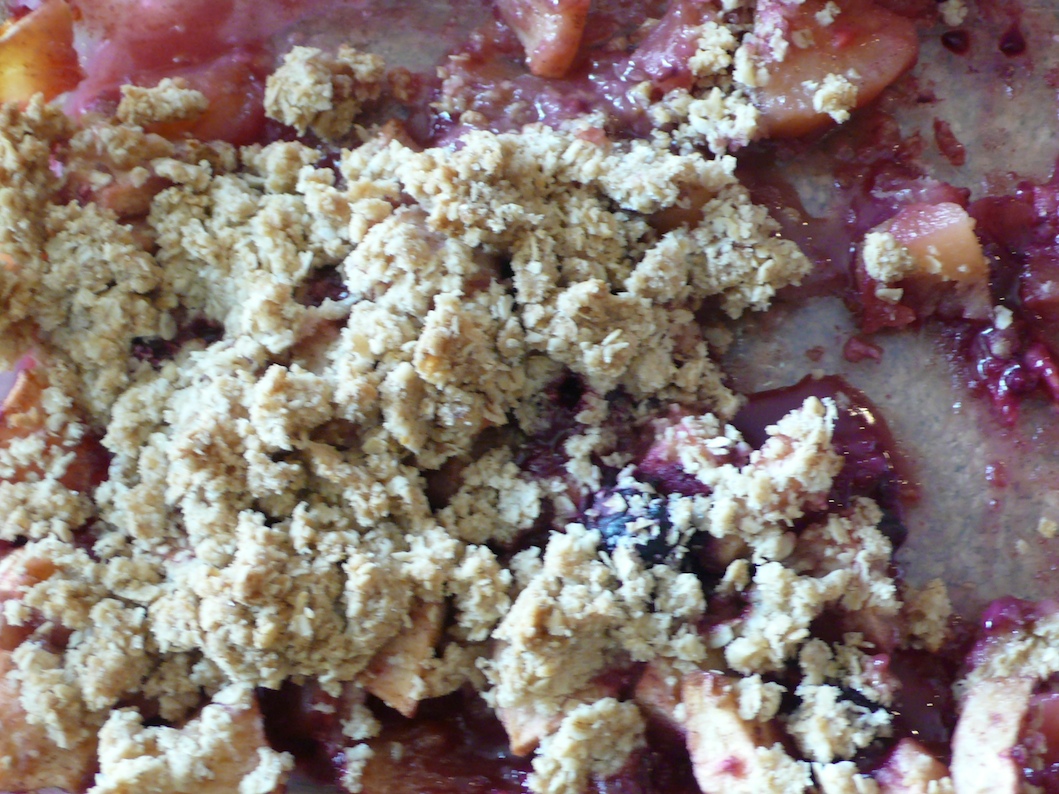
For dinner, an angel hair pasta with spinach, zucchini, tomato, mushrooms, sliced garlic, white wine and sour cream. And for dessert, an apple berry crumble made with literally a handful of berries left over from a berry fest, and some gorgeous Braeburn apples. The berries tinged the apples red, and added a sweet berry tartness to the crumble. Perfection.

This crumble will serve six. Adjust as needed. Wonderful warm with cream, and leftovers make a great breakfast, with a bit of milk or yogurt poured over 🙂

  • 4 apples, peeled, cored and chopped
  • 1 tsp lemon juice
  • 1/2 – 1 cup mixed berries (we had blackberries, raspberries and blueberries)
  • 2 tsp + 1 tbsp granulated light brown sugar
  • 1 + 2 tsp cinnamon
  • 1 tbsp flour
  • 1/2 – 1 cup steel cut oats
  • 1/2 stick (approx 4 tbsp) cold butter, grated
  • 1/4 tsp salt

Preheat the oven to 170 C

Peel, core and chop the apples, and place them in a glass or metal baking pan. You can use a pie pan but I like those smallish rectangular pans. Sprinkle lemon juice over.

Mix in the berries, with your hand or a spoon, making sure that the berries are completely mixed up with the apples. Sprinkle over 2 tsp light brown sugar (or more if your apples arent that sweet), 1 tsp cinnamon, and 1 tbsp flour. Again using your hands or a spoon, mix well. The flour will thicken the juices of the apples and berries as they cook so you have a thick luscious crumble, instead of a juicy wet one! Ensure that the berry apple mixture is arranged in an even layer in the baking pan.

In a small bowl, mix together 1 tbsp sugar, 2 tsp cinnamon, the oats, grated butter, and salt. Using your fingers, work the butter into the oats. The mixture will resemble sandy gravel. This is what you want. Taste – if it needs more cinnamon, more sugar, more butter, add.

Sprinkle the crumble mixture over the apple berry mixture, and bake in the oven for 45 minutes – 1 hour. Serve warm or cold.

Frittata!

18 Aug

Ahhhhh… here I am in my “other” home, with my beloved M + Z + B + the AuPairNation of Essia + Julia. And of course, the King, Raai. Its wonderful to be back, and I am blissfully babied out. It was a 24 hour journey to get here, so I let myself off one day of blogging. But today, I cooked and so I thought it would be a good idea to start to blog again … I find that if I let anything go for more than a day, it becomes a habit NOT to do it!

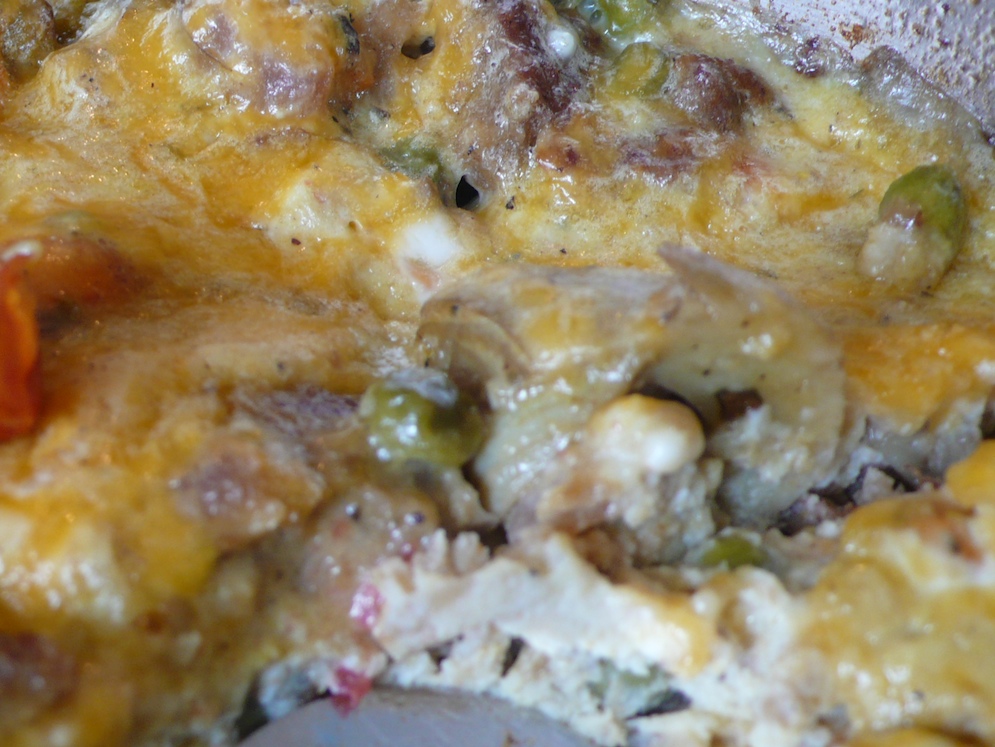
I love cooking in my sister’s kitchen. Its large, airy, comfortable. Everything is so well organised, and its totally open plan. I love her knives, her pots and pans, and particularly, I love the contents of her fridge! There is always something interesting in there that will challenge me to create something delicious. Today, I was cooking for 6 people for lunch, so I decided on a frittata. Its a really simple open omelette, with the fillings added before the eggs. Its fluffy, and is finished in the oven, so that the cheese melts and browns a bit. Delicious – and it can contract and expand to take on whatever is in the fridge! Plus, its wonderfully easy to feed a hoard of people.

Along with the frittata, I made an apple berry crumble, and for dinner a very simple vegetarian curry with brown rice. The remains of the frittata were delicious sliced with dinner. Meals at my sisters are like this… I cook, and we always find ways to incorporate the previous meal into the current one. Simple food, cooked with organic and local ingredients. So much joy … And she has a huge basil plant, her own tomatoes, and a fig tree that is positively laden with swollen purple fruit. I think I am going to have fun here!

I am giving you the approximate ingredients for my frittata today. Use what you have in the fridge – and be experimental. But make sure you use your own judgement about what you mix together into the frittata. I wouldnt add blue cheese, but feta makes a wonderfully salty counterpoint to just about anything. Onions, peas and carrots go well with lots of things, but olives are quite a specific taste and might not meld well with parmesan, for example. Think about what youre putting together into the frittata, and then give yourself permission to experiment! Also be logical. I used 3 different kinds of cheeses because my sister had that in the fridge – but if you only have one cheese, then use that and dont go out and buy extra!

This is a wonderful dish to serve for lunch or breakfast, and its as tasty cold as it is hot, so its fantastic to serve at a picnic or in hot weather 🙂

This will serve six

  • 2 – 3 tbsp olive oil
  • 1/2 red onion, sliced thinly
  • 2 – 3 garlic cloves, crushed
  • 1/2 tsp oregano
  • 1/2 tsp basil
  • salt and pepper
  • splash of balsamic vinegar
  • splash of port wine
  • 1/4 cup water (about)
  • 1/2 cup peas
  • 2 small carrots, sliced
  • 1/2 cup artichoke hearts, sliced
  • 1 cup mixed baby tomatoes (roma and plum), sliced
  • 4 vegetarian sausages, crumbled
  • 8 eggs
  • 1/4 cup milk
  • 1/4 cup parmesan, grated
  • 1/4 cup feta, grated
  • 4 tbsp hummus (optional, but it added lots of protein and it was delicious!)
  • 1/4 cup cheddar, grated

In a large, oven proof frying pan, heat the olive oil, over medium heat, and fry the onions and garlic until glossy and soft. Season with herbs and salt and pepper. Add a splash of vinegar and wine, and let the onions colour and burn just a little bit. Pour a bit of water into the pan, and scrape up the juices and burnt bits if any.

Add the vegetables, and stir to combine. Taste for seasoning. You dont want it too salty as the cheeses will add salt too. Crumble in the sausages and stir well.

In a separate bowl, whisk together the eggs, milk, parmesan and feta. When the vegetables and vegetarian sausage have been combined to your liking, arrange them evenly over the bottom of the frying pan. Lower the heat, and pour over the egg mixture. Using a wooden spoon, move the egg mixture around gently in the pan to encourage it to cook about half way through. DONT mix it though – you just want to kind of poke holes in the bottom that will be filled by uncooked eggs!

Spoon the hummus over, if using. Switch the oven broiler on, and sprinkle over the cheddar.

Slide the frittata in the oven for maximum 5 minutes. It will cook through, puff up a little, and the cheese on top will melt and brown a bit.

Serve immediately with fresh brown bread. Or wait a while, till its cooled, refrigerate and serve it sliced, for a summer meal that it light, and delicious.

Lemon Raspberry Ripple Ice Cream

14 Aug

I am leaving on a jet plane… and as usual, the packing, the sorting, the organising, is overwhelming. To shift from one home to another is always a major undertaking. Remembering basics – toothbrush, plugs, wires, passports (! I lost mine, and then found it again, but thats another story), tickets, money… I always forget something, but I have been traveling ever since I can remember, so I am used to the rhythm of it. Last night, at a farewell dinner, we were chatting about the sumptuous meal I will cook when I return home… and our thoughts turned to ice cream.

I love ice cream. If there is a single food that I want and crave, its ice cream. In all its forms, in its glorious cold, creamy sweetness. I dont think I have ever met an ice cream I didnt at least like… and there are some that border on obsession and adoration. My favourites are mint chocolate chip and coffee, mixed. I love how the bitterness of coffee is transformed by cream and sugar into a sweet dark note that tantalises the senses. And that sharp note of mint, bittersweet chocolate, cold and milky, oh beautiful layers of flavour. My last meal would definitely involve ice cream of some kind, and I really enjoy checking out different flavours and ideas – I think Ben & Jerry are visionaries, and I love visiting the website of Humphrey Slocomb – gourmet ice cream beyond most mere mortals imaginings… and I fully intend to visit them one day!

One of the ice creams I will be making is this lemon raspberry ripple ice cream. The raspberry curd has been featured in a previous recipe, and it is the perfect balance to the creamy yet tangy lemon ice cream. The lemon ice cream is a revelation. When I think of lemon and cream, I usually think of curdled milk! But the higher the fat content of the milk, the less chance there is of curdling. You really must use at the very least half and half in this recipe. Though I have to admit, I use 3 to 1, cream to milk 😉

You will need about 1 – 2 cups of raspberry curd (depending on how rippley you want it!) … the rest can be bottled, slathered on crumpets, or given as gifts.

Please allow this ice cream to ripen at least overnight in the fridge, it will taste so much the better for it!

For about 2 quarts, you will need:

  • 3 cups cream
  • 1 cup whole milk
  • 1 + 1/4 cups fine granulated sugar, divided
  • Finely grated peel of 1 – 2 lemons (at least 1 tablespoon, very well packed, but I usually use 2 tablespoons)
  • 1 tbsp of vanilla
  • 8 organic egg yolks
  • Juice of a whole lemon
  • 1 – 2 cups of raspberry curd

Please try and get an organic lemon if you can! They taste so much more lemony. There is no comparison. Wash the lemon well before grating too!

Combine the cream, milk, 1 cup of sugar and the lemon peel in a medium saucepan, over medium heat. Stir constantly, and bring the mixture just to the simmer, and ensure that the sugar has completely dissolved into the cream.

Take the cream off the heat, and stir in the vanilla.

In a bowl that you will use as the top of an improvised double boiler/bain marie, whisk together the remaining sugar, egg yolks and lemon juice. Place the bowl over a saucepan of simmering water, and gradually whisk in the warm cream mixture. Continue to stir until the custard has thickened. Taste. It should be sweet and sharp all at the same time. I sometimes adjust by adding more lemon juice or peel if I think it needs it.

Strain the mixture through a sieve, and leave to cool. Refrigerate overnight, or for at least 5 hours, before processing in an ice cream maker.

Transfer about 1 1/2 cups of ice cream into a clean container. It will be very soft, so you need to work quickly. Spoon about half a cup of raspberry curd over, and repeat four times, finishing with ice cream. If you want a major ripple effect, plunge a knife into the container and pull upwards, therefore swirling and rippling the raspberry curd throughout the ice cream. I usually just leave the layers, because I like it that way!

Freeze for at least 12 hours, or overnight before consuming with absolute delight! The flavours of summer in one sweet rich gorgeous package. I think I could marry it! 😉

Nigel Slater’s Perfect Summer Pudding + A Quick Nathalie’s Recap!

13 Aug

Tonight we had an amazing dinner at Nathalie’s Gourmet Studio – good food, wonderful company, and the inspiration of a truly passionate chef. I had the tomato crumble with a goat’s cheese cream for starters – sublime, out of this world decadence. Just gorgeous. Goddess had a crab mille feuille which was just stunningly beautiful in its construction. JoB had a reconstructed salad nicoise which had the most perfectly simple (and simply perfect) dressing. And Goddess’ Spouse had a scallop tart with absolutely sublime deeply simmered onions. For mains, the table was split evenly. Carnivores devoured a steak in a gorgeously lush looking red wine reduction, with grilled vegetables and the delicious-est polenta I have ever had – cheesy, crisp on the outside, meltingly creamy inside. We vegetarians (or otherwise) had home made tagliatelle with a mushroom foam and a tangle of wild mushrooms. Surrounding the tagliatelle was this simple seeming, brave, delightful mushroom broth. Amazing taste. Amazing balance. So smart it made me joyous!

And dessert! Again, we ordered everything on the menu. A mango cream under a shortbread crust with a deep blazing yellow mango sorbet. A “big mac” of a huge chocolate macaron, with strawberries, and a perfect scoop of strawberry basil sorbet in the centre. A litchi combination – raspberry and litchi espuma, litchi sorbet, and a raspberry litchi mille feuille. A trio of a caramel vanilla cream puff, a salted caramel macaron, and a chestnut chocolate mousse. And a green tea mousse with a chocolate ribbon running through it. Needless to say, we devoured it all, so happily, with the joy and comfort of good friends and family.

So tonight, I just didnt have time to cook. I am packing for the US (slightly frantically, but trying to be calm). But I have been wanting to try this recipe, so I decided it is going to be a “cheat” night. I share this recipe with you, which I bookmarked in 2001. Its a perfect summer pudding recipe, written with wit and passion and opinion and love by one of my favourite food writers, Nigel Slater. I hope it inspires you. I am going to try a version of it soon and will report back. But for now… enjoy the writing of a brilliant cook. With love, from a very replete and sated me 😉

—————————————————————–

Perfect Summer Pudding

By Nigel Slater

The Observer, August 5, 2001

One of the things that exasperates me about the insatiable demand for ‘new’ recipes is that it doesn’t give anyone time to get something well and truly right. I see nothing wrong with tinkering with an idea until it is as good as it can be; in fact, I see everything right about it.

I just don’t understand the desire (or is it desperation?) for snatching up a new recipe, rushing through it, then dashing off for the next cookery magazine, book or television programme for the next new thing. What is it exactly that these cooks are frantically searching for? Wouldn’t it be better to find a dish that they know and like and then to work at it until it is absolutely to their taste?

There is much, much pleasure to be had in honing a dish to perfection. To get to know the little nuances and pitfalls, the tricks and the intimacies of a recipe, and add your own signature if you wish. If this is a search for perfection – and I suppose it is – then we have to work out the crux of it all: the real reason why an idea appeals to us. We need to identify the heart and soul of a dish and get that part of it right. In some ways you can get this from a well-written recipe. But the truth is that there is more to it than that. Some of it is intuition, a gut feeling that you have understood what I like to call the ‘essence’ of the thing. The part of something that really rings your bell. If you like, the whole point. Identify, and then pursue.

By identifying that point, you will know what you are aiming for and why you are cooking something. I would argue that in a risotto, say, it is not just the grains of stock-saturated rice that are the essence of the dish, but the way in which the limpid stock holds those wet grains together on your fork. (Which is why vegetarian stock never makes quite the perfect risotto, because it lacks the gelatinous quality of chicken stock.) In a piece of roast pork it is the contrast between the sweet, rich meat, succulent fat and crisp, salty crackling. And in a chocolate brownie it is (for me, at least) the contrast between the crisp crust and the moist, but not wet, cake beneath.

I could go on, and indeed I will – at least once a month over the next few weeks.

We are not talking about textbook perfect here, as in the arrogant and often misguided notion of how something ‘should be’ (usually by self-styled tin gods of the cookery world, who are hiding their ignorance behind a smokescreen of arrogance), but in that it will give you as much pleasure as you can possibly get from it. So, not only have you had the pleasure of sniffing, stirring and tasting, but the end result is as near to perfection as you can ever imagine it being. You have found and understood the very reason for that dish, that recipe. Now that is what you call cooking.

And so it is with summer pudding, that rough’n’tumble of raspberries, currants and bread. I rank it with Christmas pudding as one of the best recipes ever, except, of course, that the weather is usually better. It matters not one jot if you make it in a shallow dish, a pudding basin or, charming this, in individual china dishes. What is important – no, essential – is the juice and how the bread soaks it up. This is your ‘essence’. The crux of the matter.

We must work out our own preference for the ratio of the three different berries.

I like a proportion of blackcurrants, a tart counter to the ever-sweeter varieties of raspberries and redcurrants. Purists will not accept a blackcurrant in a summer pudding. I add them for their glorious colour and for the extra snap of tartness that they bring. The sweet of tooth can leave them out. Then again, too many blackcurrants will overpower the raspberries. My perfect berry count is 150g blackcurrants to 250g of redcurrants to 500g raspberries.

Historically, this pudding was made with a raspberry to redcurrant ratio of 4:1. (The idea goes back to the 18th century and was a favourite of health spas, the bread being a substitute for butter-rich pastry.) Purists will stick to this. But our tastes move on, and this balance is now considered a little insipid; a few blackcurrants turn up in most versions now.

The fruit

My suspicions about the wisdom of solemnly following a recipe were once again founded this week. The currants I bought for my summer pudding from a large supermarket chain looked bright and fresh, but were flabby and flat-tasting, and sweet rather than sharp. To have followed a recipe blindly, ‘yes, sir, no sir,’ would have resulted in a sweet and flat-tasting pud. Luckily, I tasted the fruit and added less sugar by way of compensation – though, ideally, I would have preferred tarter currants. The offending redcurrants, by the way, were Rovada, the oversweet raspberries Tulameen.

The bread

The bread is more than just a case to hold the fruit. Its texture is crucial to the whole pudding.

Without it you would have nothing more than a compôte – stewed fruit. Soft, ‘plastic’ bread turns slimy rather than moist. God knows why it turns so nasty – it’s like eating a soggy J cloth. No, the bread needs enough body to hold its shape should you decide to turn your dome of fruit out, and the closeness of texture not to turn to pink pap.

A well-made white sandwich loaf will work.

Dense bread such as sourdough is often too tight to soak up the juice. Brown bread is disgusting in this instance. Come to think of it, brown bread is disgusting in most instances.

The juice

The centre of attention, the difference between a good pud and one that is utterly sublime is the juice that soaks into the bread. It is this – its flavour and sheer abundance – that will make or break this dessert. It does need sweetening though, so a shake of sugar over the berries is essential. I use 3 tablespoons for fruit of normal tartness. This doesn’t sound a lot, I know, but you will have, at the table, the tempering effect of the cream.

The cream

A jug of cream is a necessary part of a summer pudding. Don’t even think of offering crème fraîche, the pudding is tangy enough as it is. You want pouring cream, not whipped or extra thick, but good old-fashioned double cream. And preferably unpasteurised. You will need a 1l pudding basin.

850g mixed raspberries and currants, with an emphasis on raspberries
7-8 slices firm, good quality white bread
3 tbsps white sugar
3 tbsps water
cream to serve

Sort through the fruit, tenderly, picking out any that are unripe or mouldy. There’s nearly always a few. Pull the currants from their stems then put them, with the raspberries, in a stainless-steel saucepan over a low heat. Taste the fruit for sweetness and add sugar accordingly. For normal, sweet raspberries and slightly tart currants, I add 3 tablespoons or so of sugar. Sometimes you may need slightly less or more. Use your own judgment, bearing in mind that the finished pudding should have a bit of sharpness to it. Pour in a little water, a couple of tablespoons will do, then bring it to the boil.

The currants will start to burst and give out their juice. They need no longer than three or four minutes at a cautious simmer. The fruit should be shiny and there should be much magenta juice in the pan. Turn off the heat.

Slice the bread thickly. Each slice should be about as thick as your little finger. (Thinner if you are making several smaller puddings in individual moulds.) Cut the crusts off the bread. Set one piece aside, then cut the rest into ‘soldiers’, that is, each slice of bread into three long fingers. Using a glass or cup as a template, cut a disc of bread from the reserved slice and push it into the bottom of the pudding basin.

Line the inside of the basin with the strips of bread, pushing them together snugly so that no fruit can escape, and keeping a few strips for the top. Fill the bread-lined basin with the fruit and its juice – it should come almost to the rim. Lay the remaining bread on top of the fruit, tearing and patching where necessary, so no fruit is showing.

Put the basin in a shallow dish or bowl to catch any juice, then lay a flat plate or small tray on top with a heavy weight to squash the fruit down. Some juice may escape, but most will soak into the bread. Leave overnight in the fridge. (You may have to remove a shelf depending on how deep your fridge shelves are.)

Remove the weights, slide a palette knife around the edge, pushing carefully down between bread and basin so as not to tear the bread. Put a plate on top, and then, holding the plate in place, turn quickly upside down and shake firmly to dislodge the pud. It should slide out and sit proud. Pass a jug of cream around – it is an essential part of the pudding. Serves 6-8.

Cinnamon Sugar Cookies

11 Aug

perfect happy memoryI wrote in an earlier post about my late father’s love of white buttered toaste with a sprinkle of sugar. He ate it as a treat, even though he could have most any gourmet food he wished. This taught me that food is about memory as much as it is about taste… And one of my earliest memories is staying over at an Aunt’s house, one sharp sparkling autumn day, with my sister. We woke up in the morning, and she offered us cinnamon toast. We had never had it before (I think I was probably 6 to my sisters 4 years), and eagerly accepted.

What a taste. What an amazing combination. White toast, crispy and warm, melting butter, crackling sugar … and cinnamon. Its a dark scent, almost woody and powdery. Hits of spiciness, sweetness, flowers. Its not a description that comes easily, but when you taste cinnamon, especially for the first time, its as if your taste buds wake up. I have always loved the scent and taste of cinnamon, and its warming fragrance brings memory of autumn, cider, Christmas. When I sat down to write about the actual taste of cinnamon, I realised this is another taste which is intricately wrapped in memory for me.

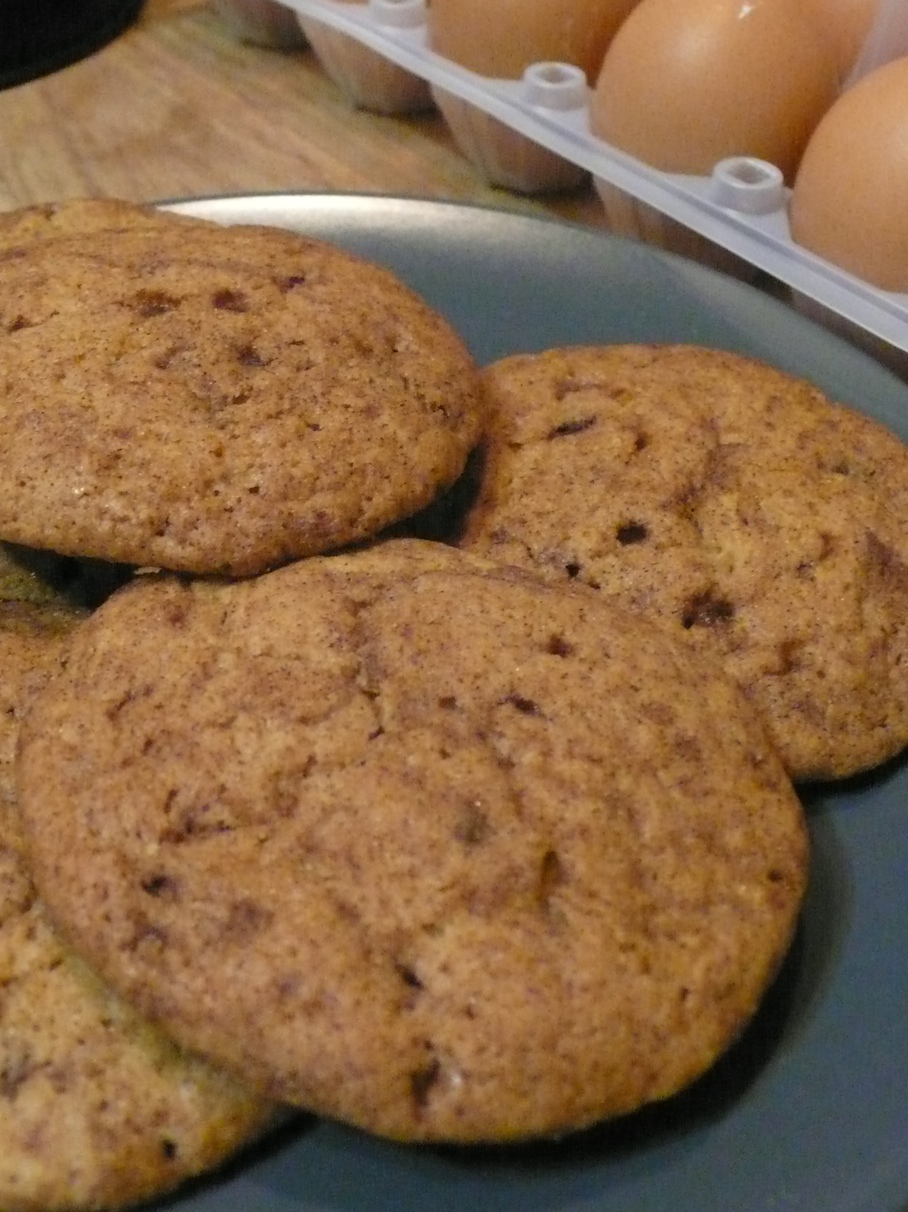
So today, on the first day of the Ramadan, after an exceedingly hot, busy day, I wanted comfort. Food that is a combination of memory and laughter, and wonderful easy taste. I turned to this recipe for cinnamon sugar cookies which I think I have been making as long as I can remember cooking. These cookies are really delicious, quick to put together, and delightful to give away. The recipe makes a very soft dough. Dont over beat it or you will get tough cookies. Just let it sit, in its creamy buttery sugary-ness, and handle with care when you dip in cinnamon sugar.

Enjoy with much love, and the memory of warmth during the cold…

Makes about 32 cookies, depending on how big or small you want them!

  • 3 tbsp fine granulated white sugar
  • 1 – 2 tbsp cinnamon (depending on how deeply cinnamon you like your cookies – I always use 2 tbsp!)
  • 1 1/2 cups sugar – a mix of dark brown, light brown, and white (I use 1/2 cup of each)
  • 1 cup / 2 sticks butter, slightly softened
  • 2 eggs
  • 1 1/2 tbsp vanilla extract
  • 2 1/2 cups pastry flour
  • 1 scant tsp baking soda
  • 1/2 tsp salt

Preheat your oven to 160C.

Mix the 3 tbsp sugar and cinnamon in a little bowl, and set aside. Make sure you combine thoroughly – the sugar will be a dark brown when done. You will roll the cookie dough in this just before baking.

In a stand mixer bowl, combine your three sugars. I usually beat the sugars together to ensure they are combined well. If you dont have a stand mixture, use electric beaters.

Once the sugars are combined, add the butter, cut into chunks. Let your mixer beat the sugar and butter together until very well combined. This could take a few minutes. Just have some patience.

Add the eggs and vanilla, and beat until completely combined. The mixture will be a little soft and fluid. Let it sit for a few minutes minutes. This gives the butter and sugars time to melt into each other.

Combine flour, baking soda and salt in a separate bowl, and little by little, mix into the butter sugar mixture. I use a spoon or spatula at this point as I dont want to over mix the cookies! A tender cookie is one which is allowed to come together of its own accord! Again, let sit for a few minutes before moving on to the next step.

Line baking trays with greaseproof paper.

Using a tablespoon, measure out spoon sized pieces of dough (you can make bigger or smaller, according to your preference – this is just how I like to do it!). I usually get about 8 cookies to a sheet.

Using your thumb, drop the dough straight into the sugar/cinnamon mixture, and gently roll it around to coat it completely. Place on baking tray, and pat down gently, so it is not a ball shape, but a little flatter.

Bake for about 15 – 18 minutes. The cookies will rise, and then fall. They are done when they have turned a slightly darker shade of brown.

Let cool in trays for at least 5 minutes before cooling completely on racks.

You will have a wonderfully soft cookie with a crispy crunchy crust. Perfect balance.

Share! These are too good not to – and you can make sure other people will make wonderful cinnamon memories too 🙂

Tomato Salad

9 Aug

I know, a tomato salad. Simple, right? Well, yes, and no. Tomato salad needs only a few ingredients, but this is one dish where organic, fresh and local really count. Go to the market, or the grocery store, and really look at the vegetables on offer. Smell, feel, prod, poke. When you only use a few key ingredients, freshness is all. A good tomato is one you can actually smell – that ineffable scent that is only tomato. This is a dish to have up your sleeve when you are serving heavy foods. Its fresh, delicious – tasty and sweet. Its a perfect complement to stews and breads – the juices of the tomatoes beg to be mopped up and savoured.

This salad brightens up any meal. When I make a grilled cheese sandwich, I serve a small side salad of these tomatoes. When I have a huge hoard over and am serving stew or sausages, or anything heavy, I offer these tomatoes. Its so easy to make and is really a wonderful addition to any party meal. When you serve lots of people, you want them to feel abundance. Adding an extra dish, especially one as easy as this, makes people feel your generosity.

This dish is all about the tomato. Make sure you pick ripe, bright, red, luscious ones – and try and make them organic if possible. It really makes a difference! Cooking is not just about putting ingredients together – its about forethought when shopping!

Feeds about 12 – 14 people

  • 4 cups red cherry tomatoes
  • 4 cups yellow / mixed tomatoes
  • A pinch of sugar
  • Lemon Juice
  • Salt and Pepper
  • Fresh Basil
  • Extra Virgin Olive Oil
  • 1 very thinly sliced white onion (optional)

Please note that you should buy the best tomatoes that are available – if you see that big fat beefsteak tomatoes are the best in store at the moment, get those. Just make sure you deseed them.

Cut the tomatoes in half (if small) or in large chunks, deseeded (if large)

Let the tomatoes sit in a bowl, and sprinkle with a pinch of salt and a pinch of sugar. This will encourage the tomatoes to let go of a bit of their juice.

Sprinkle about 3 – 4 tablespoons lemon juice over the tomatoes.

In a separate bowl, sprinkle a few tablespoons lemon juice over the onions (if using), and let them sit until the acid in the lemon juice has mellowed out the onions.

Salt and pepper liberally.

Cut about ½ cup of fresh basil over.

Slick about ½ cup of olive oil over.

Mix. Taste. Adjust.

Refrigerate for at least an hour to allow flavours to meld. Allow to come to room temperature before serving.

If you have any left overs, blitz in the food processor with some chili for a wonderful salsa which is great with pita chips. Or roast in a very hot oven, with a few slivers of garlic until almost blistered and burnt, and mix with some hot cream for a pasta sauce that is out of this world. Or add to a stew or soup the next day. Tomatoes are so very versatile and add a hit of sweetness and brightness to any dish.

Potato, Sweet Potato and Beet Gratin

7 Aug

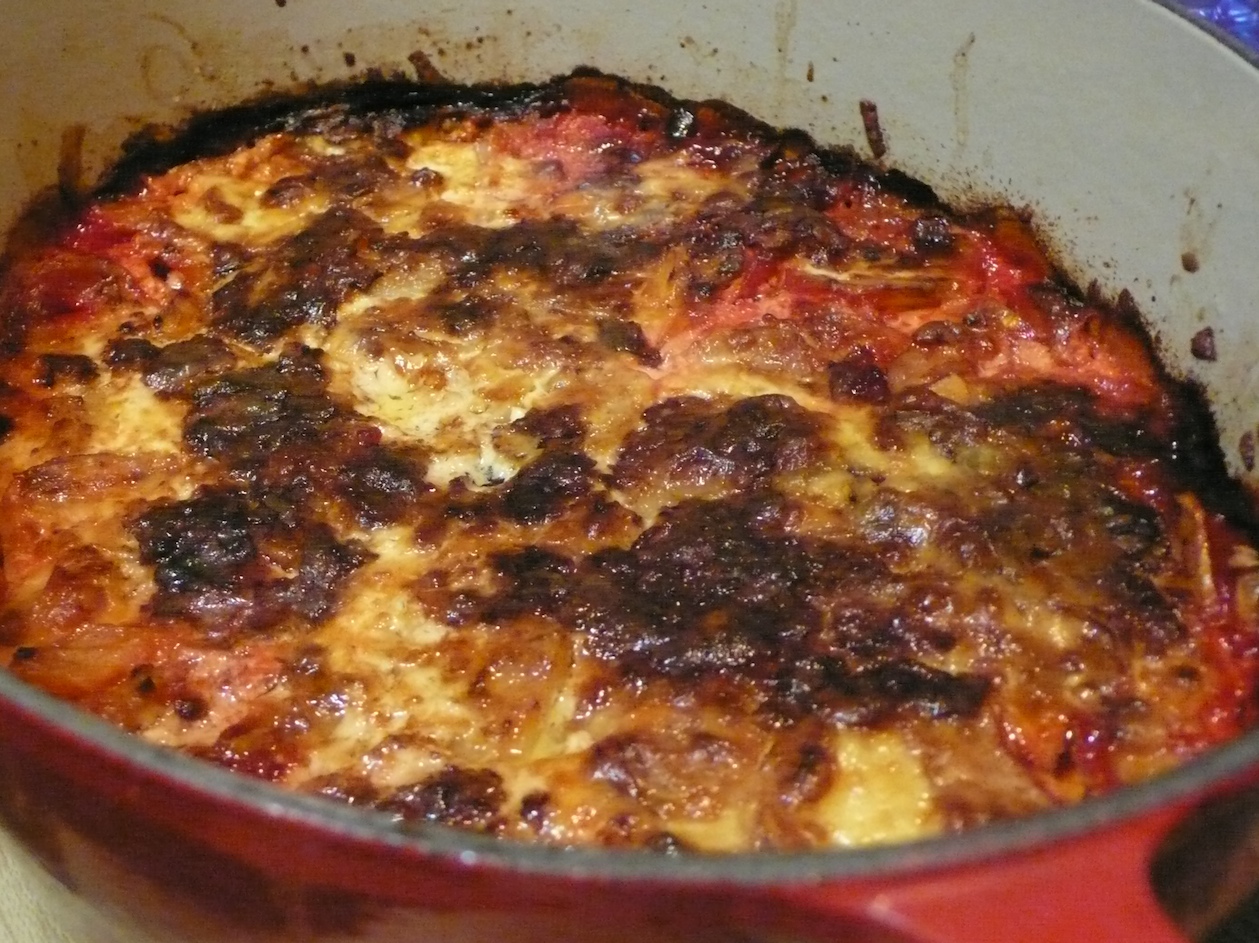
potato, sweet potato and beet gratinTonight, I was lazy. I wanted to spend the entire evening in bed, watching videos, but of course, I needed to cook! I have made a promise to myself to post one recipe or musing every day, and so I wandered into the kitchen to be inspired. I had beets, potatoes and sweet potatoes sitting on the counter waiting for a rosti which I want to make for Ezril. I had loads of little baking paper packages of cheese bits, all wrapped up, and needing to be used. And I had some cream and milk and garlic. Okay then, instead of a rosti, which would take lots of work over the stove, I decided on a gratin. And a gratin with beets! I needed to think this through before jumping in.

I think sometimes that cooking is about inspiration, but equally, it is about preparation. Even if you dont have a clear recipe, and want to be inspired by your ingredients, always, always take five minutes to think about how you are going to put everything together.  If you dont, even in your head, have a clear work progress plan, you will definitely forget something or an important step. Trust me! Ive done it before, with disastrous results!

Beets are gorgeous creatures, but they have one flaw (or wonderful attribute depending on your way of looking at things) – they make everything they touch turn pink! I wanted to incorporate beets into this gratin because I thought they would add an earthy unique flavour, highlighting the creaminess of the potatoes and the sweetness of the sweet potatoes. A good counterbalance. But I really needed to sit and think for a while about how I was going to keep them separate but together. So I decided to prep them all the same way, but in different bowls, and layer them instead of mix them all up. The milk/cream would bind them all together, and the cheese would act as a barrier between the beets and potatoes so they wouldnt completely bleed into each other.

I think this gratin turned out gorgeously. The garlic scented the milk, but you can still taste each individual ingredient. I love love love crusty burnt bits of cheese on anything, and this gratin gave me acres of it. And silky, creamy, rich potatoes. This is a wonderful side dish for a big group, or you can cut down on the amounts, and bake a small pan for just two. Its fantastic the next day, served for breakfast, cold, or sliced and slightly fried, with an egg. Its also great, served with a very tart (arugula) salad for lunch. Its comfort food, from the heart, without a huge amount of effort. Love it!

For a large gratin dish or casserole, you will need:

  • About 3 – 4 cups potatoes
  • 1 – 2 cup sweet potatoes
  • 1 cup beets
  • Boiling water
  • 3 + 2 cloves of garlic, thinly sliced
  • Salt and pepper
  • 2 – 3 tbsp butter (optional – I only use butter if I am not using cream)
  • 2 – 3 cups milk and/or cream (I used a mixture)

The preparation is all important in this recipe. You will need to keep your beets and potato mixture separate until you are ready to bake.

Peel and thinly slice your potatoes and sweet potatoes, and immerse them in cold water in a bowl. Peel and thinly slice your beets, and immerse them in cold water in a bowl. Allow the potatoes and beets to sit for at least 10 minutes. This will encourage some of the starch to come out.

Boil some water, drain the cold water from your potatoes, put them back in the bowl, and slice 3 cloves of garlic over. Cover the potatoes completely with boiling water.  Do the same for your beets, slicing 2 cloves of garlic over. Leave in the boiling water for 15 minutes or so. They will not cook, but they will get a little bit softer. This is what you want.

Meanwhile, grate about 2 – 3 cups of cheese. I used a mix of cheddar, parmesan, mozzarella and pecorino. This was what I had in left over bits in the fridge, and what was available. Swiss cheese, like Gruyere, is more traditional, but I like the process of using up left over bits and pieces.

Drain the potatoes and beets and place back in their individual bowls.

Preheat your oven to 180C

Lightly butter a large baking dish. I use my high casserole dish, because I like layers in my gratin!

Layer a thin layer of beets, salt and pepper them, dot with a bit of butter if you are using, and cover with some cheese. Layer some potatoes, salt and pepper them, and cover with cheese. Continue like this until you have used up all your ingredients. I usually end up with 4 – 6 layers, always trying to end with potatoes. Add a final layering of cheese over the top.

Pour in about 2 cups milk/cream mixture until 2/3rd of the way up to the top layer of cheese. It will vary depending on your dish. Push everything down a bit into the cream. Bake in the oven for at least an 1 hour, possibly up to 2, checking every now and then that you dont need extra milk/cream (you really shouldnt, but add more if you think it needs it). Check to see if the gratin is done by forking a bit of potato – it should be tender, and break under very little pressure.

Take out of the oven and allow to rest for at least 10 minutes before serving.

Apple Pie with a Pecorino Crust

6 Aug

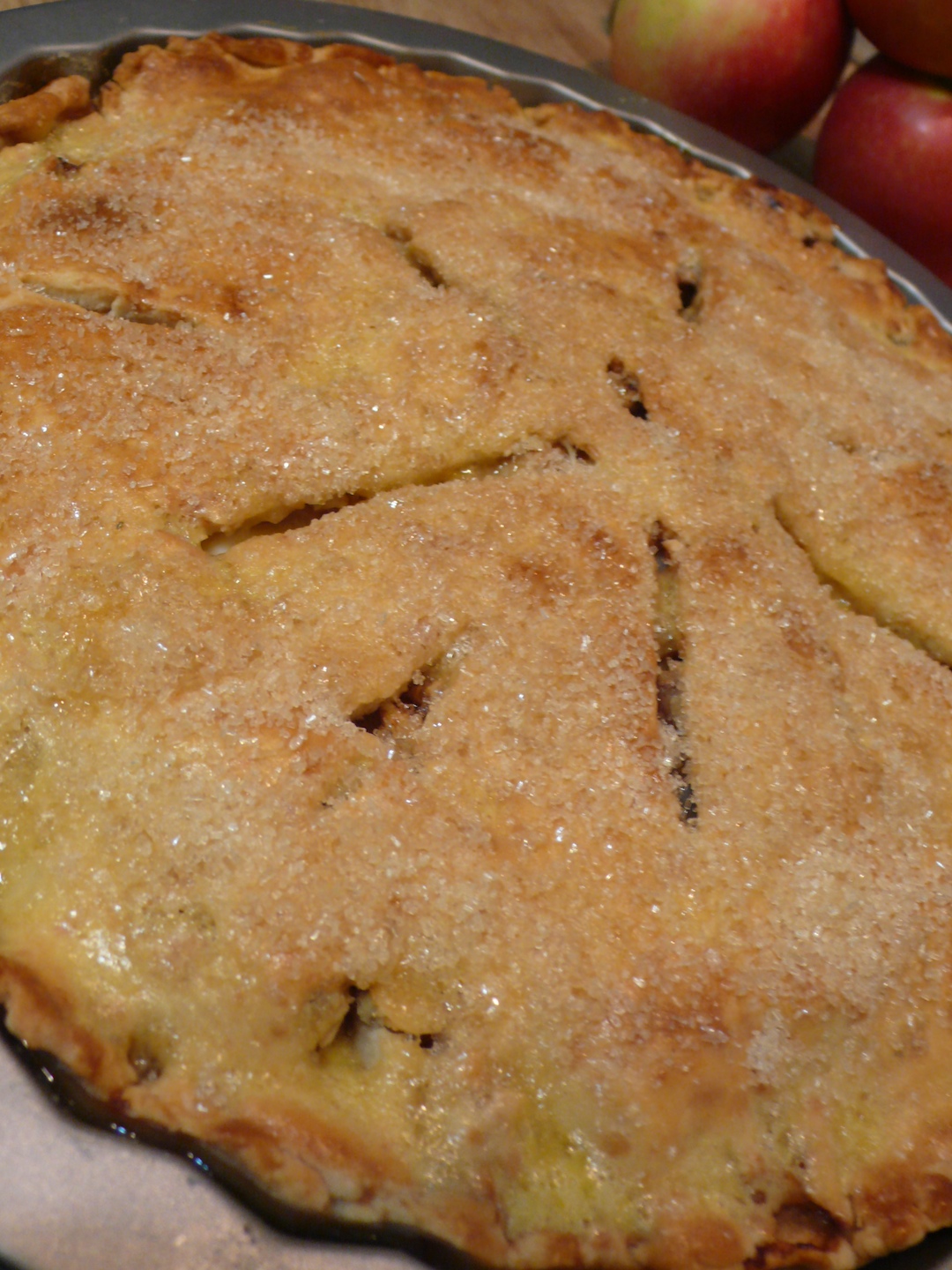
apple pie with pecorino crustOh apple pie. Its a simple simple dish, but you can screw it up in so many ways. Good apple pie is brilliant – bad apple pie, well the less said, the better. I love apple pie but I know how difficult it is to make well. Because the ingredients are so simple – a flaky pastry crust, and apples, basically, you have to really pay attention to technique and process. I have been dreaming of an apple pie with a cheddar cheese crust for ages, and decided I would make one today.

I went to the market to get a few things I needed, and AngelKitten asked if I was sure I had cheddar cheese. I blithely said yes. Of course, I didnt have any. But I had bumped into Iq at the market and when I told him what I was baking, he said he thought it would be gorgeous with a pecorino crust. Well, I did have pecorino, so I made it with that! Cooking is sometimes about making do with what you have, and forgiving yourself for assuming you have what you dont!

I think this pie came out beautifully. Its sweet without being overwhelmingly so. Its crust is so gorgeously savoury. The apple interior is scented with cinnamon. It reminds me that in South Africa, we eat cheese and jam together. Sweet and salty. A perfect balance. This pie has those elements.

And thank you to Iq for the pecorino suggestion!

Pecorino Crust

  • 2 1/2 cups pastry flour
  • 1/2 tsp salt
  • 1 stick (8 tbsp) butter, frozen
  • 2 tbsp vegetable shortening or margarine, very cold
  • 1 1/2 cups pecorino cheese grated (you can use cheddar if you are a traditionalist!)
  • 2 – 4 tbsp ice cold water

Mix the flour and salt together in a large bowl. Grate the butter into the flour, and toss gently with your hands to mix.

Cut up the margarine into tiny pieces, and toss into the flour butter mixture. Add the pecorino, and toss again. You should have a lumpy, slightly golden mixture.

Using your hands, mix in the cold water, a tablespoon at a time, to create a firm and pliable dough. You can knead this dough a few times, using the heel of your hand to smear the dough away from you (this lengthens the frozen butter bits and makes it flaky).

Wrap the dough in baking paper and refrigerate for at least an hour.

Apple Filling

  • 7 – 8 apples, peeled, cored and chopped – about 6 – 7 cups in total (I used Pink Ladies and Gala)
  • 2 tbsp juice (optional)
  • The juice of 1 lemon
  • 2 – 3 tbsp light brown sugar (depending on the sweetness of your apples)
  • 2 tbsp flour
  • 1 tsp all spice
  • 1 1/2 tsp cinnamon
  • 1 tsp vanilla essence
  • 1 tsp balsamic vinegar (optional)

Peel, core and chop your apples and place in large bowl. Add the juice and lemon juice as you chop to ensure the apples dont brown too much.

Add the sugar, flour, all spice, cinnamon, vanilla and balsamic, and toss well to combine. Set aside for about 30 minutes.

Assembly

  • Dough
  • 1 egg, beaten
  • Apple filling
  • 1 – 2 tbsp cold butter, cut into small pieces (optional)
  • 1 egg beaten
  • 2 tbsp light brown sugar

Preheat the oven to 180C. Butter a 9 – 10″ pie plate, with a removable edge if you like.

Divide the dough in half, and on a floured surface, roll out one half of the dough. Put the remaining half of the dough into the fridge. Fit it into your pie plate, making sure the dough comes up over the edge. Poke holes in the dough with a fork, and bake blind (lined with greaseproof paper or aluminum foil and filled with beans or pie weights). Bake for about 20 minutes. Remove the greaseproof paper and beans, and bake for a further 5 minutes until just lightly brown.

Remove the crust from the oven, let cool for about 5 minutes, and brush with beaten egg.

The apples will have let go of a lot of juice in the bowl. Using a spoon (or as I do, you hands) take the apples out of the bowl, making sure to leave quite a bit of the juices behind. Mound the apples in the pie plate. Take about 2 – 3 tablespoons of the juice and pour over the top. Dot with butter if you want.

Roll out the second half of dough, and place over the pie, crimping the edges to seal. Bake in the oven (on a cookie sheet if you are worried about spillage) for 30 minutes or until lightly browned.

Take the pie out of the oven, and brush all over with the remainder of the beaten egg, and sprinkle with sugar. Return to the oven for 5 – 10 minutes more or until the pie is shiny, and sugar has caramelised a bit.

Take out of oven and allow to cool for about 10 – 15 minutes before serving warm with cream.

By the way, Ezril loves the juices from the apples, mixed with some milk as a drink!

White Chocolate Semolina Pudding with Damson Jam

4 Aug

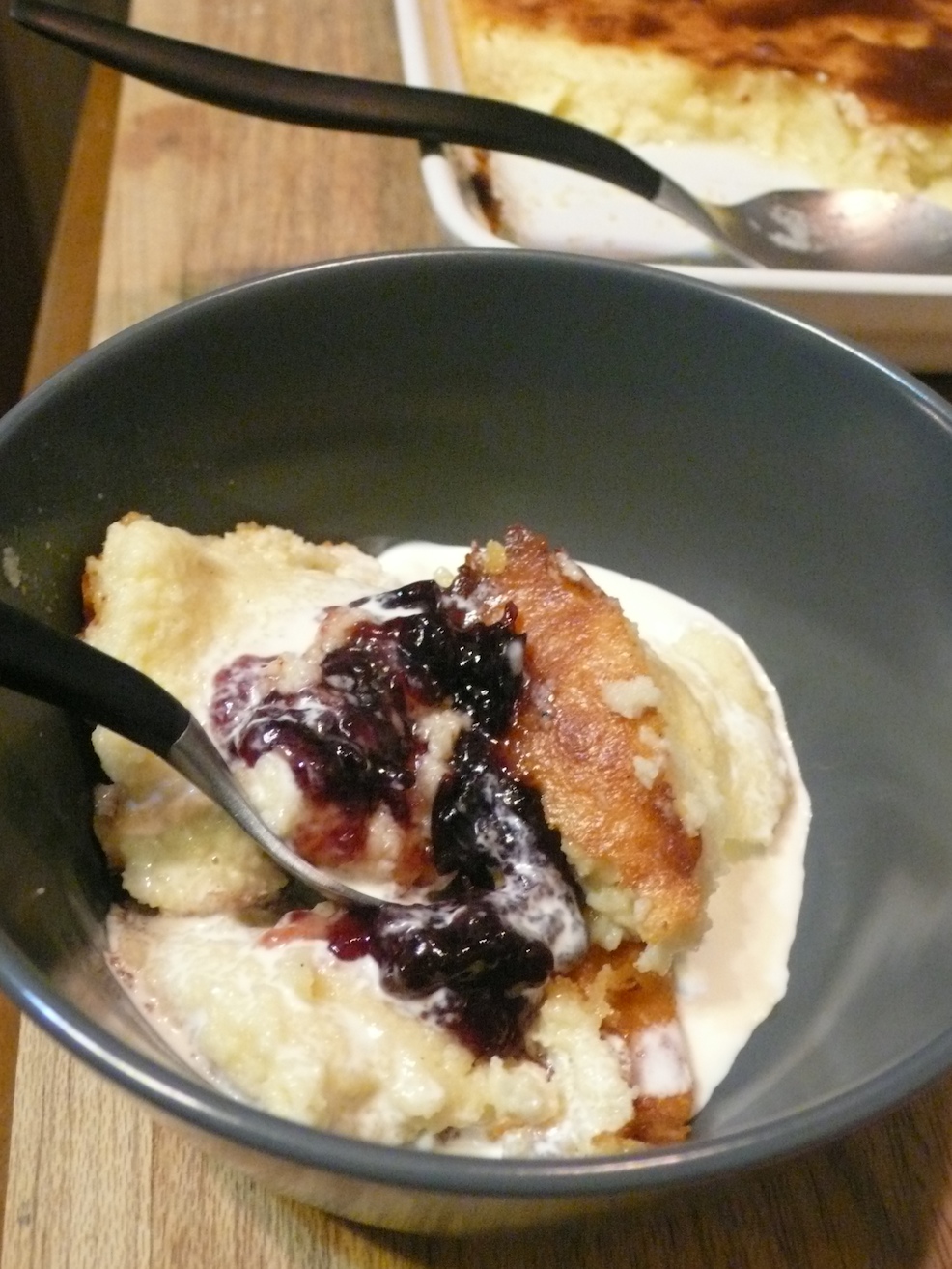
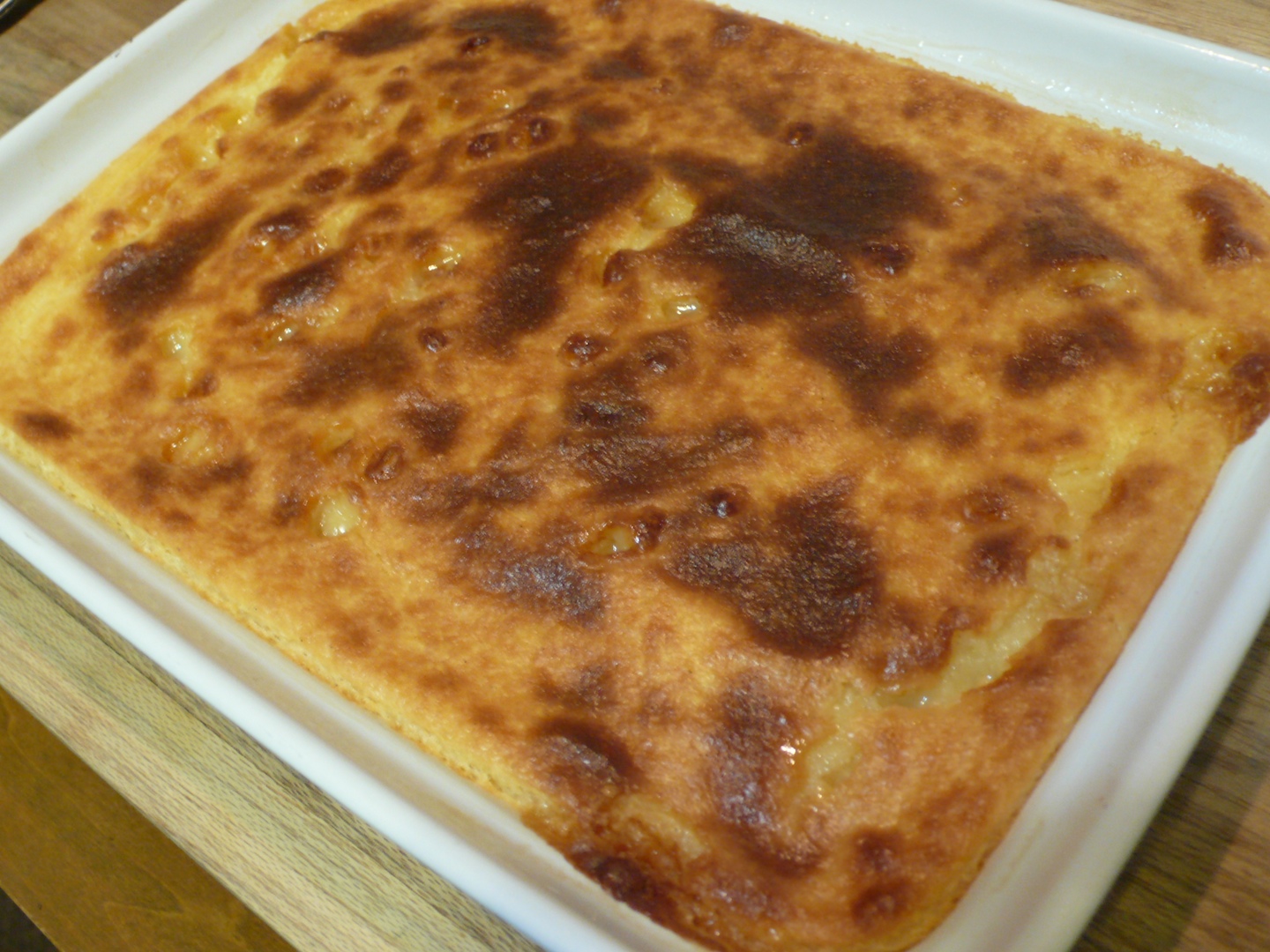
White Chocolate Semolina Pudding with Damson Jam and a touch of CreamThis is not your school days semolina pudding. I promise. No lumps or bumps or tasteless paste. This is semolina pudding for sensualists. This pudding is smooth, moist, golden, scented with vanilla, creamy with white chocolate. Sexy and yet comforting at the same time – yes its possible. Just think of the scent and feel of your favourite partner’s worn t-shirt enveloping you, and you will know what I mean… Or not! You might just have to take my word for it!

Its a doddle to make – and I needed something simple, yet decadent, because I came home from an almost six hour shopping spree with ZaZa and my feet hurt! I am expecting people for dessert tonight, and I was thinking of making a cake, or cookies, but this is so much easier. And it can all be made in one pot if you are super lazy (though transferring the cooked semolina into a nice looking baking dish is pretty simple too), and tastes like you slaved over the stove for hours. I love that kind of cooking.

This does not require a huge amount of technical cooking, chopping, slicing, dicing or sauteeing. Its a little bit of waiting (for the vanilla to infuse), a little bit of stirring, some pouring (if you are putting it in a pretty baking pan) and some more waiting while it bakes golden. It does however depend on your sense of taste and balance – how much vanilla? How much white chocolate? How much, if any, sugar, to balance the chocoalte? I have to rein myself in in regards to chocolate, but if you feel like going wild, you have my blessing! Substitute dark or milk if you wish, but I think this pudding is perfect with white chocolate.

Here in Malaysia we call semolina suji or sooji and it is used for cakes, puddings, and a huge variety of Indian dishes. Its also used extensively in Italian and European cooking for pastas and breads, amongst other things. Its used as the base to make couscous, and is basically the coarse pieces of starch or endosperm (what a word!) from milling of durum flour. It is awesome.

And the jam? Well, when you have Duchy Organic damson jam, theres not much point in making your own. Its the best jam ever. Dark purple, and tasting like mystery … superb with this pudding, on a slice of dark brown bread, with a bit of cheese. Its only available in the shops on a seasonal basis (which I like very much), so when I see it, I grab at least 3 or 4 jars and hoard it with pure adoration. Use whatever jam is your personal favourite!

This will fit a large-ish baking dish, serving about 6 – 8 people, depending on greed 😛

  • 4 cups milk (or a mix of milk and cream – or for the lactose intolerant out there, almond or oat milk, or even coconut milk)
  • 1 vanilla pod (or up to 2 tsp vanilla essence, added later)
  • 1 scant cup semolina
  • 1 cup white chocolate, chopped plus addition 1/4 cup optional
  • 1 tbsp light brown sugar (or to taste – optional)
  • 2 eggs
  • 1 – 2 tbsp butter
  • Jam and a bit of cream to serve

Pour 4 cups of milk into a medium saucepan. If you are using a vanilla pod, slice it in half lengthways, scrape the vanilla seeds into the milk, and drop in the pod as well. Bring the milk almost to a boil (when you see little plip plops of milk at the surface, take it off), stirring with a whisk all the while, and take off the heat. Leave, covered, for about 15 minutes, to allow the vanilla to infuse the milk. If you are using vanilla essence, leave for a few minutes to cool down, and go on to the next step.

Preheat your oven to 180 C and butter a large-ish baking dish (I use two small pretty white ceramic dishes because thats what I have!).

After 15 minutes, uncover the milk, and slowly whisk in the semolina. Whisking in the semolina off heat, in warm instead of boiling milk, ensures that the finished product is smooth like silk. Put the saucepan over medium heat, and allow the mixture to come to the boil, whisking all the while. As you bring the semolina milk mixture to the boil, it will start to thicken. It will eventually get quite stiff. It is boiling when the semolina starts to bubble at the surface. Make sure you whisk the entire time to ensure that it does not burn, and stays smooth.

Off heat, fish out the vanilla pods, and add the white chocolate. I usually add about 1 cup of white chocolate, and then taste. Chocolate varies so much in quality and sugar levels, that sometimes you may need the addition of a tablespoon (or even two) of light brown sugar. Most of the time, if you are using good chocolate, you dont really need it. I leave it to your (sweet) palate to decide. Remember though, that if you decide to serve it with jam, it will have a very sweet addition, and so needs to be mildly sweet, rather than overly sweet. You can kill this pudding with too much sugar!

If you did not use a vanilla pod, add your vanilla essence now, to taste.

Switch to a spatula, and beat in the eggs, and the butter. These two ingredients act as softeners and thickeners as the pudding bakes.

If you are feeling very decadent, and are a chocolate fiend, feel free to sprinkle extra chocolate over the pudding just before it goes in the oven (that would be me!). It might be nice to have a white chocolate semolina pudding, and sprinkle over with shards of bittersweet chocolate. Though I would then serve a seville orange marmalade with the pudding rather than damson jam. You could also, if your heart so desires, sprinkle some nutmeg or cinnamon over, though for me, these tastes are too much for the delicacy of this pudding.

Baked Pudding Cooling Down with dots of White ChocolateBake in the oven for about 30 – 35 minutes until the top is golden, and the pudding is slightly puffed. Take out of the oven, and allow to cool at least 10 – 15 minutes before serving. You could leave the pudding in a switched off warm oven while having dinner if you like…

Serve with some jam and may be some extra cream on the side for those who want it (and I dont know anyone who wouldnt!)

Creamy Eggs

2 Aug

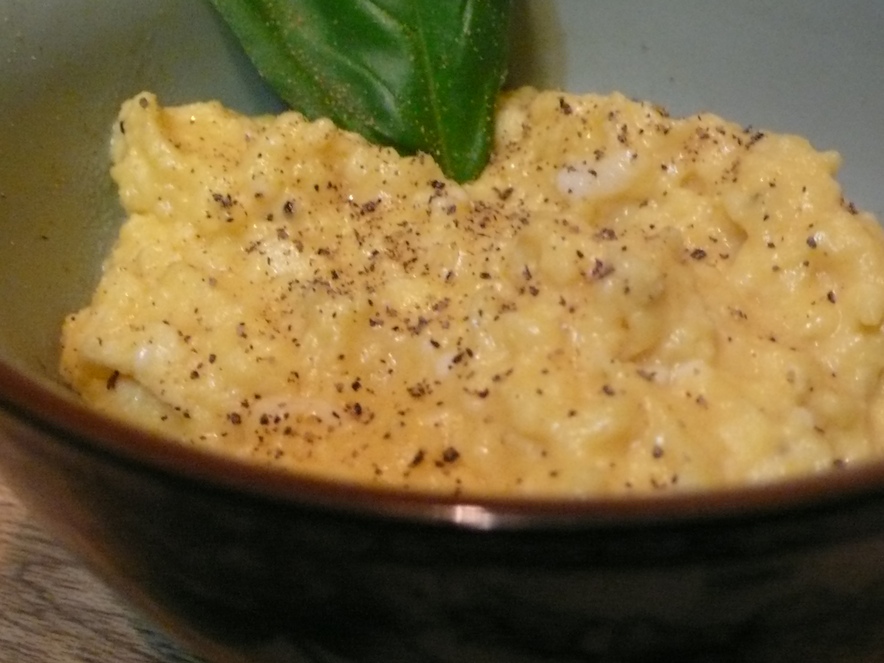
Creamy EggsEggs are humble things, but they taste spectacular, and they add their special golden glow and richness to lots of different dishes. They therefore should be treated with great honour and respect. I love making things with eggs – custards, quiches, cakes, ice creams. But sometimes, what I really want is the perfect egg in all its glorious eggy-ness. When that happens, I turn to this recipe for creamy eggs. Well, in all honesty, these eggs are scrambled, but the methodology and the finished product are just so different from the regular garden variety scrambled eggs that we started to call them differently. They deserve it.

These eggs are creamy to the point of custard, but still most definitely not. They are scrambled, and yet silky, unctuous, rich and light in a way that eggs whipped in a pan could never be. The secret is in the preparation, and because of that, these creamy eggs are really a gift of love. They take a while to make – may be 15 minutes – may be half an hour. It all depends on your heat source, on how well you cushion your eggs from the heat, and how many people (and thus how many eggs) you are feeding. As a result, I would not make this for more than 4 people – but I prefer making it for just 2. Or even, as a gift to myself, for just one. For breakfast or a light supper, these eggs are perfect.

These eggs are also really good for someone who isnt feeling very well. They are so easy to eat. They slip down the throat, and fill the belly. Their golden colour, and tantalising scent perk up even the most jaded or weary of appetites…

Remember though, as a cook, this is a meditative dish. The constant stirring, the thoughtfulness about thickness and balance, the tasting… you have to be in the present when you make these eggs, and what you put into them is what you get out of them. Make sure that you are happy and loving when you make this dish, because if you arent, you will surely taste it in the eggs.

You can serve these eggs with lots of things. For non-vegetarians, snippets of silky smoked salmon layered atop the eggs seems like silk on velvet. For the rest of us – the sharpness of basil or another herb, snipped fine, might be a perfect contrast to the sublime richness of the eggs. To be honest though, I serve them with nothing but a crack of black pepper and a silver spoon, nestled in a pretty bowl like golden curds. Sometimes toast might get a look in – just for that crunchy contrast, but honestly, you need nothing but these eggs to bring sunshine and smiles to those you love… incluing yourself!

For each person, you will need:

  • 2 fresh organic eggs (preferably at room temperature)
  • 1/2 tsp sour cream or creme fraiche
  • Salt and pepper to taste
  • 1/2 tsp cold butter cut into tiny slivers
  • Bain marie – double boiler set up

A bain marie or double boiler can easily be made by putting a metal bowl over a saucepan of boiling water. Just make sure the bowl doesnt touch the water, and have a kettle of boiled water standing by in case you need to replenish the water at a critical moment. Start off by filling the saucepan about 1/4 full with water, and setting over low heat to come to the boil.

Meanwhile, break the two eggs into a bowl, and very gently, mix in the sour cream or creme fraiche with a fork. Try not to beat the eggs or whip them or form too many bubbles in the mixture. Water and air are the enemy of creamy eggs – they form steam which help puff up the eggs as they cook. You want something much deeper and darker and sensual. Fluffy eggs have their place – but not here!

Crack some black pepper and a pinch of salt over. You can adjust later. You just want a tad right now.

Once the water is boiling, put the metal bowl on top of the saucepan, and slide your eggs in. No butter, no oil. Just eggs and a little sour cream. With a spatula, start stirring the eggs…. Find a pace and rhythm that works for you. Figure eights usually do it for me. Watch the eggs carefully, and just keep stirring and stirring. Slow and even, no sudden movements, just a gentle silky pattern. You will see the cream slowly dissolve into the eggs, and the mixture go from slightly glossy and transparent to thick and yellow and opaque.

Keep stirring. (Thats the basic recipe. Eggs and stir!) Your eggs will go through quite a few stages. They will start gaining thickness, and will look like golden oatmeal porridge. Basically, what you are doing is cooking the water out of the eggs, and encouraging the proteins to thicken and cream. This takes time and gentleness – in heat and in touch. Go fast, and your eggs will respond and go rubbery.

When they look like thick oatmeal porridge, you can add a little bit of cold butter for silkiness and smoothness and creamy taste. But you dont have to if you dont want to. What you should do at this point is taste for salt and pepper and adjust accordingly.

Keep stirring. 🙂 When the eggs look like a firm cottage cheese or ricotta, take them off the heat immediately.

Serve atop crisp toast, or in a bowl with a silver spoon.

Taste the love.