Vegetarian Panna Cotta

9 Jul

I have always loved panna cotta. The milky, trembling, perfectly set dessert just does it for me. May be because its so simple – the essence of milk. Scented lightly with vanilla, not too sweet, creamy and yet light, its a wonderful dessert. You can add all sorts of things – a chocolate sauce, a drizzle of strawberry jelly, fruits – to the pana cotta itself, or on the side, and you will get a different taste. A light espresso sauce comes to mind. Anyway, the whole point is, panna cotta is a simple and delicious thing – but I was unpleasantly surprised when I found out how it was made: milk, sugar, vanilla and gelatin. Now, vegetarians cannot eat gelatin because its made up basically of hooves, bones and cartilage of animals from the slaughterhouse boiled down. I will consume animal by products like eggs and milk, but not by products from animals that have been slaughtered. So I have foregone my panna cotta, and moved on to other delights.

Until a few months ago, when I used agar agar to stiffen and hold whipped cream. Hmmmm. I wondered if the same could be applied to the creation of panna cotta. Well, yes, but. Yes it can, agar agar is an excellent gelling agent. And yes, its relatively easy. But, you really have to follow instructions. I know this by trial and error. For almost each cup of milk or cream that you use, you need a little less than 1 tsp powdered agar agar. The agar agar must be given sufficient time, in a variety of circumstances, to melt and incorporate into the cream. If it doesnt, you get a yucky, grainy, unset mess. I know. It happened to me!

I did save it though, and now have six pretty glasses of panna cotta settling peacefully in my fridge. This dessert is easy to make as long as you accept there will be a long period of calm reflective slow cooking, and a few moments of utter chaos. Best prepare for the chaos at the beginning and set everything up so that at least it is controlled. If you do, you will have a guilt free (well relatively) panna cotta that really delights.

For 6 ramekins or glasses you will need:

  • 1 cup milk
  • 1/2 cup buttermilk (or additional milk if you dont have or dont want to use the buttermilk)
  • 3 3/4 tsp agar agar
  • 3 cups cream or half and half (I used 1 1/2 c cream and 1 1/2 c whole milk)
  • 6 – 8 tbsp sugar (preferably caster)
  • 1 vanilla bean split in half  or 1 tbsp vanilla extract
  • At least 2 cups ice

First off the prep. Set up your six glasses or ramekins on a clean tray or baking sheet and set aside. Have a large mixing bowl (that will fit your saucepan comfortably) at the ready, along with ice in the freezer, a large pouring jug, and a sieve.

In a medium saucepan, pour the 1 cup milk + 1/2 cup buttermilk and sprinkled the agar agar on top. Mix well and leave for at least 5 – 10 minutes to soften and incorporate. I use buttermilk in this recipe because I love the subtle tang it gives the finished product – it enhances the taste of milk, without intruding. However, if you just like milk, just use milk!

Meanwhile, in a separate bowl, pour the cream / half and half and sprinkle over the sugar, and mix in the vanilla extract, or scrape out the vanilla bean, and pop its contents, and it, in. Leave to get acquainted.

After about ten minutes or so, go back to the saucepan, and on low heat, bring to the simmer, stirring all the while. What you will want to see is the mixture slowly getting thicker, and the agar agar melting. You want to bring this just-almost-not-quite to the boil. A few bubbles coming lazy to the surface and you know youre just  a tad too hot. You want to do this slow and gentle.

Hold the milk at a simmer, stirring slowly all the while for 3 – 5 minutes, and then add half of the cream mixture. Continue stirring and repeat bringing the milk-cream mixture just to the boil, and keeping it at a high simmer for a few minutes. Finally, add the rest of the cream mixture and repeat. This entire process should take you between 10 – 15 minutes. Your main aim here is a smooth creamy mixture. You want to ensure that the agar agar is completely melted into the milk and cream, and it can only do so if you bring it just to the boiling point. Enjoy this time, because all hell will break loose soon!

Agar agar gells without the need for refrigeration, so as soon as you take it off the heat, it will start to stiffen up. You now need to work extremely quickly. Put ice into the large bowl with water, and set the saucepan atop. Mix to cool down for only a few minutes – you still want to work with a warm/hot mixture, otherwise it will start gelling! Place sieve over your pouring jug, and pour all the cream through, pressing down on the solids, and discarding. Pour the cream straight into your ramekins or pretty glasses. You will see the drips and drops starting to gel so work quickly but evenly. Cover, and refrigerate for at least an hour, or overnight.

A note on the agar agar: I have read that agar agar to liquid should be a 1 tsp to 1 cup ratio. I have tried this, and it comes out a very very stiff jelly. My aim for the panna cotta was a slightly wobbling, smooth, silky dessert. I have therefore come up with a ratio of 4 1/2 cups liquid to 3 3/4 tsp agar agar. This is an important measurement. Please make sure you measure everything carefully. If your agar agar does not set, or sets too hard, you can always melt everything down again, reheat and go through the same process. If it is set too hard, add at least 1/2 cup of milk and 1 tsp or more of sugar. If it has not set enough, add 1/4 tsp of agar agar.

Good luck!
Fresh Mint Ice Cream

8 Jul

Oh the joys of mint ice cream. I cant tell you what a wonderful contrast the sharp, icy mint and the smooth creamy ice cream tastes like – you will just have to try it yourself! An ice cream maker is quite important for this recipe, but you could, I suppose, freeze the custard, and check on it at hourly intervals, stirring to make sure no crystals form. I use a mixture of fresh mint and mint extract, and I combine spearmint, peppermint and applemint in my fresh mixture, though if you only have access to one type, by all means use only that. I also use a mixture of 2 to 1 in terms of cream and milk, but you can adjust this according to your tastes. The egg whites can be refrigerated in a clean bottle and used within a week for something delicious like meringues or something boringly healthy like an egg white omlette.

This recipe makes 2 pints, and you could certainly halve it if you are not feeding a large number of people! Make it a few days ahead of time so the ice cream has time to ripen and deepen in the freezer.

  • 4 cups heavy cream
  • 2 cups whole milk
  • 2 cups packed mint (a mixture of spearmint, peppermint and applemint), stalks removed and washed clean of grit
  • 1 + 1/2 cup of sugar
  • 12 egg yolks
  • 1 tsp peppermint or mint extract (if needed, and I usually do)

In a blender, combine the cream and the mint and 1 cup of sugar, until the mint is just flecks of green in the cream. Pour this mixture into a large saucepan and add the 2 cups of milk. Heat on a very very low fire until simmering (don’t boil), and then take off the heat and allow the mixture to steep for at least 15 minutes, and up to a couple hours.

When youre ready to start again, beat the remaining sugar with the egg yolks, until a bright yellow golden colour.

Once the mint cream has steeped, test for heat. If its cold, heat it up so that when you dip a finger in it, it feels like very hot bathwater. Take about a half cup of the mint cream and beat it into the egg sugar mixture. Incorporate this back into the mint cream, which should be set over a very low fire. Cook, stirring slowly, for about 6 – 8 minutes or until a custard forms. You can tell this is working if you dip a spoon into the cream and run a finger across the back, you see a clear clean line.

Be brave when making custard. People fear that they will end up with a sweet scrambled egg mess! I wont lie, sometimes that happens, but you will get the hang of it quite quickly. Low heat and constant stirring are the keys to success. You will see the mixture turn from a watery liquid, to a thickish custard – this is where you want to stop, and take it off the heat and test it. If you do get a few scrambles, don’t worry – the sieving process will make sure those curdy bits at the bottom don’t get into the final mixture! Also, you can beat (gently with a fork) in half a cup of cold cream once you have sieved the mixture: this sometimes helps a lot.

Put a large sieve or cheesecloth over a clean large bowl, and pour the custard through the sieve, pressing down, and then discarding the solids. Taste for sugar (remember that when you freeze ice cream, your taste buds don’t taste the sweetness as well), and for mint. If needed, add a teaspoon or two of mint or peppermint extract. If you think it needs to be sweeter, beat about half a cup of custard in a smaller bowl with a couple heaping tablespoons of sugar, and combine back.

Put the custard in the fridge and let it cool completely for 6 hours, or overnight. Taste again.

Once the custard has cooled, follow the instructions on your ice cream maker, and churn. This should make 2 lots of ice cream in the usual 1 pint ice cream maker.

Spoon into a clean waiting container, and freeze overnight, or a few days, to let the flavors ripen and deepen.

PS — help yourself to a scoop of the freshly churned ice cream — cook’s treat!

Passion Fruit + Lime Cordial

7 Jul

This is not so much a recipe as instructions for alchemy. Its such a simple process, and the results are sublime. In South Africa, passion fruit and soda is on every menu, and passion fruit cordial is easily available year round. Its not so easy to get elsewhere – and when it is, it tastes chemical and nasty.

But real passion fruit cordial, made sharp and bright with the addition of fresh lime, is a drink for every summer’s eve. Refreshing, delicious, more-ish and perfectly blendable with everything from soda to vodka. This is something that if you have a large fridge, you should keep on hand all the time. Even in the darkest winter, a splash of passion fruit cordial can brighten up your day.

And just remember – you can use this to flavour all sorts of things. From a salad dressing to a sauce, to fruit for a crumble or whipped cream; this golden, glowing syrup is fantastic.

  • 4 cups white sugar
  • 2 cups water
  • Juice from about 12 limes (approx ½ cup) – don’t worry, include the pips!
  • About 24 passionfruits (depending on size, and ripeness – about 2 cups in total)
  • Lime oil (totally optional)

Over high heat, in a large, heavy pan, dissolve the sugar in the water. Add the lime juice. Let this mixture come to a rolling boil. As it does, you will see the syrup become clear, and the pulp and pits from the lime juice will rise to the top and become foamy.

Take the syrup off the heat, and add all the pulp and seeds from your passion fruits. I cant really tell you how many to use as passion fruit is so variable in terms of flavour and ripeness. You will need less of the really ripe ones (with wrinkly deep purple brown skins) but I have made this with great success with under ripe passion fruit – I just used a whole lot more! You will need at least 2 cups of passion fruit pulp.

Bring this mixture to the boil again.  It should take about 5 minutes.  As it boils, add a tiny splash of lime oil if you have it to brighten the taste even further.

Once it has boiled, take off heat, and leave to steep for up to 8 hours. If its summer time, or you live in a country where ants will be attracted to this sticky sweet syrup, make sure that you put the pan in a sink of water. This will let the syrup cool and the flavours meld, without you having to worry about finding a trail of ants drunk on passion fruit!

Once cooled, taste. It should be sweet sweet essence of passion fruit. If its not, add more passion fruit, and bring to the boil again, and cool once more!

Drain this syrup through a mesh, pressing down on pulp and seeds to extract full flavour. Bottle and keep for up to 6 months in the fridge.

Serve syrup in a tall glass with ice and heaping amounts of soda water, and a sprig of mint. So delicious, you wont be able to believe it.

Sticky Fresh Ginger Cake

6 Jul

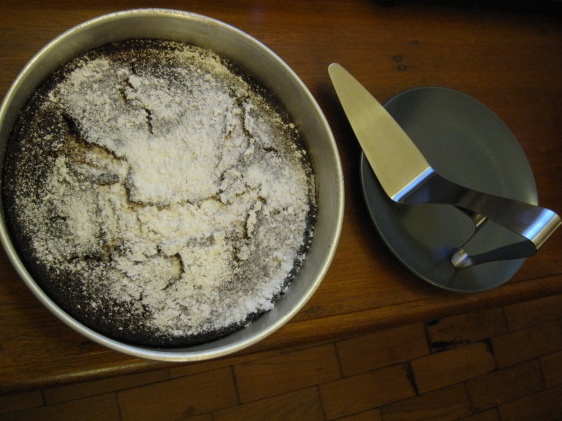
We made the dough for Chicago deep dish pizza tonight, and Ezril and AngelKitten decided to stay to watch the Netherlands – Uruguay game. Though we had already had dinner, we felt like something warm, tasty and comforting for a snack. I checked what was in the cupboard, and found the ingredients for a fluffy yet sticky, warm and crusty fresh ginger cake. Oh wow, was this good. We devoured it as soon as it was out of the oven (a bit of a mistake, we should have reigned in our greed and waited five minutes!) and it warmed us with love and companionship as it fed us.

This is a great tea cake – quick to put together, and so very welcoming. You could use powdered ginger instead, but I love the sharpness of fresh.

For a 9 inch cake pan, you will need:

  • 2 cups flour – 1 1/2 cups cake flour, 1/2 cup all purpose (or all all purpose if you have no cake flour)
  • 1/2 tsp baking soda
  • 1/2 tsp salt
  • 1 1/2 tsp mixed spice
  • 1/2 tsp cinnamon
  • 2 – 3 tbsp grated fresh ginger or 2 – 3 tsp dried ginger
  • 1 stick / 8 tbsp butter (1 cup)
  • 1/2 cup golden syrup
  • 1/2 cup light brown sugar
  • 1 cup buttermilk
  • 1/2 cup milk
  • 1/2 cup ginger beer or ginger ale
  • 1 egg
  • 1 tbsp vanilla
  • A few tbsp caster sugar

Preheat your oven to 180C or 350F. Butter a 9 inch cake pan well and set aside.

In a large bowl, combine flours, baking soda, salt, mixed spice, cinnamon and ginger. Whisk gentle to combine.

In a saucepan, over medium to low heat, combine butter, golden syrup and brown sugar until just combined, and the butter has melted.

In a small bowl or measuring cup, combine buttermilk, milk ginger beer, egg and vanilla, and beat with a fork to combine.

Pour the butter mixture into the flour, and beat with a whisk to incorporate, and then beat in the buttermilk mixture. You will have a very liquid cake batter.

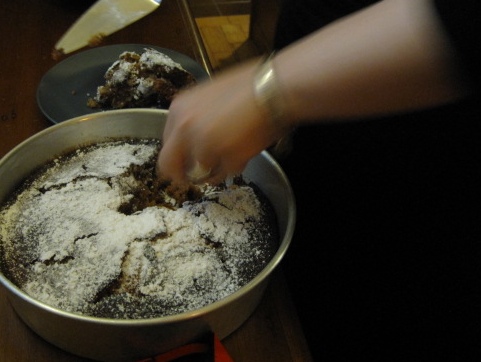
Pour into cake tin and bake for 30 – 45 minutes, until the top has turned golden and a toothpick inserted into the centre of the cake comes out with a few crumbs attached. The cake will be fluffy at the edges and sticky gooey in the centre. A delightful combination!

Sieve a few tablespoons of caster sugar over the top of the cake, and leave to cook for at least 5 minutes before slicing from the pan and enjoying.

If you really want to gild the lily, this would be pretty extraordinary with some lemon curd slathered over the top instead of caster sugar. It would be great baked in loaf tins as well, and sliced. Excellent with a very old cheddar or other sharp cheese. And this is perfect summer picnic cake. Any which way, enjoy with love!

Special thanks to AngelKitten again for keeping track of the cooking ingredients, and to Ezril for tasting!

All photographs copyright Chan KY

Favourite Things

6 Jul

These are some of my favourite things…

Most cooks I know have obsessions –  a particular brand of balsamico or olive oil, certain types of knives, particular tools that they adore, cookbooks. I must admit, I have them all. Cooking enables me to enjoy spoiling myself with things that are “useful” … and buy ingredients which I can share with others and make into delicious dishes.

I love going to grocery stores in new countries I visit – and hardware stores, in the cooking section – and see what gadgets or tools or special ingredients that are local to that place. They are the best things to bring home, because they ensure I have a sensual reminder of the place and space I have visited. Small pleasures, but they are the most important.

I have some things which have never left me, and which go along with me in my travels. I have lugged cookbooks on two week trips to friends, and have packed my favourite knife in my carry on luggage.

I thought that every now and then I would share a few of my favourite things with you because these special items are part of what defines my cooking philosophy.

My favourite cookbook of all time. The Frog Commissary Cookbook by Steven Poses, Anne Clark and Becky Roller, has inspired me for over 20 years. I first got it when I was in university, and its simple, clear writing style, and easy to follow recipes inspired me to cook with passion and creativity. Steven Poses had one of the first modern restaurants in Philadelphia, the Frog Commissary, and is a contemporary of Alice Waters from Chez Panisse on the West Coast. His food is not quite as local/natural as hers is, but it is delicious, divine, delectable.

Though I never got to go to the Frog Commissary, I have had this book since university days. Steven Poses now runs Frog Commissary Catering in Philadelphia, and has cooked for more than 15 million guests. When I first read this cookbook, I fell in love with its unique clever take on food.  Their ideas were so varied, their influences so wide ranging, and their ability to combine different ingredients into a magical special meal made me an instant fan. But it was the absolute specificity of the recipes, and the fact that you could try one and know it would come out perfectly, that had me for life.

I think I have gone through about six or seven copies of this book. I use each copy until it falls apart. For a while there, it was out of print, and I used to buy them wherever I found them (on ebay, 2nd hand bookstores) and hoard them like precious gold. My favourite recipes are either adapted from or inspired by the recipes in this book, and I never ever tire of reading their ideas and inspiration. The food here is very international, vegetarian friendly, and inspired.

I collect cookbooks and always have a couple at my bedside table to page through at night. However, if I had to pick just one cookbook to dream from, be inspired from, and cook from – this would be it.

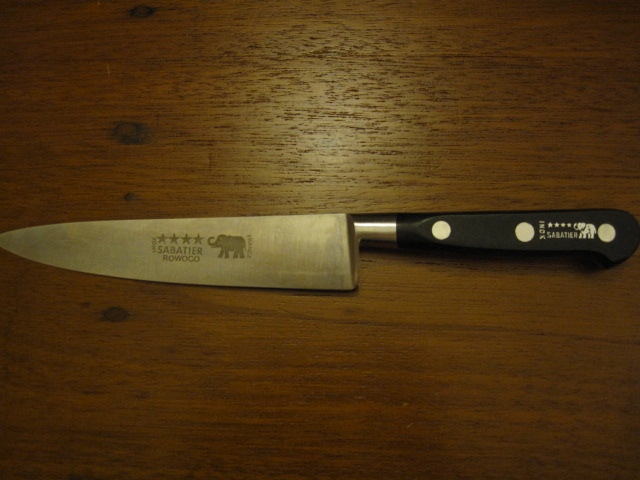
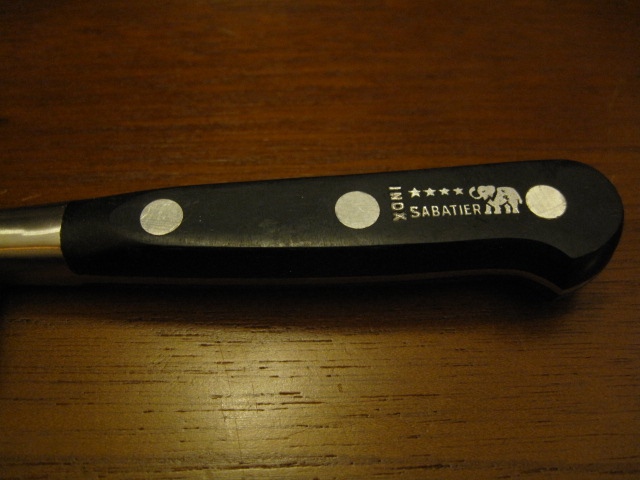
I collect chef’s knives. I love the different types of knives and different brands – I read about the different approaches to shaping and creating a knife with respect to the art form that this truly is. When I finally had the money and the desire to start collecting my own knives, there was only one knife I wanted – a Sabatier. These knives are handmade in Thiers, France from a single piece of high carbon stainless steel. The blade and handle are a single piece of steel, so there is no risk of a blade divorcing a handle mid chop! The knives are hand forged, and have an unbelievable balance in the hand, and a wonderful almost instinctive slice. Their sharpness stays for ages, and they feel both delicate and strong in the hand. I love these knives, and this one, my 4 star elephant Sabatier is my absolute favourite. Its a bit larger than a paring knife, but not as huge as a big chef’s knife. Its large enough to tackle big jobs, sharp and sturdy enough to mince an onion in a few seconds, and comfortable enough in my hand so that I never ever feel tired when using it.

I have a lot of knives in my kitchen, but this is the only one I will not allow anyone else to use. Its “my” knife, and when I hold it in my hand, I feel confident in what I am doing – which of course is half the battle won!

I have two of these 4 star knives, and I use them every single day. I love them so much, there are no words. I found them on ebay, where you can get amazing deals for old Sabatier knives. Do your research first, though. You must know what you are getting, and where its from. There are a lot of fakes out there!

And finally, my favourite graters. I have tried all sorts – box graters, those crappy ones they sell at Ikea, grater attachments for food processors, etc etc etc. But nothing, nothing, nothing compares to Microplane. These graters were developed as plane tools for the woodworking industry. It was a woman, cooking in her own home, who nicked her husband’s new woodworking tool, who gave these tools their place in inspired herstory. Once you have tried a Microplane grater, you will not use anything else again, ever. Everything, from carrots to cheese to peel, grates smoothly, evenly, and easily. There is almost no effort needed to get stunning results. These three graters are the only thing I ever use for cheese, for grating vegetables, for mincing garlic and ginger, and for getting the peel off lemons and limes. I use them all the time, and though you do have to be careful with fingers (they are sooooooooooooo sharp!) these are indispensable.

So these are three tools which make me happy, and help me to be a better cook. Hope they give you ideas about what you are using in your own kitchen. If you have special tools, I would love to hear from you!

My Tomato Sauce

5 Jul

For pasta, for pizza, for salsa… for just about anything. When I need a pasta sauce that is delectable, this is the one I go to. Its been “developed” over more than 20 years of cooking tomato sauce. I have friends who remember me cooking a version of this sauce when I was 14 years old! Im almost 40 now 😉  Its ingredients are malleable but there are some broad rules that I usually stick to:

  • Keep a base of onions and loads of garlic
  • Always use a mix of tomatoes – I use at least 2 types of fresh tomatoes, canned pomodoro, and tomato paste. This ensures a really deep level of tomato flavour. Sun dried tomatoes are also awesome in this sauce.
  • Try and use a mix of fresh and dried herbs. Again, these impart very different flavours, and mixing them really lends depth to the sauce
  • You can use a mix of vegetables (see below for what I put into it) but try and make sure there are some carrots for sweetness

I first started cooking this sauce in high school when I used to have loads of people over for pool parties. It was the most forgiving sauce because you could simmer it for ages, and it just got better and better. As long as the basic rules were followed, and the bones of the sauce were respected, you could add just about any vegetable (bar potatoes or pumpkin) that you wanted.

When I went to university, I started making this sauce for my housemates. There was always something missing, until one day, I hit on a magic combination. And this is the secret to the sauce, without which you will not have the same sublime flavour and glossiness. These are non negotiable. You need at least 1 eggplant for silky smooth, shiny unctuousness, and a big handful of prunes for a dusky sweetness that you just cant place in the final taste. These two ingredients are secret because they both melt into the sauce, encouraging and supporting its flavour without pushing their own agenda into the story. Eggplant and prunes. Who would have guessed?! Please do not try and make this sauce without these two – I promise, it will make you so very happy that you trusted me. 😉

For about 4 – 6 cups of finished sauce, you will need:

  • 2 medium white onions (approx 2 cups), minced
  • 7 cloves of garlic, minced
  • 1/2 cup of extra virgin olive oil
  • 2 tbsp butter (optional)
  • Salt and pepeper
  • Fresh basil, thyme, marjoram, oregano and rosemary, minced fine – about 1/2 cup in total
  • 1 large or about 5 baby eggplant (approx 2 cups) roughly chopped
  • 1 tbsp balsamic vinegar
  • 1 large red pepper (approx 1 cup), deseeded, roughly chopped
  • 4 – 6 baby carrots (approx 1 cup), peeled and roughly chopped
  • 1/2 cup red wine
  • 3 tbsp tomato paste
  • 1 medium zucchini (approx 1 cup), roughly chopped
  • 2 cup mixed tomatoes, roughly chopped (I used cherry and baby roma)
  • 8 medium portobello mushrooms (approx 3 cups) peeled and very roughly chopped
  • 2 x 400 g cans of pomodoro tomatoes in juice – about 4 cups, made up with wine or water if needed
  • 15 pitted prunes
  • 2 tbsp brown sugar
  • 1 – 2 tbsp mixed Italian herbs (dry)

In a heavy 5 qt saucepan, soften onions and garlic in about 2 tbsp olive oil and butter (if you are not using the butter, just use a little more olive oil), over high heat. Keep the olive oil by the side of the stove, and add more when you feel the ingredients are sticking to the bottom of the pan.

Season the onion mixture with salt and pepper, and add about 3 tbsp of the minced mixed fresh herbs, and mix well. Lower heat to medium high, and add the eggplant. Mix well to ensure its covered with oil and onions. Add  balsamic vinegar, and mix to brown a little.

Add red pepper and mix well, and then a few minutes later, add carrots and mix well.

Add all the red wine and the tomato paste, mix well, and turn the heat to low. Add zucchini, mix well, and then add the raw tomatoes and mix well. Add the mushrooms and mix to combine all, keeping check that nothing is sticking and add olive oil if neccessary.

Measure out 2 cans of pomodoro tomatoes in juice into a large measuring cup and make up to 4 cups with wine or water if needed. Smash the tomatoes with a fork so they are roughly chopped, and add all at once to the pan.

Cover the sauce, and allow to begin to simmer and steam. Meanwhile, pit the prunes, and chop roughly. Add the prunes and brown sugar to the sauce and mix well.

Let the sauce simmer, covered, for approx 15 – 20 minutes, mixing every five to ten minutes to ensure it does not burn.

Uncover, mix very well, and let simmer for at least 45 minutes to a couple of hours, over low heat, or until reduced by half. Ensure you check the sauce every 15 minutes or so to ensure it does not burn. You can add more wine if you want a particularly deeply wine-ey sauce.

Taste for flavour and season with salt and pepper if needed, or even some more sugar, and add dried herbs. About five or ten minutes before finished, add the rest of the fresh herbs to let their scent permeate the sauce.

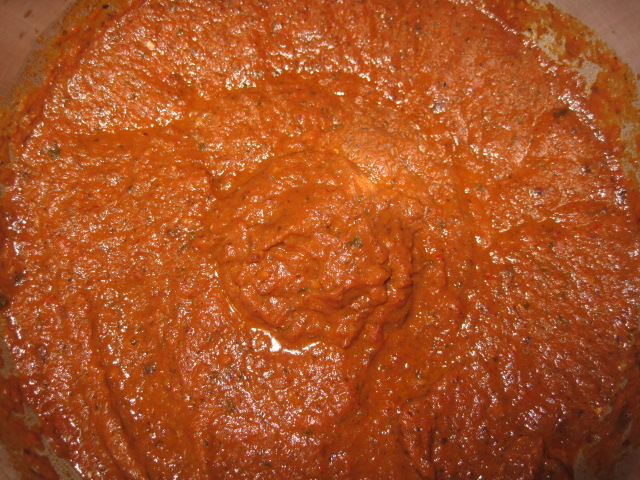
Once the sauce is to your liking, take off heat and decide if you want to keep it chunky (which is nice for some pastas, salsas, etc) or if you want to blend it smooth. I use an immersion blender here. If you do blend it please make sure it has cooled to at least lukewarm – hot splashing tomato sauce is a real pain!

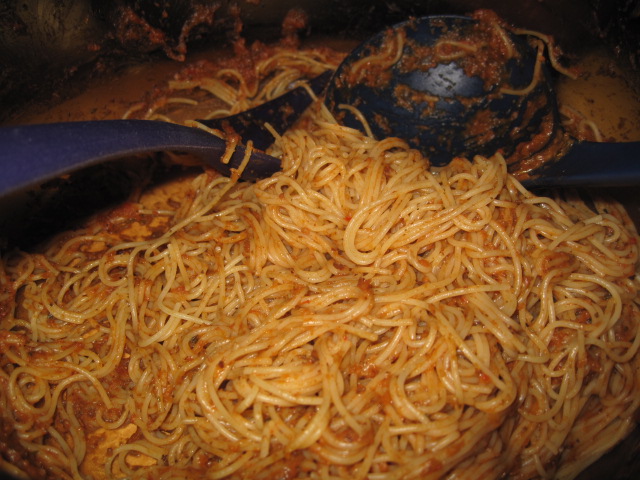
If you are using this as a pizza sauce as I will be, make sure you have at least one cook’s meal with about half a cup of sauce mixed with some angel hair pasta! Soul satisfying.

This freezes extremely well. I often freeze in an ice cube maker and then transfer to a zip loc bag. Alternatively, measure out by cupfuls into a sandwich ziploc bag and freeze flat. Keeps for up to 6 months.

Special thanks to AngelKitten for transcribing all the ingredients and keeping track of me!

Photos copyright Chan KY

Egg in the Hole

4 Jul

This was one of the first things I ever learned to make. Fried bread and egg, yes. Good breakfast (if a little ott). But cut a square (or circle) out of the bread, and drop the egg into it, and you suddenly have magic. Children love this (I know I did) – they are fascinated by it and love to dip the bread into the golden yolk. I remember making this on seaside trips, for parents’ birthdays, and just because I could!

Its wonderful as breakfast, but its also awesome for a light supper (with a salad of tomato and onion perhaps), or even a late snack whilst watching the World Cup! Its very satisfying because there is something playful about this meal – but its also really really tasty.

If you can, please try and make this with an organic egg. Because the ingredients are so simple: bread, egg, butter and seasoning, it is imperative that you use the best quality ingredients. An organic free range egg is a thing of beauty. Its yolk is a golden orange, and the taste is completely totally eggy. The white is bright and tastes clean and clear. These may cost more, but they are so worth it. The creature that gave you her egg is living a good life, rather than battery raised chickens, and you can taste that lack of stress and sadness in the egg. When I do eat animal products (egg, milk, cheese, etc) I do try to get the organic, free range variety. Not only are there stronger protections in place for the animals to ensure that they lead happy lives, but quite simply, the taste cannot compare. It is just so much better. I would rather have one egg in the hole every two weeks, and have it taste 20 times better. Its about the choice, but its also about my sensual pleasure.

For each egg in the hole you will need:

  • 1 strong slice white or brown bread, preferably home made
  • 1 tsp (or more) softened butter
  • 1 egg
  • Salt and pepper to taste

Take the bread, and cut a hole in the centre. I usually make a square, but you could cut a circle, or even use a cookie cutter to make an interesting pattern.

Butter the bread on both sides, as well as the cut out square.

Sprinkle a tiny bit of salt and pepper over the bread.

Place bread on a non stick pan, over low heat. Let the bread fry/toast in the butter on both sides, until browned to your liking.

As soon as both sides of the bread are brown and toasted (dont forget to flip the cut out square!), crack the egg into a pouring cup measure. Salt and pepper the egg.

Take a small amount of butter and drop it into the open hole in the bread. With your spatula, lift one side of the slice of bread, and pour the egg white through the hole. The lifting will allow the white to flow around the edges of the bread. Try and pour as much of the white  out as possible, creating a layer of egg white on the bottom side of the bread. Once all the egg white has been poured through, gently pour the egg yolk straight into the hole. Let the yolk cook for as long as is your preference. I personally like it a little liquid, but also slightly squidgy.

Salt and pepper just before serving.

Enjoy!

South African Potjiekos

4 Jul

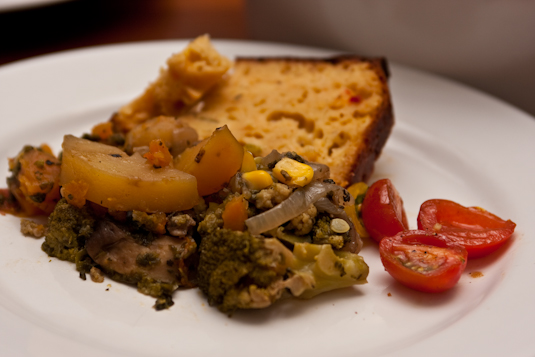
The South African Vegetarian Potjie is a classic and traditional Afrikaans recipe, usually made in a cast iron pot over a campfire. This version is basically a vegetable stew, but its how you cook the veggies, and how you present them that really makes them shine. This dish is usually made with lamb or meat, but occasionally you will find a vegetarian version. This is my favourite combination. It is a simple recipe because it comes down to which vegetables are available, and knowing how to combine said vegetables so that they sparkle.

Shopping is an integral part of cooking. Organic vegetables are always more expensive (they shouldn’t be but they are!) and so if you cant afford to go all organic, shop smart. Go to the organic section first and figure out what is freshest, ripest, smells and feels the best. Prod and touch and sniff and stroke your vegetables (much like the old lady in Tampopo) and choose a balance of colour and flavour. Max out your budget here, and then round out your vegetable selection with non-organic staples, that might have a larger range or more interesting choices then the organic aisle.

The single most important rule to remember when you make potjiekos is to let your imagination, wallet, and the state of your vegetable aisle combine in magical partnership! In terms of the vegetables you use, I would try to remember that you need something from each of these groups: aromatics to pull the entire dish together, such as onions, garlic, or for those who abstain, peppers and celery; starchy and firm vegetables that will standup to being on the bottom of the pot, and will cook the longest; sweet vegetables like pumpkin; vegetables that will release a lot of water, and flavour into the broth like mushrooms or tomatoes; and strong savoury green vegetables.

The potjiekos below will feed at least 12 – 16 people, and was made in a 32cm round (not oval) cast iron dutch oven. Get one if you can. Whatever you make in here will feed hoards, and it will last a lifetime. I quite like the smaller oval dutch ovens, but the round one is just fantastic.

I chose vegetables that were at their peak in terms of ripeness, luciousness and I tried to include a nice balance of organic and regular vegetables. I used a mix of tastes and textures that I like and enjoy, and layered the roughly chopped vegetables with a sludgey jam that I made from the onions and garlic.

I find this is a meditative dish. Cutting the vegetables, layering them, thinking about what goes where and how they will taste with each other – all these processes make you intensely aware of the food you are eating and serving. It’s a loving dish.

You can certainly adjust this recipe for much smaller crowds – though if youre cooking for 2 I would make enough for 4, and puree the remainder the next day for a comforting vegetable soup.

Potjiekos is beyond delicious! The best part, in my opinion, is the extraordinary, and scant, sauce that pools at the bottom of the cooked dish. It is the essence of the vegetables you used, and needs no seasoning. Sublime.

For a large crowd, you will need:

  • 3 – 4 onions roughly chopped
  • 8 – 12 garlic cloves, either chopped or smashed
  • 2 bay leaves
  • Oregano, basil or any other dried herb that you like
  • Salt & Pepper
  • White wine vinegar (or red wine vinegar or port wine or regular wine or juice – just something acidic and liquid)
  • Mustard for that little hit of fire
  • Vegetable oil
  • 2 – 4 tbsp butter

Combine all the ingredients above, in your dutch oven, and cook until the onions are wilted and slightly jammy in consistency. Transfer almost all of this mixture into a bowl, allowing a thin film of oil and onions to remain at the bottom of the pot.

Take your pot off the heat.

Roughly peel and chop

  • 3 – 4 red potatoes
  • 3 white potatoes
  • 1 parsnip
  • 1 – 2 large carrots

They should cover the bottom of the pot. Mix them with the left over oil and onion coating the pot.

  • Roughly peel and chop
  • 4 Japanese sweet potatoes
  • ½ medium sized butternut squash

and layer on top of the potato mixture. You should almost cover it. Spoon a bit of the onion mixture over this.

Roughly chop

  • 4 -5 large Portobello mushrooms
  • 4 – 5 small very ripe tomatoes

and layer on top of the butternut mixture. You should almost cover it. Spoon a bit of the onion mixture over this. You could also layer a few fresh herbs – rosemary, thyme, basil – here as well.

Roughly chop

  • 1 large yellow zucchini
  • 1 large green zucchini

and shuck and slice

  • 1 ear of corn

and layer on top of the mushroom mixture. Spoon over your onion mixture again.

Roughly chop

  • 1 – 2 small heads of broccoli
  • 1 -2 small heads of broccoli rabe or cauliflower or purple broccoli
  • 1 bunch of spinach
  • A few baby corns

And layer on top.

Your dutch oven should be full now. If its not, add more vegetables as you see fit. DON’T mix the layers.

Spoon over the last of your onion mixture.

Either make a vegetable broth with an organic broth cube, or use plain water, add enough water to come about 1/4th of the way up the pot.

Cover. Do not stir whatever you do! Check only occasionally as you cook this over a lowish to medium heat for an hour or more. You will know when its ready. Everything will have steamed, lightly. All the vegetables retain their individuality, but the gorgeous elixir which has been created by their mingled cooking steam will unify the dish. It is truly a case of the sum being more than the parts. Check for salt and pepper.

To make this look “presentable” and party perfect, sprinkle a few breadcrumbs and over the top for the last five minutes. Pop into a hot oven, with the broiler on. Alternatively, chop up a few bright green asparagus or some broccoli, and put on top in the last 5 minutes. They will stay bright green and make the dish look delicious. Or sprinkle the top with some Italian parsley.

Day Two: If you have leftovers, you can do much with this stew. Blend in food processor or blender for a vegetable soup that is beyond delicious.

Mushrooms and Couscous

3 Jul

I first had this dish in a “wymyn friendly” cafe in Observatory, Cape Town. The place was a little intimidating (identifying as I do as a woman 😉 ) but the cooking was outstanding. Unfortunately, it closed down because the chef and the front of house manager were partners, and when they ended, the cafe ended. But while it was operational, I ate here on a regular basis to have this meal. Its charm is in its simplicity and clarity, and yet its attention to colour, texture and taste. Its an easy meal to make, but incredibly satisfying for a vegetarian, and a vegan too if you substitute olive oil for butter, and leave out the parmesan.

I made this for MZ one evening when everyone was exhausted and tired. It was so comforting, you could feel the mood around the table change. It was good.

The other thing I love about this is that is so easy to adapt – you can make it for yourself, or you can serve it on a platter, with the golden fluffy couscous, and the beautiful steaming mushrooms arranged in generous synchronicity. Such pleasure.

I usually make this for 4 – 6 people but feel free to double or halve or even quarter!

Couscous

  • 2 tbsp olive oil
  • 1/2 white onion, minced
  • 1 clove garlic minced
  • 1/2 tsp dried basil or 1 tbsp fresh basil, minced
  • 500 g box of couscous
  • 1 1/4 cups of boiling salted water or vegetable stock (see note)
  • Couple tablespoons of butter or olive oil
  • Salt

First, pour out your couscous and measure the number of cups. Most boxes of couscous can vary by up to half a cup of couscous, though you should get about 2 1/2 cups of couscous in a 500 g box. You will want exactly half the amount of couscous, for your boiling water or stock. Set aside.

In a large saucepan, over medium heat, soften the onion and garlic in the olive oil. When soft and glossy, add basil and a little salt and mix well. Take off heat, and add the couscous. Mix well so that the onion is completely combined with the couscous.

Pour over boiling salted water or vegetable stock, and immediately cover for 5 – 1o minutes, until the water is completely absorbed into the couscous.

Using a fork, fluff the couscous, adding small slithers of butter or a glug of olive oil and tasting for salt. Set aside, covered until ready to serve.

Mushrooms

  • 3 -4 tbsp olive oil
  • 1/2 white onion, minced
  • 2 – 3 cloves garlic, minced
  • 2 – 3 cups mixed mushrooms (portobello, white, Swiss brown), peeled and roughly chopped (you want large pieces)
  • 1 – 2 tbsp balsamic vinegar
  • 1 tbsp soy sauce
  • 3 tbsp butter
  • 2 – 3 tbsp dijon mustard
  • 1/4 cup red wine
  • 1/4 cup water or veegetable stock
  • 1/4 cup half and half (very optional)
  • Salt and pepper
  • Handful of baby spinach + handful of fresh basil

In a large frying pan, over medium heat, soften onion and garlic, and season with a little bit of salt and pepper. When the onions are glassy, turn heat up to high, and add mushrooms in batches of 1 cup each. You want them to sear a bit, and burn a bit before releasing their juices. Stir well, and continue moving the mushrooms about the pan.

When all the mushrooms have been added to the pan, add the balsamic and soy sauce all at once. This will quickly steam in the pan, caramelising some bits of the mushrooms, but also encouraging them to release their juices. As the liquids begin to come out of the mushrooms, do not stir. Add a few slivers of butter over the mushrooms and allow the heat and steam to melt the butter into the mushrooms. This will do two things: it will flavour the mushrooms, and bring out their incredibly rich and meaty taste, but it will also thicken and encourage the sauce that is being created from their juices. The alchemy of heat and ingredients!

Add the dijon, wine, water and half and half (if using) and mix extremely well. Taste for seasoning and adjust. Allow to boil down by about half, but ensure you still have some liquid at the bottom of the pan. Set aside until ready to serve, or serve immediately.

Just before serving, reheat gently, and add a handful of baby spinach, and a handful of fresh basil to the pan, stirring to wilt.

Assembly

To serve this dish you will need:

  • Couscous
  • Mushrooms
  • About half a cup of toasted pine nuts
  • Another handful of fresh basil or Italian parsley, chopped roughly
  • Thin slices / shards of old parmesan (optional)

On a beautiful serving platter, arrange the couscous so there is a small well or dip in the middle. Mound the mushroom mixture into the well, and pour sauce over the sides, so you soak the couscous, but still allow its fluffy goldenness to shine through. Sprinkle the pine nuts over, and then the basil or parsley. Finally top with shards of parmesan if using.

Delicious!

Roasted Butternut and Pesto Lasagne

2 Jul

I was expecting quite a few people tonight to watch the Brasil – Netherlands game (was that a surprise or what?!) and so decided to make a lasagne. But I didnt want to do one which was rich in tomato sauce (though I do have a wonderful sauce that has a secret ingredient… oh wait, I will leave that for another time!). I decided I wanted to do a lighter version of lasagne, so I thought of butternut (orange for the Dutch) and pesto (green for the Brasilians). Instead of a bechamel or thick cheese sauce, I decided to do a mix of ricotta, light cottage cheese and sour cream. Not traditional, I know, but it made the lasagne very edible especially when watching such a nailbiting game! It wasnt heavy or overwhelming, but really scrumptious and pleasurable.

This is really easy to make, especially if you do the pesto the day before. This is recommended anyway to ensure that the sauce deepens in flavour and complexity. The rest is a matter of mixing a few things together, and roasting the butternut, and it really can do that all by itself!

This recipe will fill a very large roasting pan – serving probably 10 – 12 hungry people (or 6 with double leftovers, which isnt half bad!)

Roasted Butternut

Butternut is extraordinary. Its sweet and roasts, bakes, stews, steams and purees like a dream. It has a vibrant colour, and its just an amazingly beautiful texture and taste. You really dont have to do anything to it for it to taste good. Just let it be, and thank it for being. 🙂

For this recipe you will need:

  • 1 1/2 large butternuts (probably about 5 – 6 cups chopped)
  • Seasoned salt and white pepper
  • Olive oil

Preheat oven to 180C. Peel, deseed and chop your butternuts roughly. Tumble the butternuts onto a cookie sheet in one layer. Sprinkle with a few tablespoons extra virgin olive oil, some seasoned salt if you have it (if not regular salt is fine), and white pepper. Using your hands, mix all well, and pop into the oven. This will roast very quickly – you probably dont need more than 20 – 30 minutes. You will know its done when the butternut starts to caramelise and brown on the edges, and its soft through. Gorgeous. Leave to cool while assembling the rest.

By the way, the butternut is superb just like this, served as a side dish, or as the basis of a wonderful soup (whiz it up with some yogurt or a little bit of vegetable stock), or even as a cold salad, tossed with some rocket and balsamico and parmesan. Can you tell I adore butternut? 🙂

“White Sauce”

This is not your traditional bechamel. Its much lighter, and yet ensures that the lasagne stays moist and tastes very rich. Its easy to make because it takes no cooking. Just a little beating together and you have alchemy.

The egg just adds lightness and helps everything cook. If you dont have one, or dont want to add one, then forego it.

You will need:

  • 500 g light cottage cheese (curds or smooth, your choice, though I like curds)
  • 500 g ricotta (full fat or light, again your choice)
  • 250 g light sour cream or about 1/4 cup buttermilk
  • 1 egg
  • Handful of parmesan
  • Salt and pepper (just a little)

In a large bowl, combine all ingredients, and set aside until assembly.

May I just make one note here? I had a beautiful bowl of cottage cheese, ricotta and parmesan and I broke the egg straight into it. And the egg was bad. The smell was terrible, and I was heartbroken. All that good food gone to waste, simply because of my laziness. Please do remember to make sure that when you are adding egg to a recipe, always break it open in a separate container and then add it to your main ingredients. You will save yourself an extra expense and trip to the grocery store. I know, from experience!

Assembly

For this lasagne, you will need:

  • Panful of roasted butternut
  • “White sauce”
  • Pesto
  • About 1 1/2 cups pecorino or parmesan, grated
  • 500 g box of dry lasagne pasta or fresh, if you can get it!
  • Olive oil
  • Handful of Italian parsley to finish

Preheat your oven to 180C.

If you are using dry pasta, fill a pan with hot water, add a few drops of olive oil, and put the pasta in. This will hydrate it a little, which will help in the baking process. You dont cook this lasagne for long, and it does not have a thick saucey component that will cook the pasta during baking. Hot tap water is fine, or a kettle that has been boiled and left for 15 minutes or so. You should be able to touch the water. Leave the pasta in for about ten minutes.

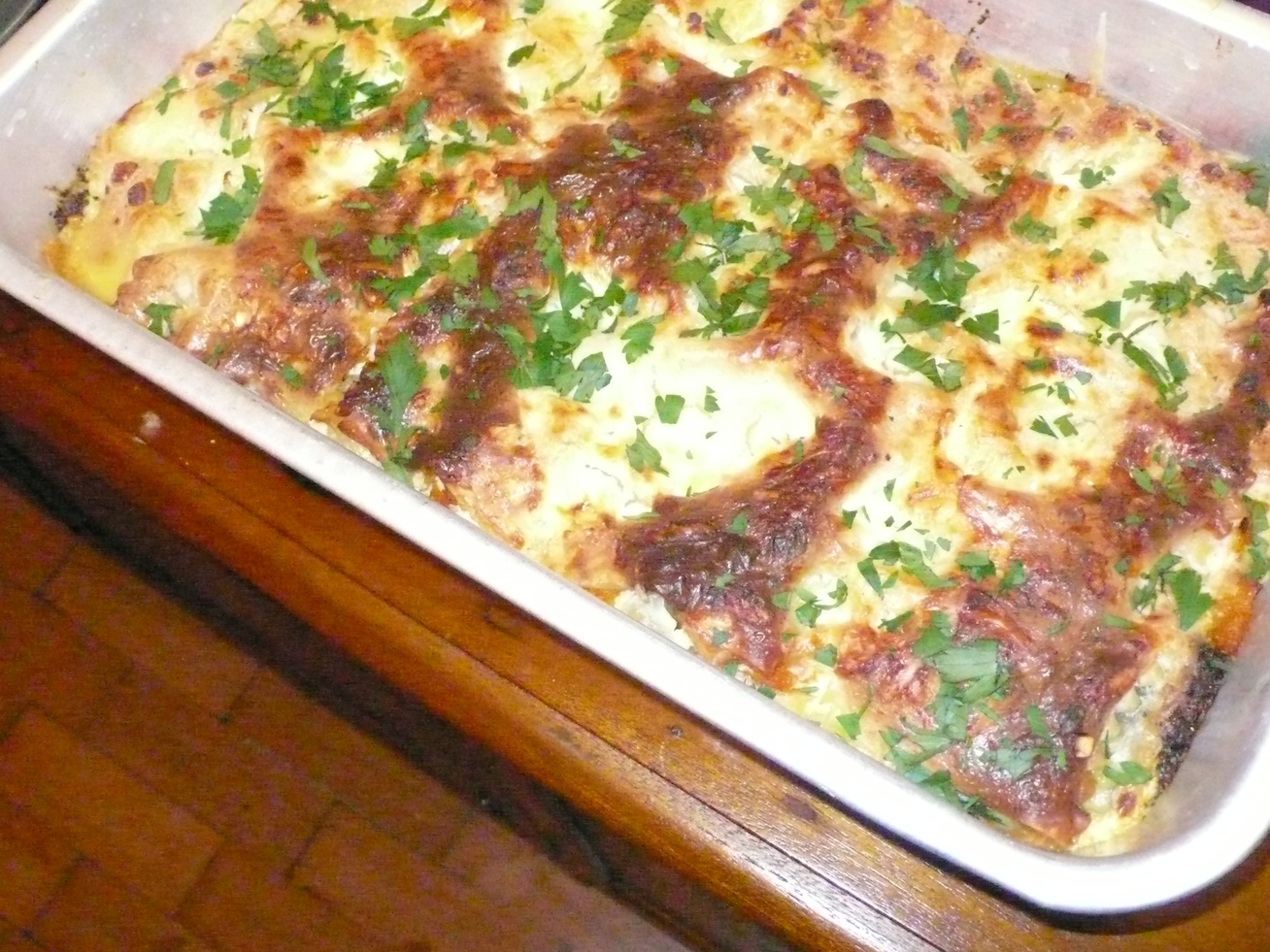
Oil the bottom of a very large roasting tin with a little olive oil. Spread about 1/3rd of the butternut over the bottom of the pan, sprinkle a little bit of parmesan over, and drop about 1/2 cup of white sauce over this. Cover entirely with pasta. Spoon about a cup of white sauce over this (or more – you want to cover the pasta entirely but not thickly), and spoon tablespoons of pesto on top. You want a white base, with beautiful bright green blobs. Cover entirely with pasta. As you cover it, you will see the pesto spread – this is good. Do another butternut layer, another pesto, and a final butternut layer. Cover with a final layer of pasta, and pour the rest of the white sauce over all, and sprinkle the remainder of your cheese over. You should have a pretty full pan, and five layers of lasagne.

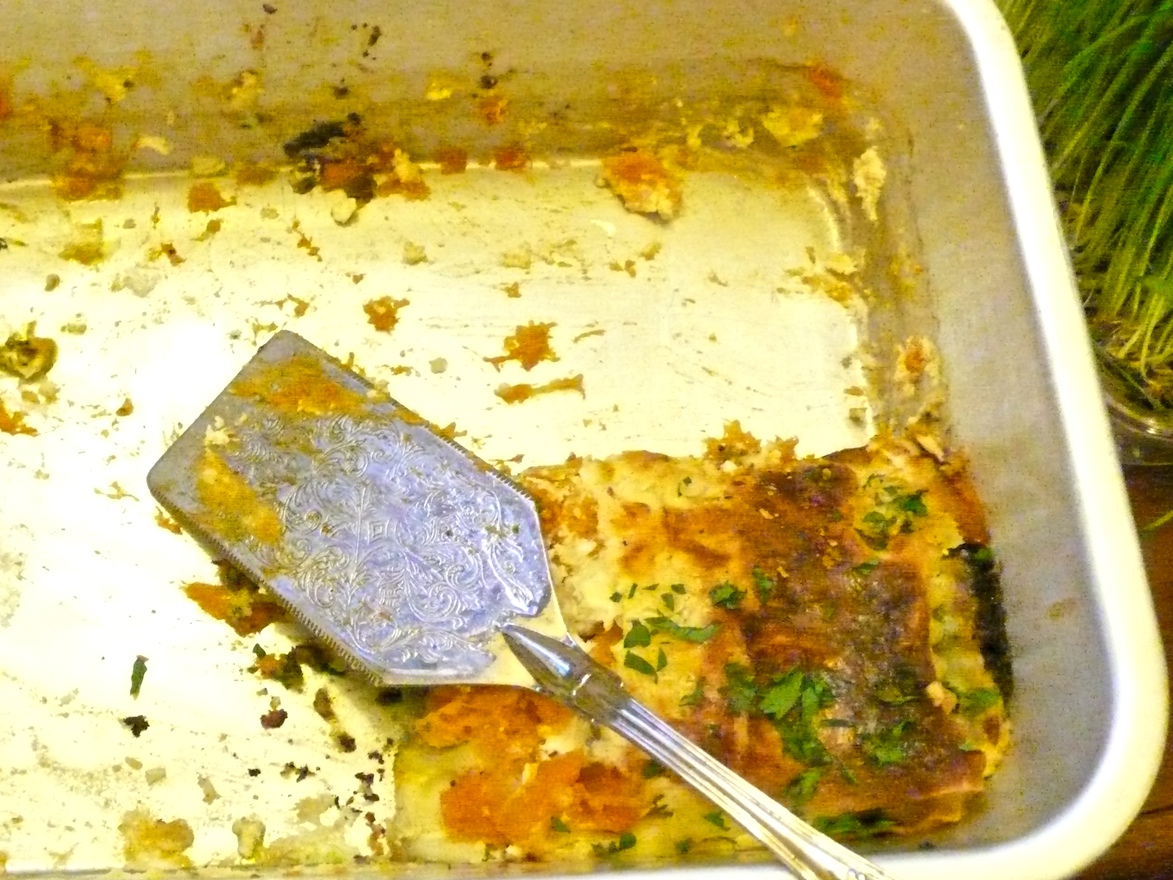
Bake in hot oven for about half an hour, or until heated throughout, the pasta is soft, and the top is brown and crispy. Let rest for a few minutes when you take it out of the oven, and chop up a handful of Italian parsley to sprinkle over.

Serve with a refreshing salad. And watch your team win! Or lose 😉